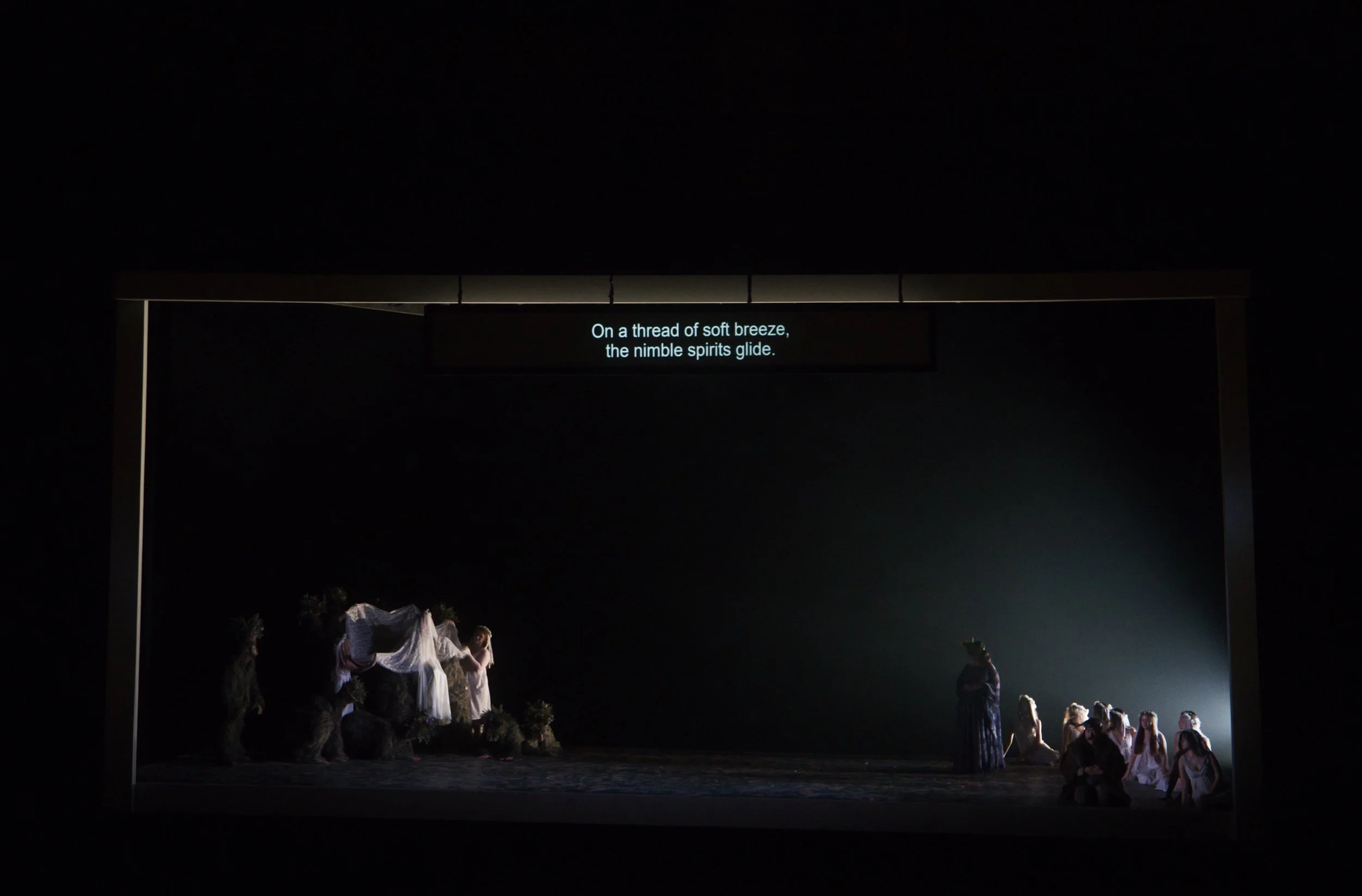
FALSTAFF
VERDI / BOITO
“Falstaff” (2026) 120 minutes. Staged Opera. Verdi + Boito. Live performance, light, sound, costume, amplified instruments. The Juilliard School. Marcus Shields/ Frank Oliva/ Avery Reed.
FALSTAFF
VERDI / BOITO
Juilliard Opera
Juilliard Orchestra
Joseph Colaneri, Conductor
Marcus Shields, Director
Frank Oliva, Scenic and Lighting Designer
Avery Reed, Costume Designer
Miguel Alejandro Castillo Le Maitre, associate director and Choreographer
Cast
Falstaff: Minki Hong
Ford: Titus Muzi
Alice Ford: Page Michels
Nannetta: Shiyu Zhuo
Meg Page: Sophia Baete
Mistress Quickly: Lauren Randolph
Fenton: Adam Catangui
Dr. Caius: Chester SeungYup Han
Bardolfo: Nathan Romportl
Pistola: Lin Fan
Chorus
Kimberly Alexandra Adam, Felix Aurelius, Antonia Cáceres, Bryan Corral, Joe DeGroote, Zhongjiancheng Deng, Fantine Douilly, Andrew Gellen, Scarlett Jones, Owen Kilgore, Giuliana Leto, Joe Murphy, Lucia Papikian, Benjamin Pedersen, Sophia Pelekasis, Samone, Boheng Shen, Adriana Stepien, Sean Tagariello, Tivoli Treloar, Valcharge, Fangzhen Wang, Minghang Wang, Tong Zhang
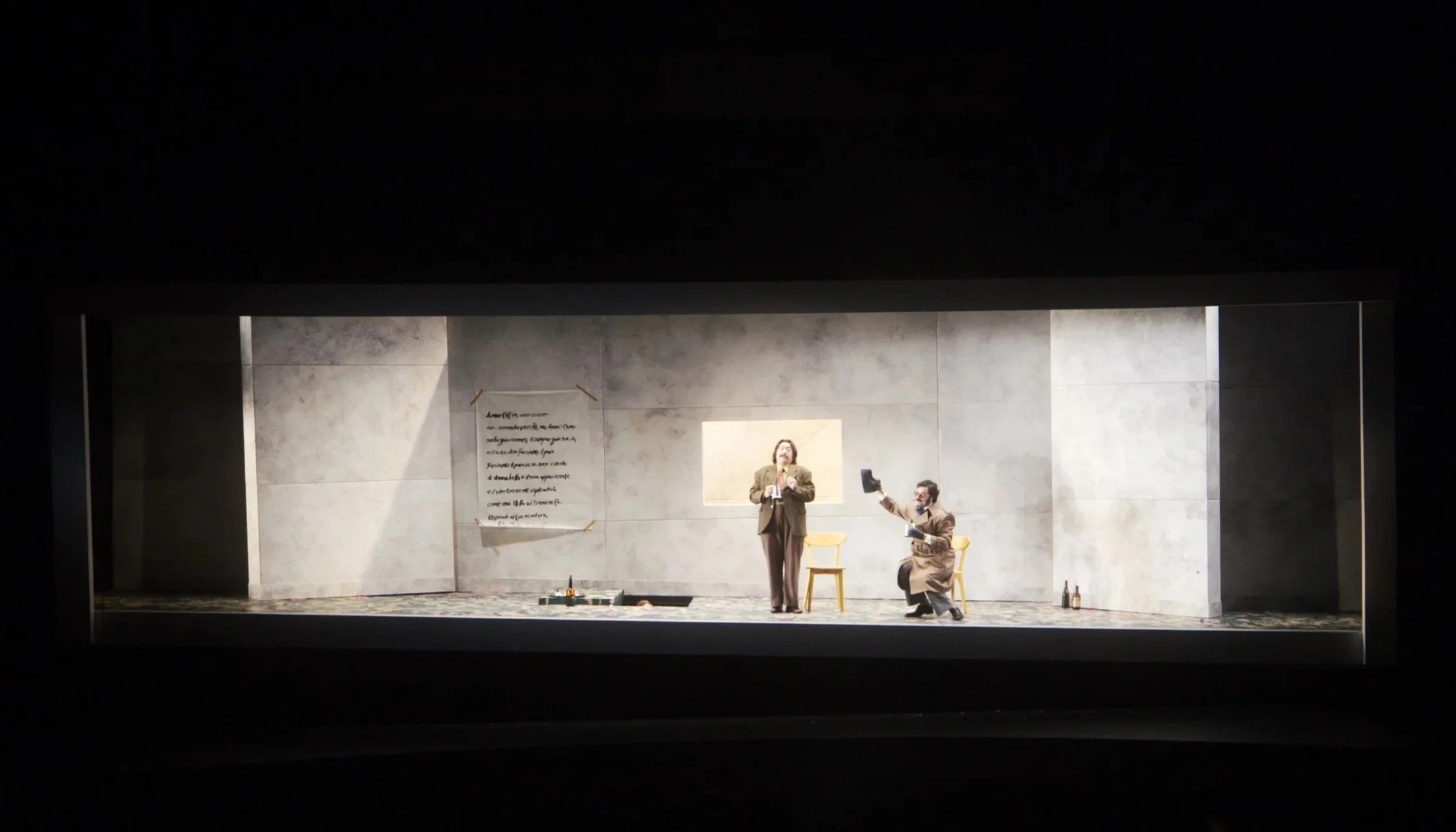
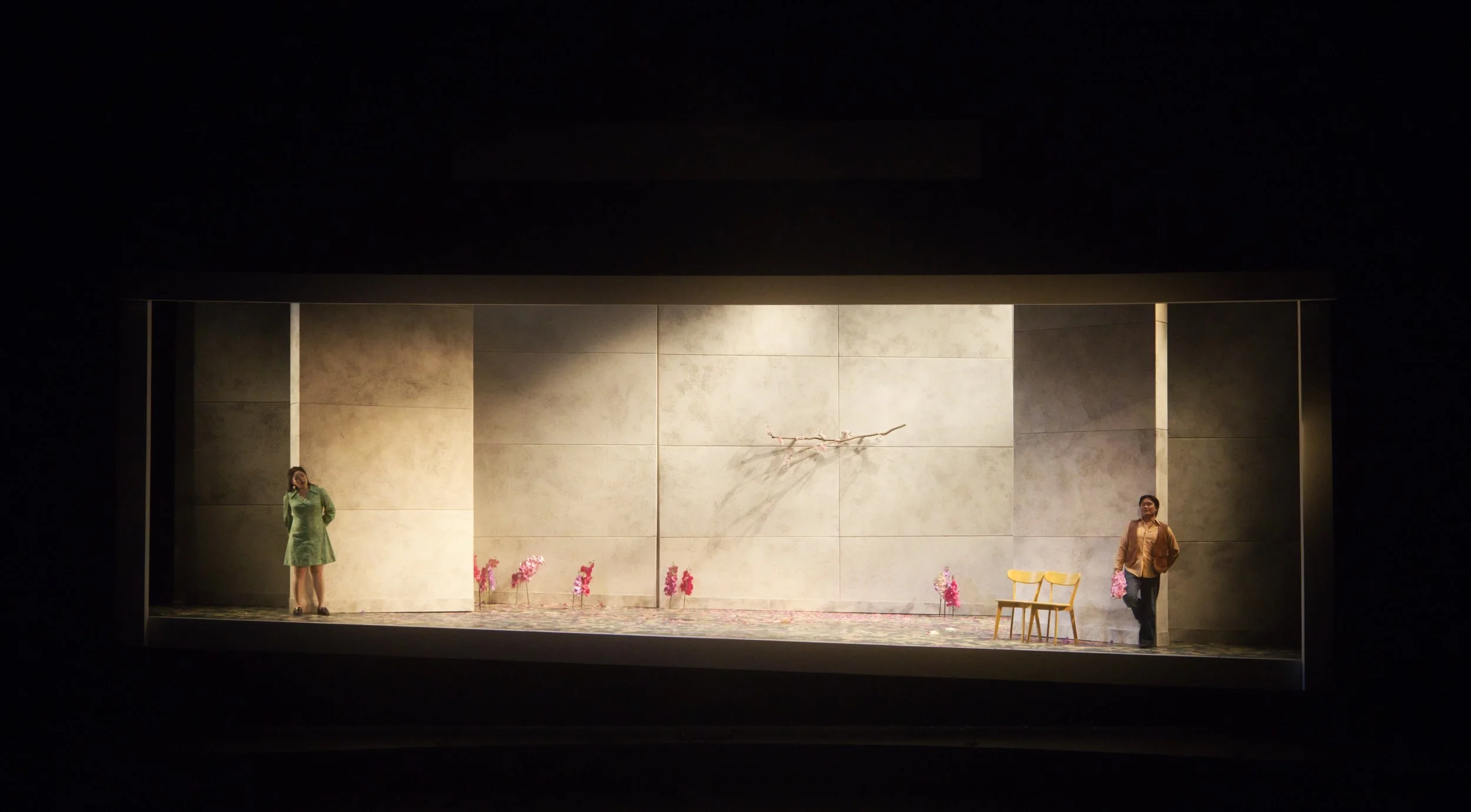
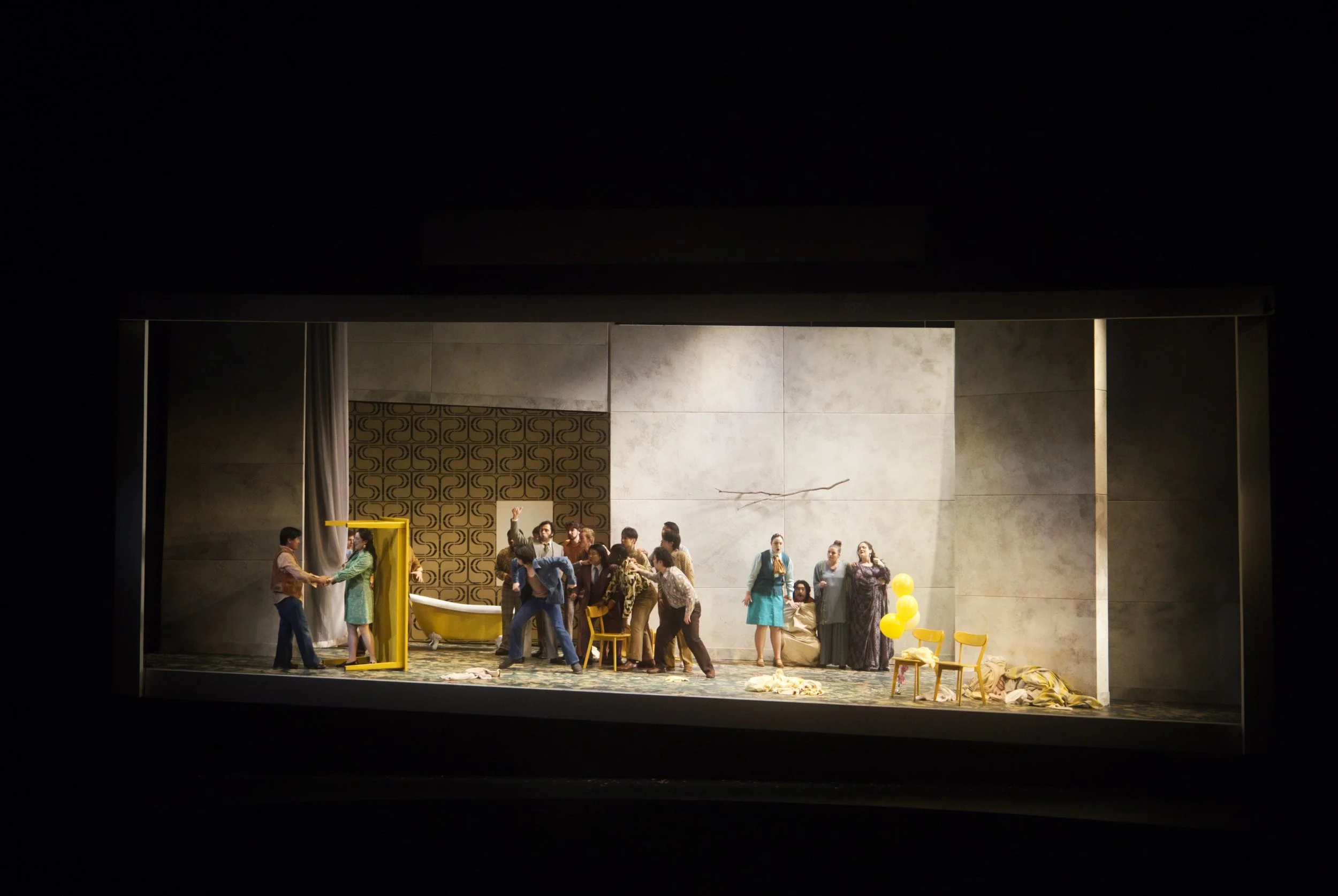
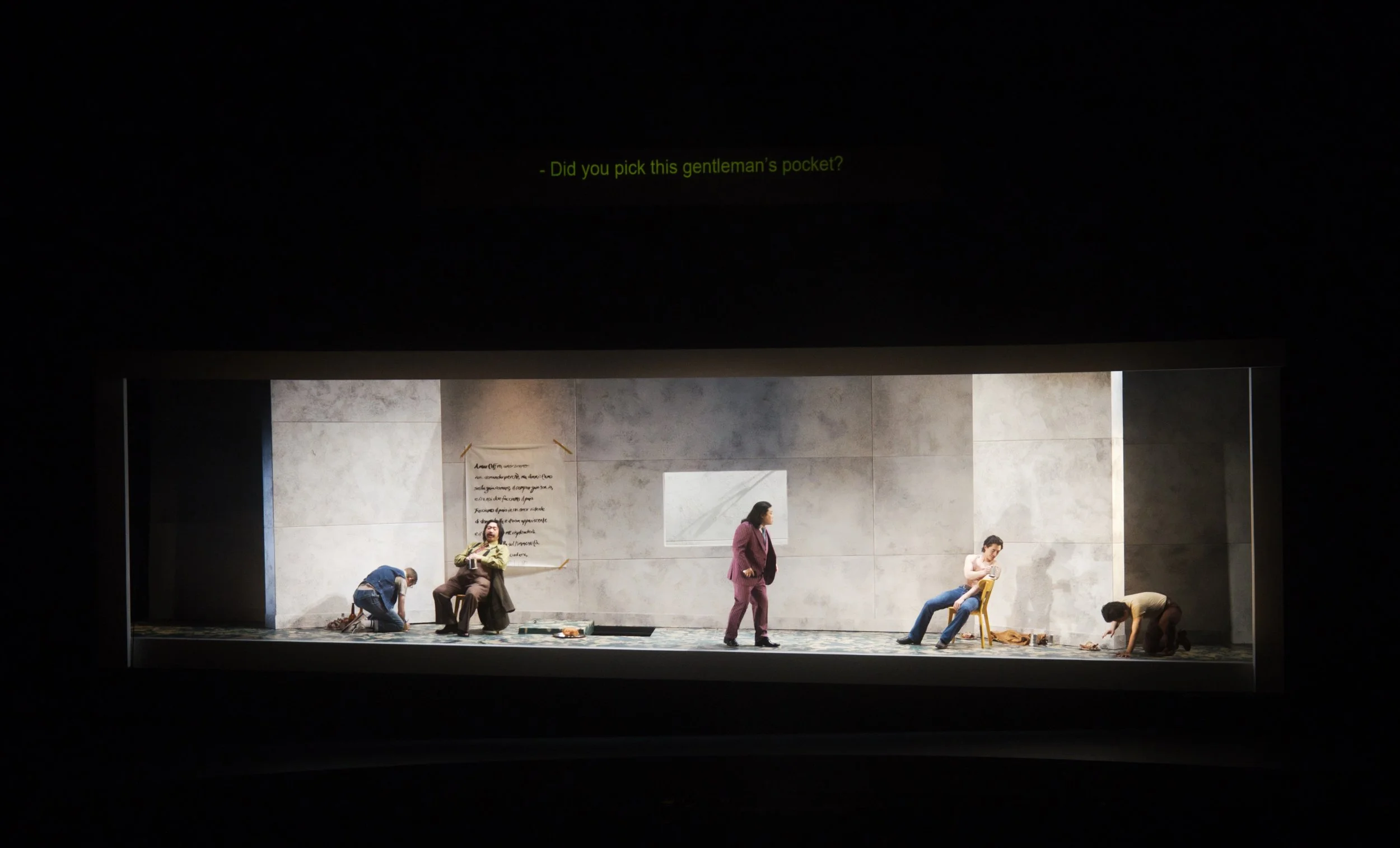
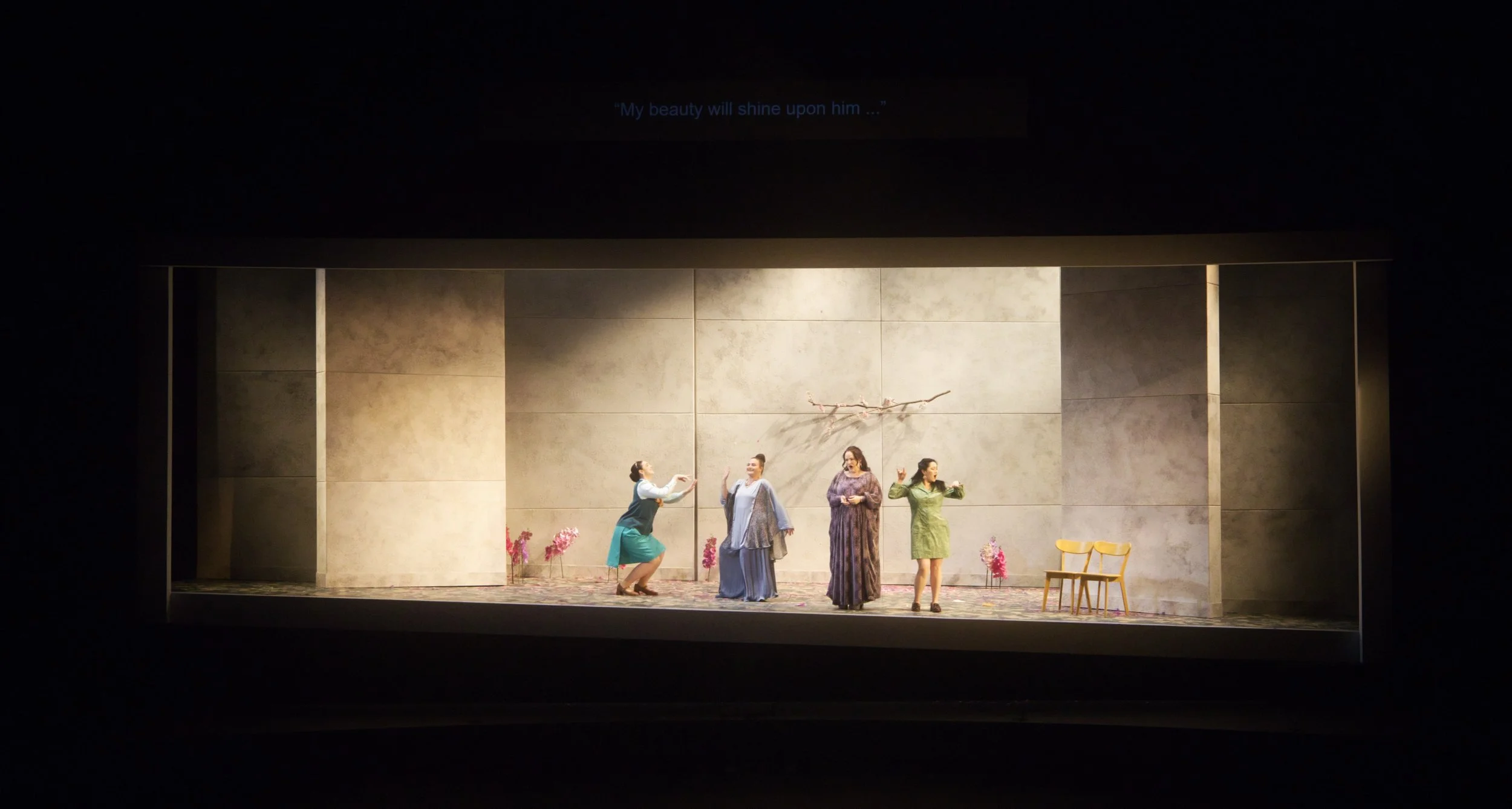
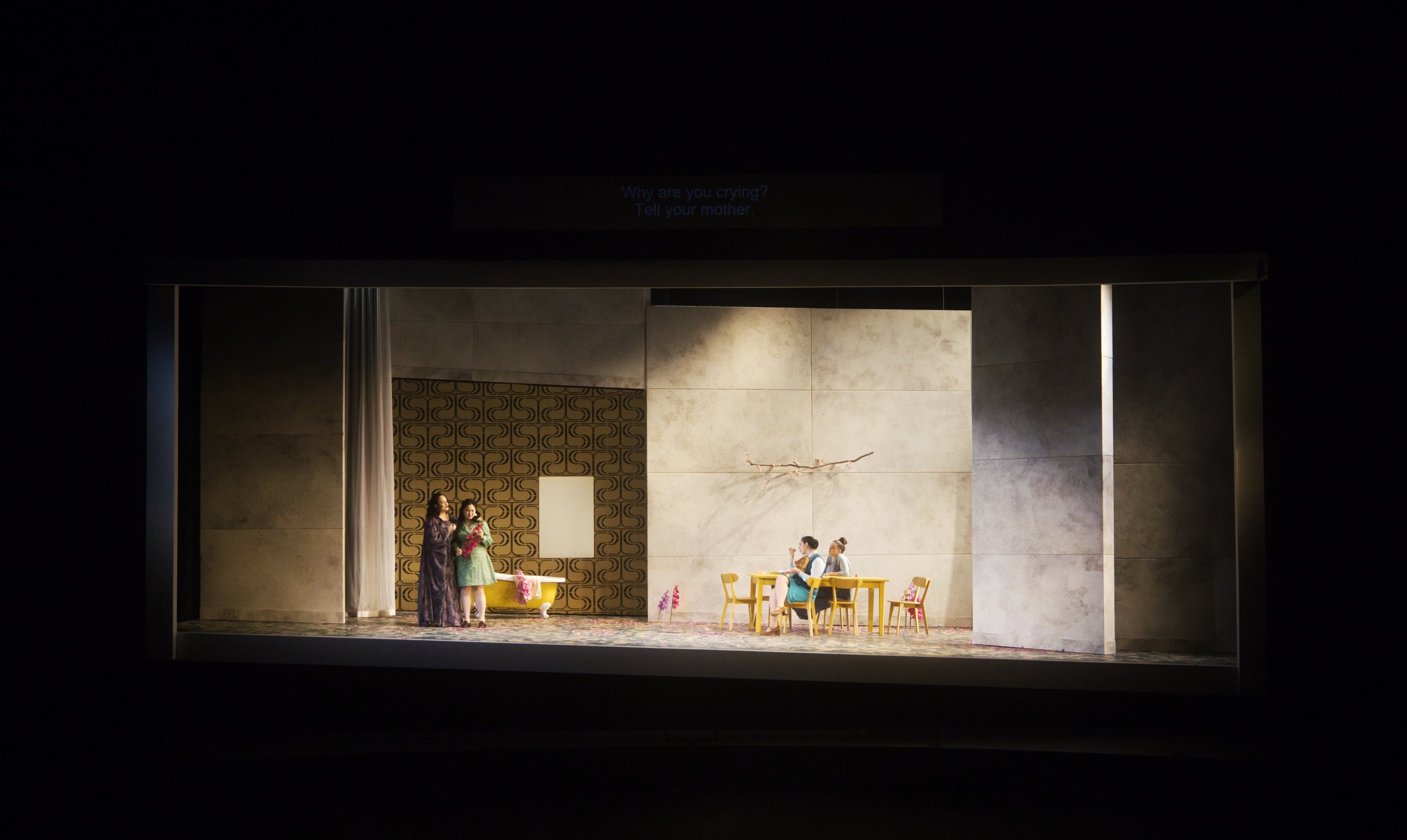
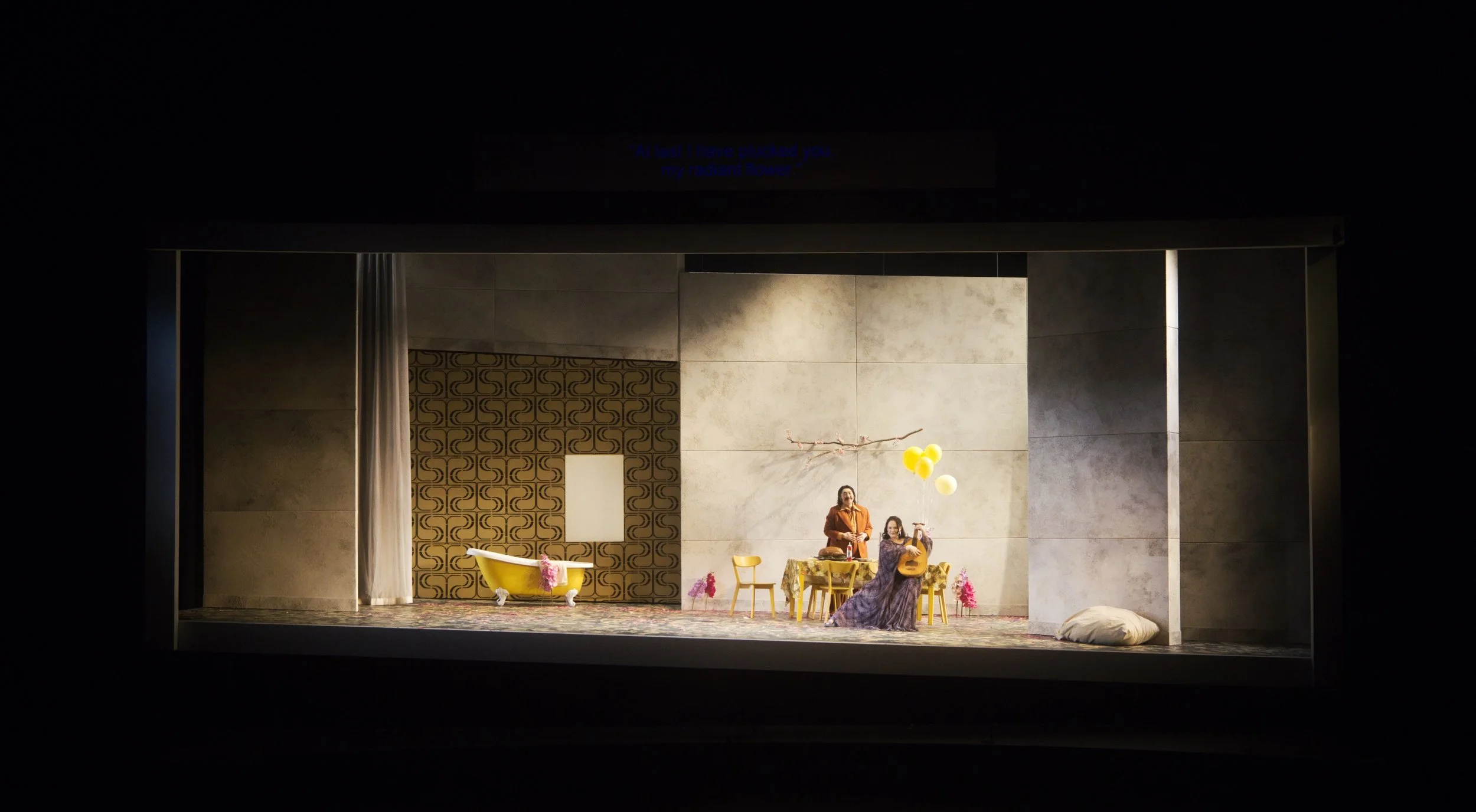
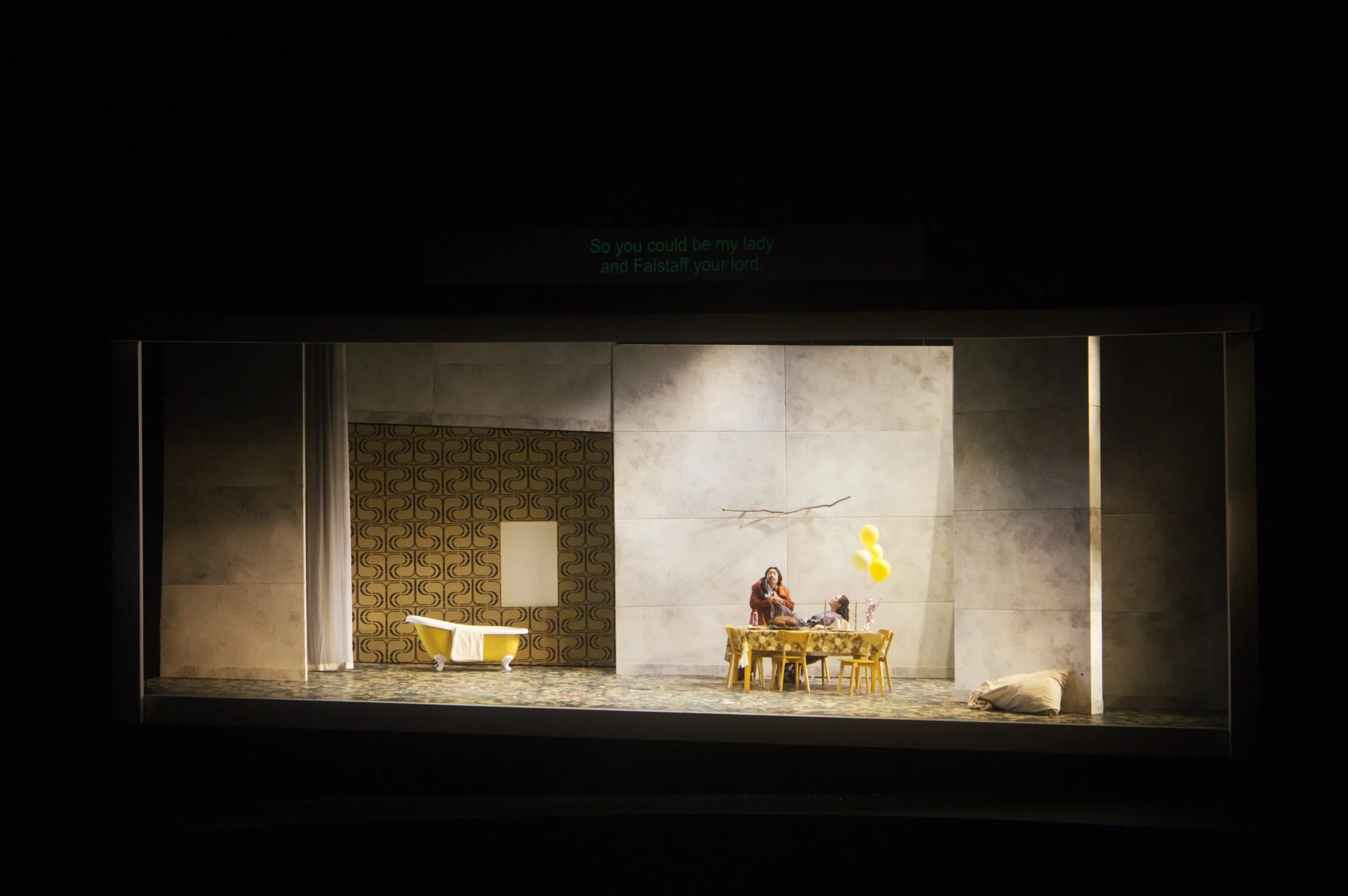
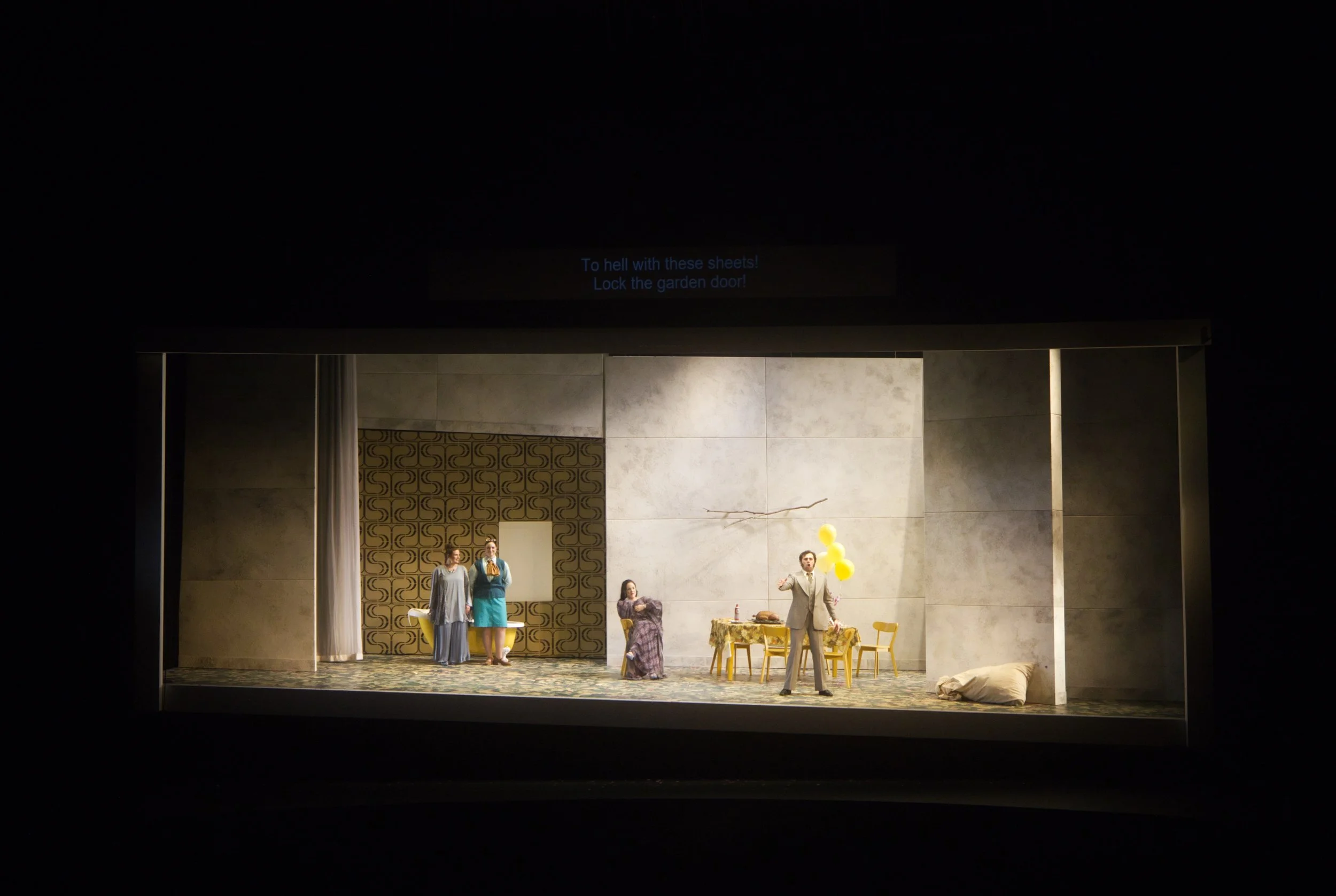
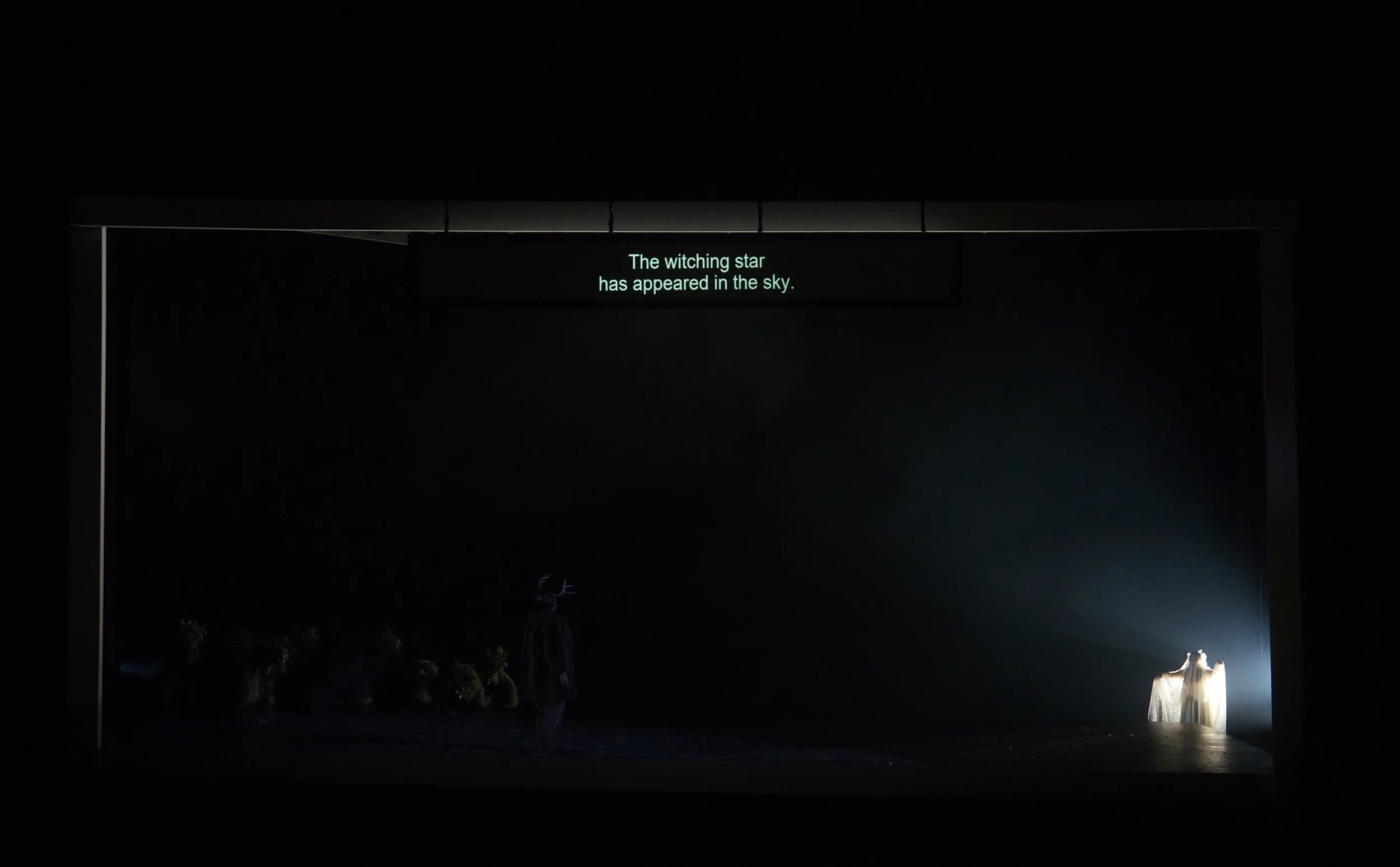
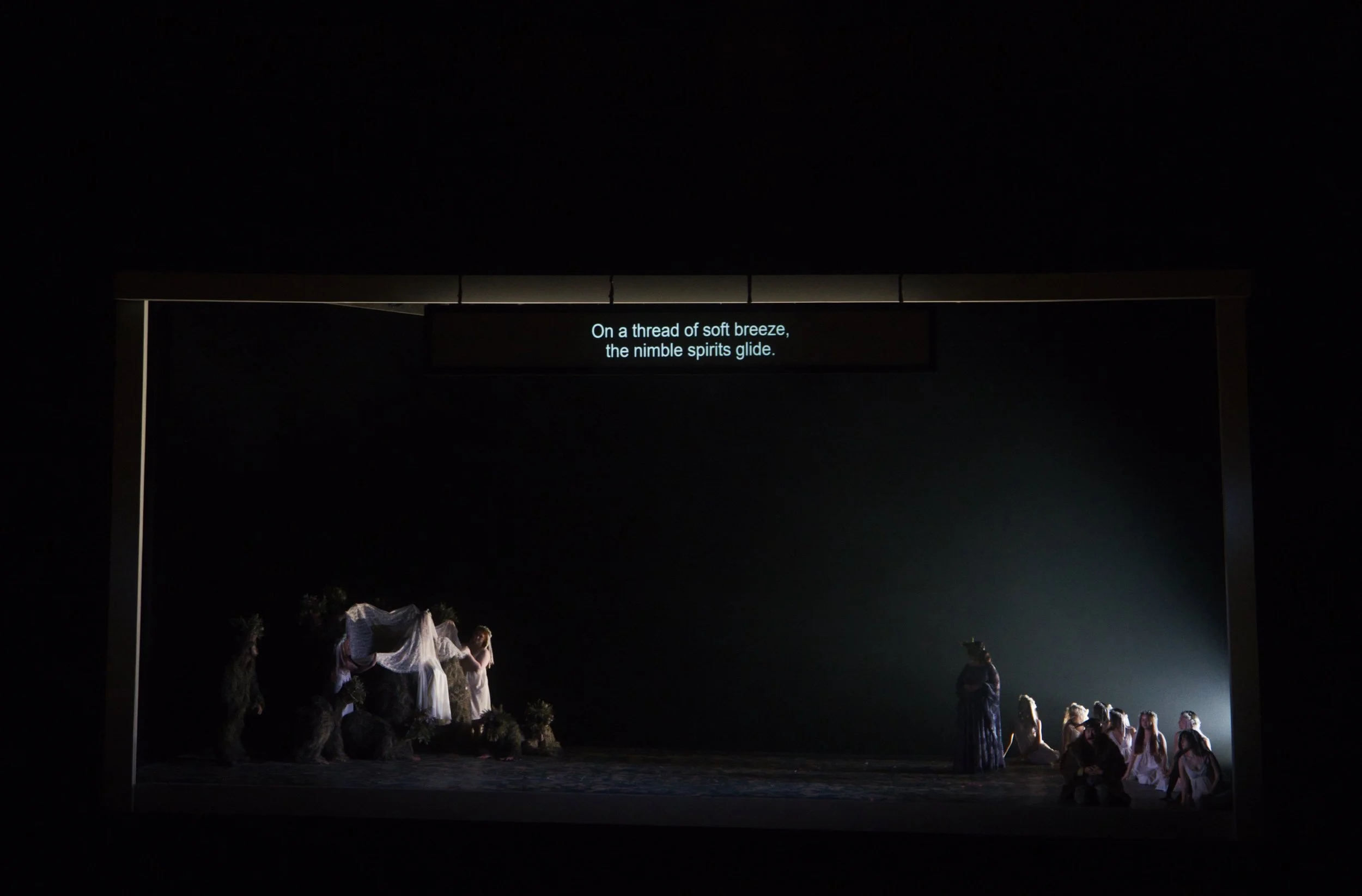
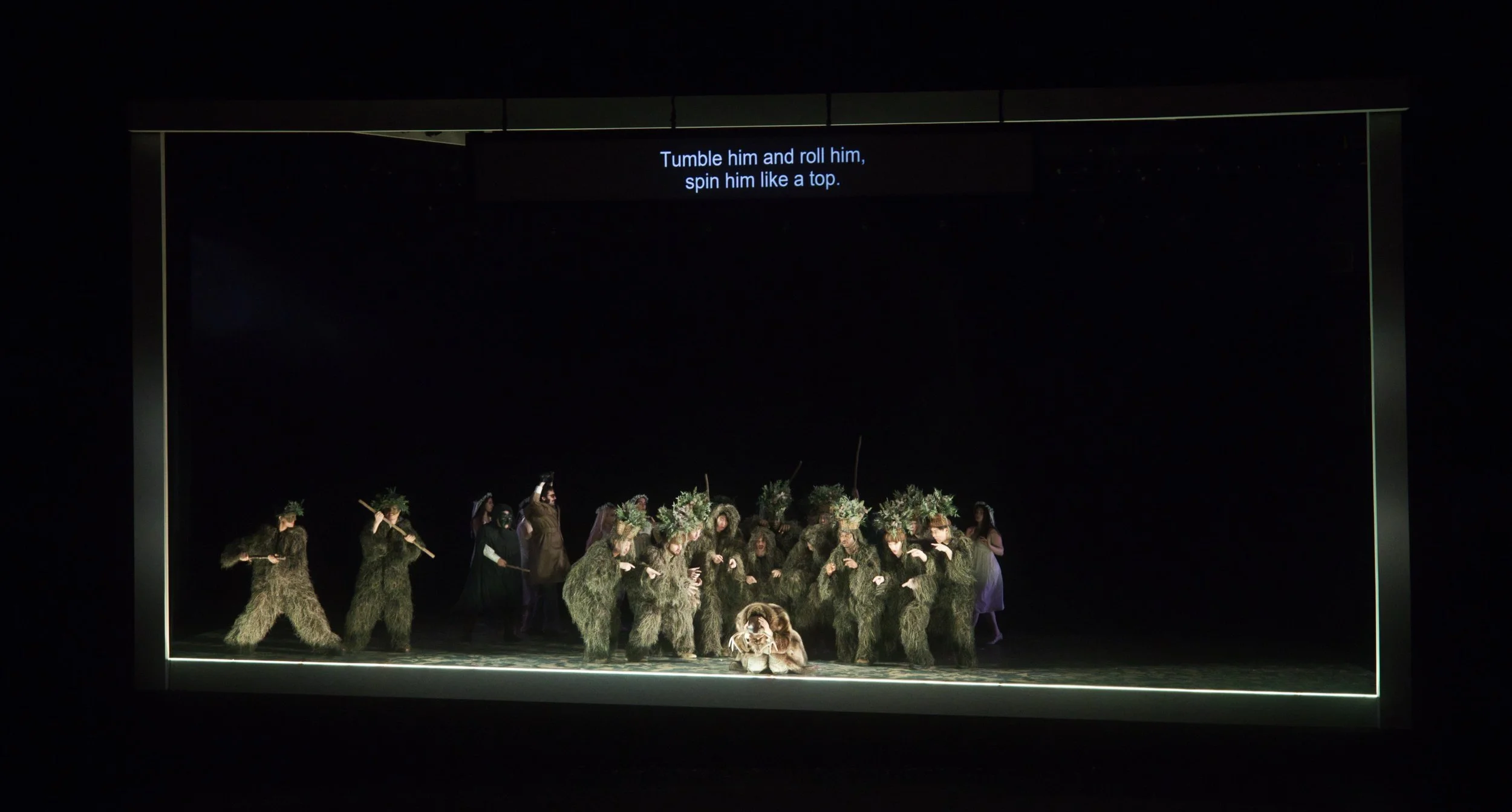
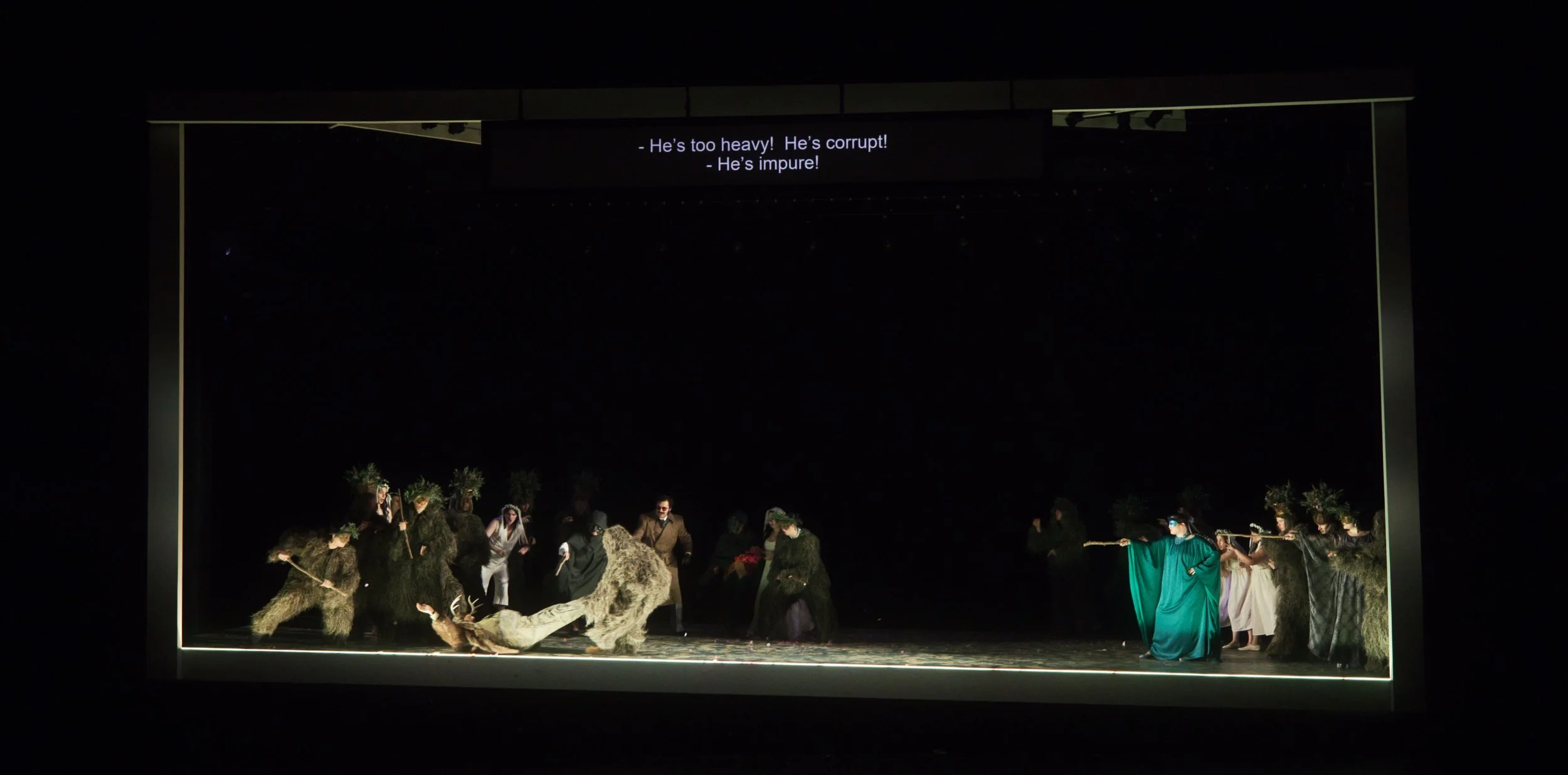
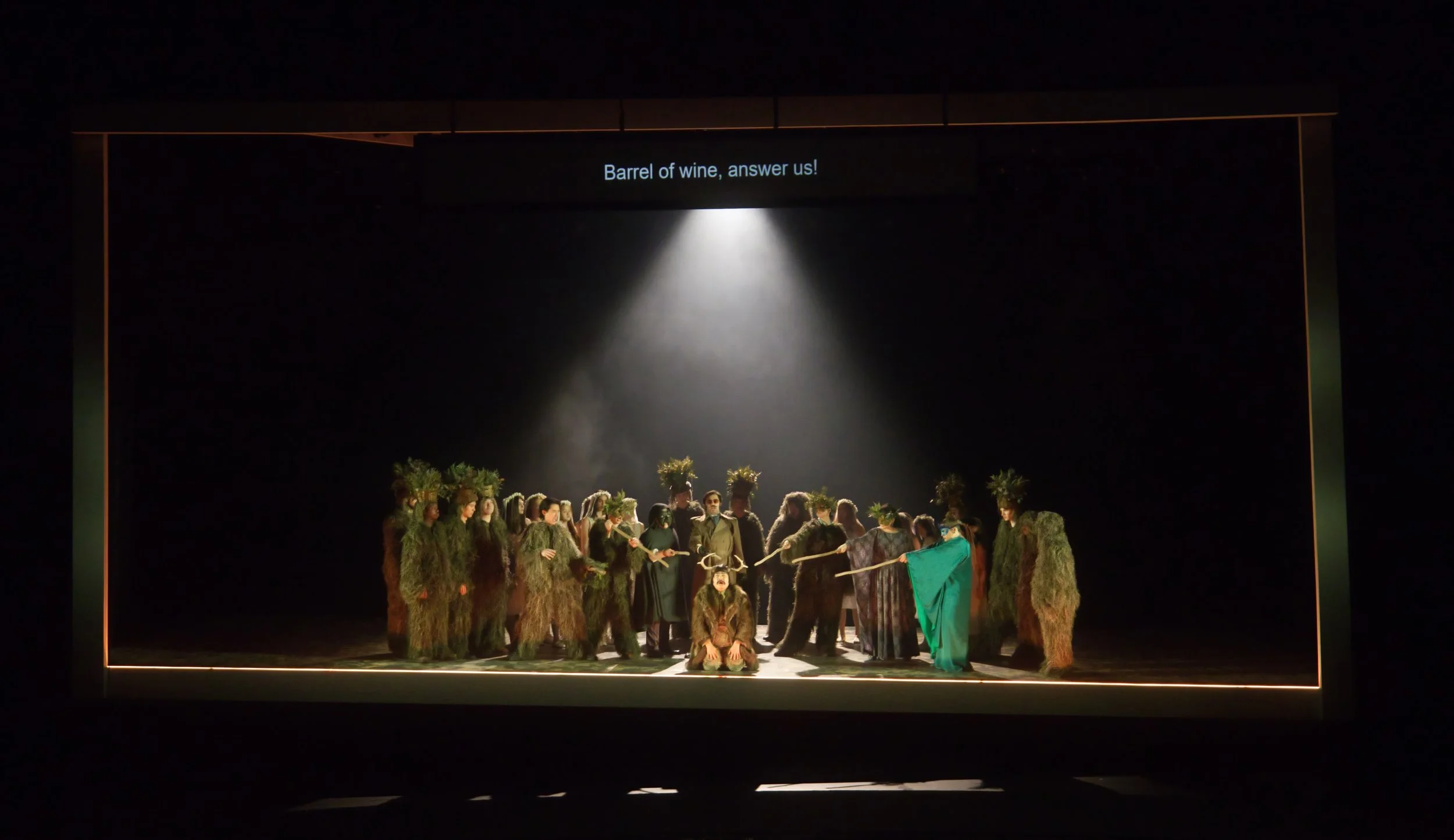
For Falstaff, we were dealing with a piece that needs to move very quickly and carry momentum scene to scene, while also providing acoustic support for a group of emerging professionals tackling a difficult orchestration. At the same time, we wanted a world that could feel strange and dynamic, provide meaningful shift location to location, and that foregrounded bodies and energy.
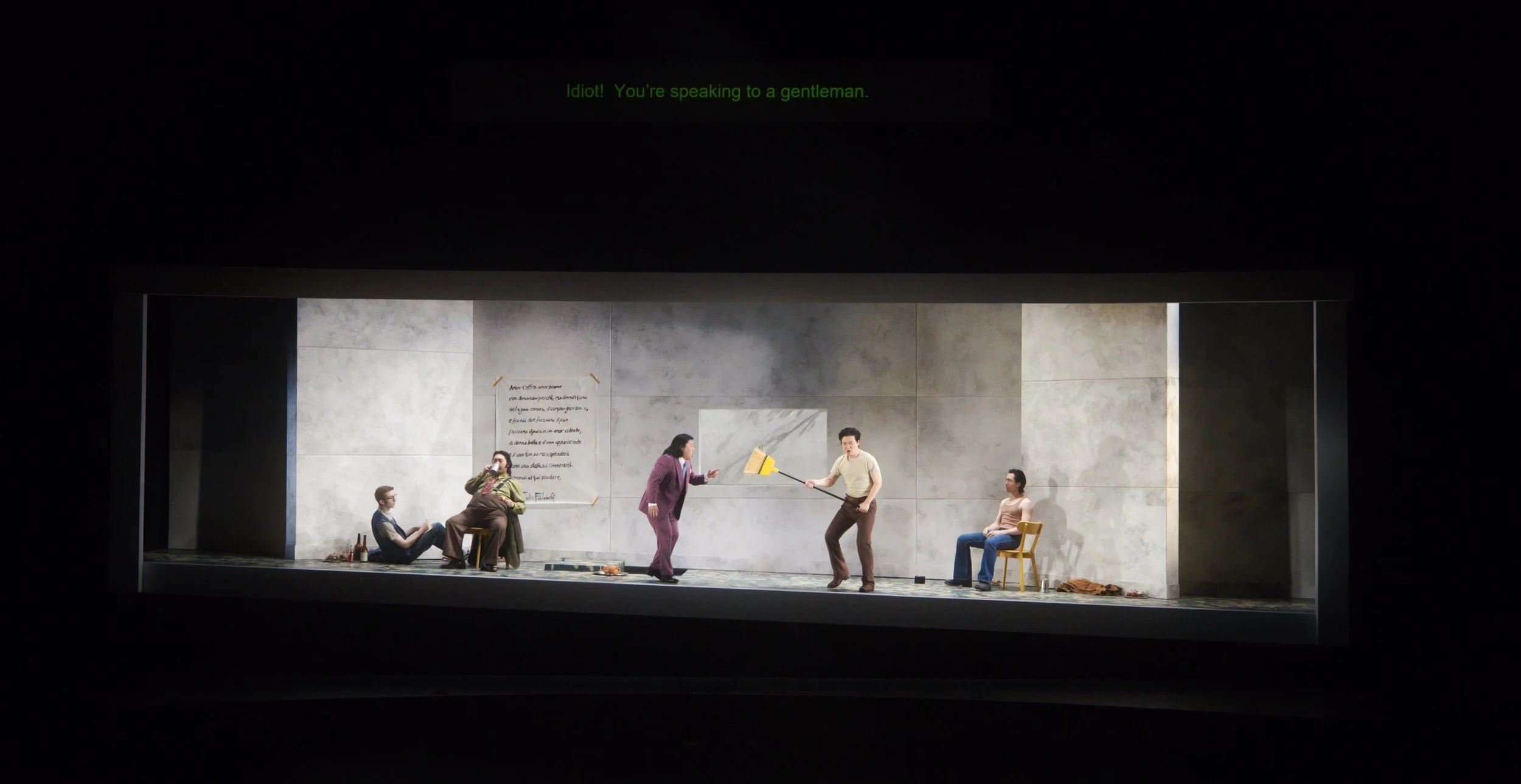
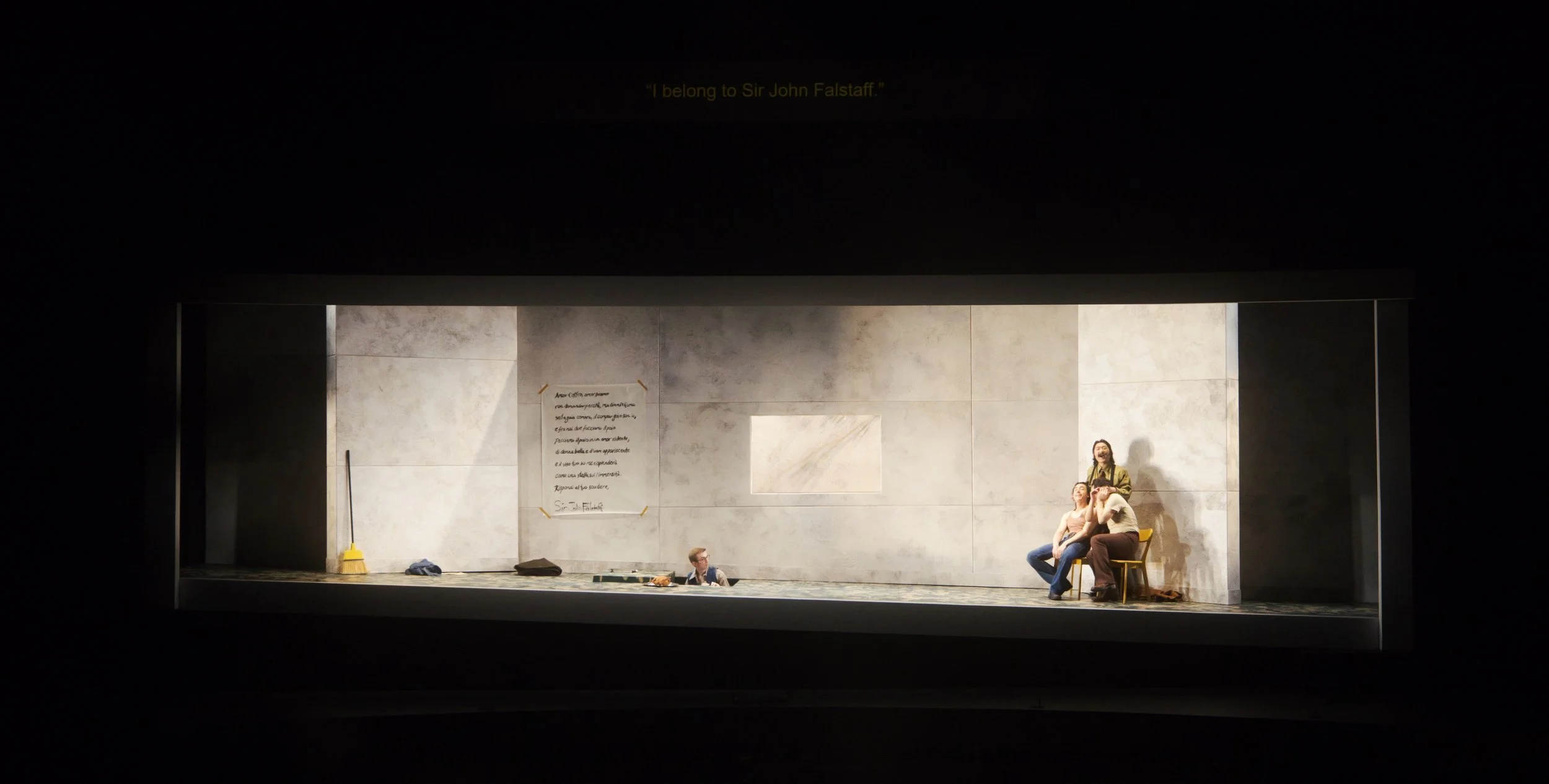
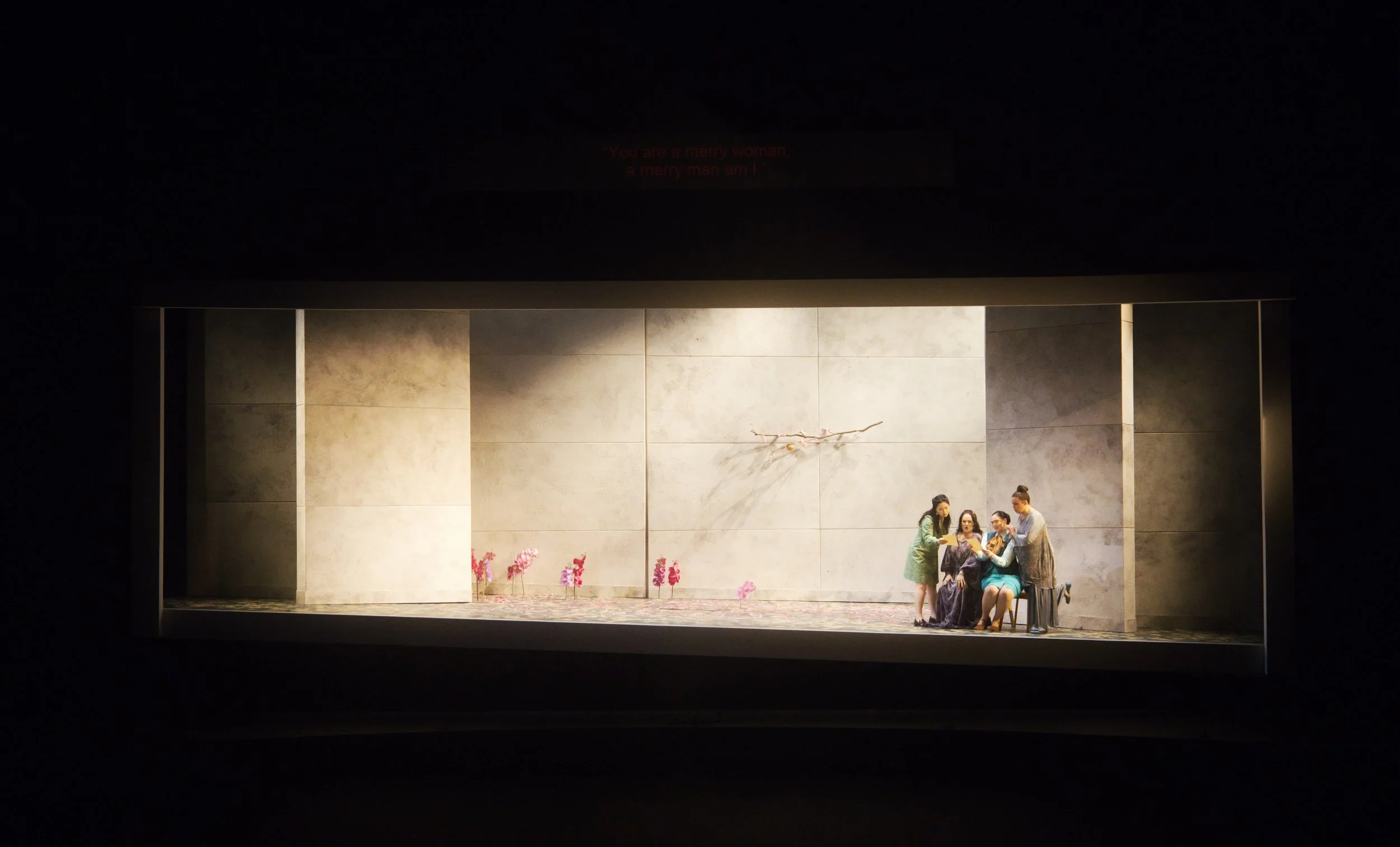
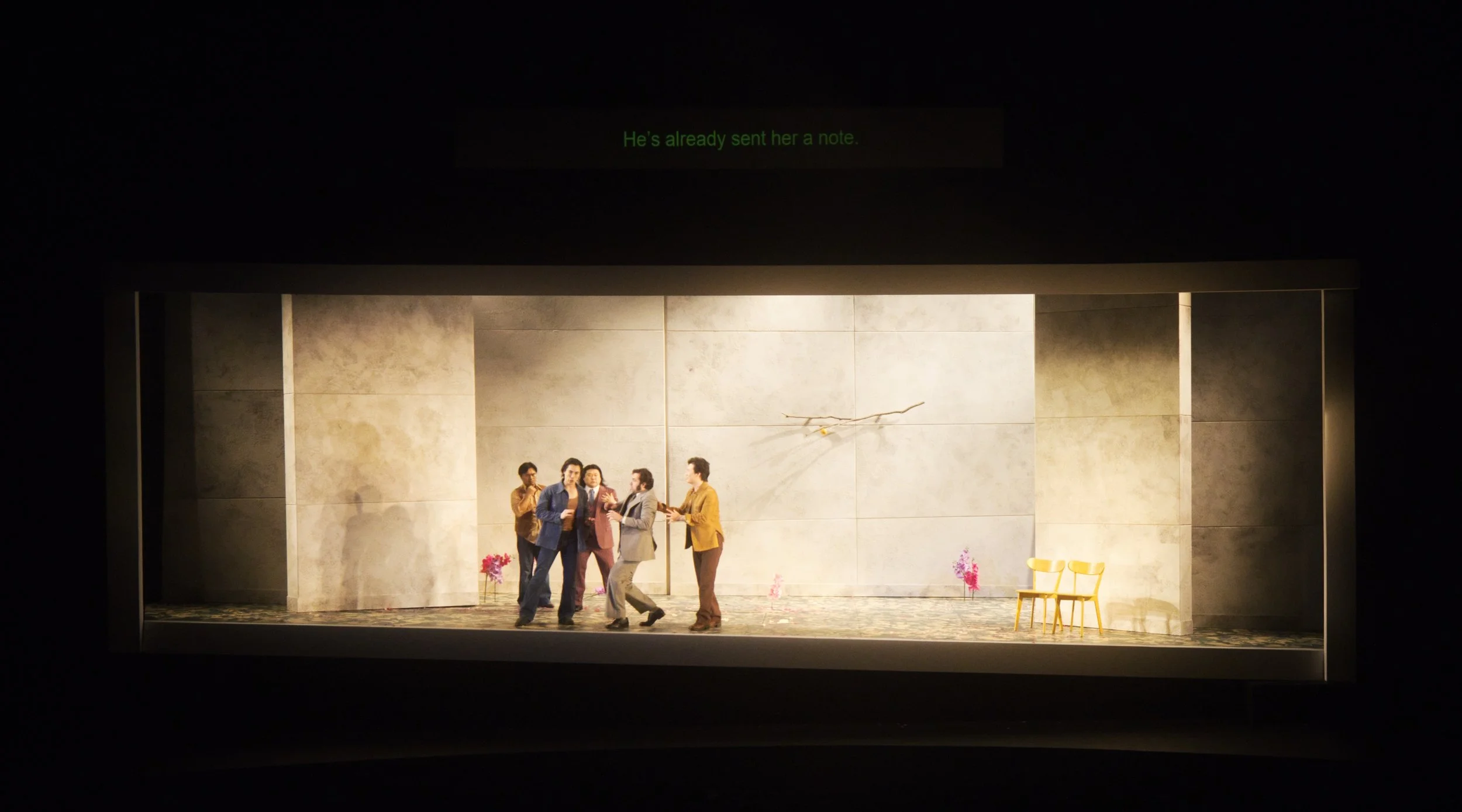
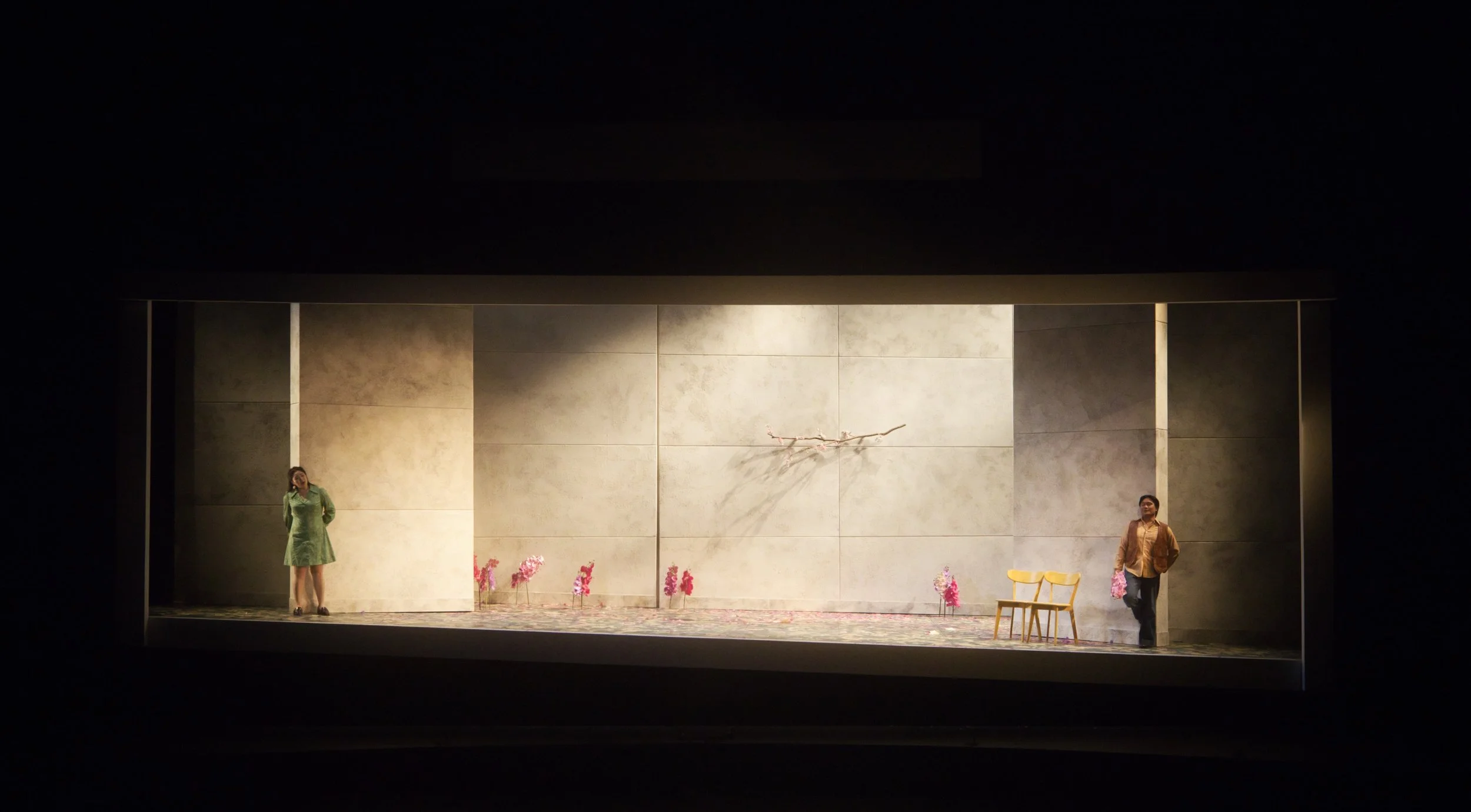
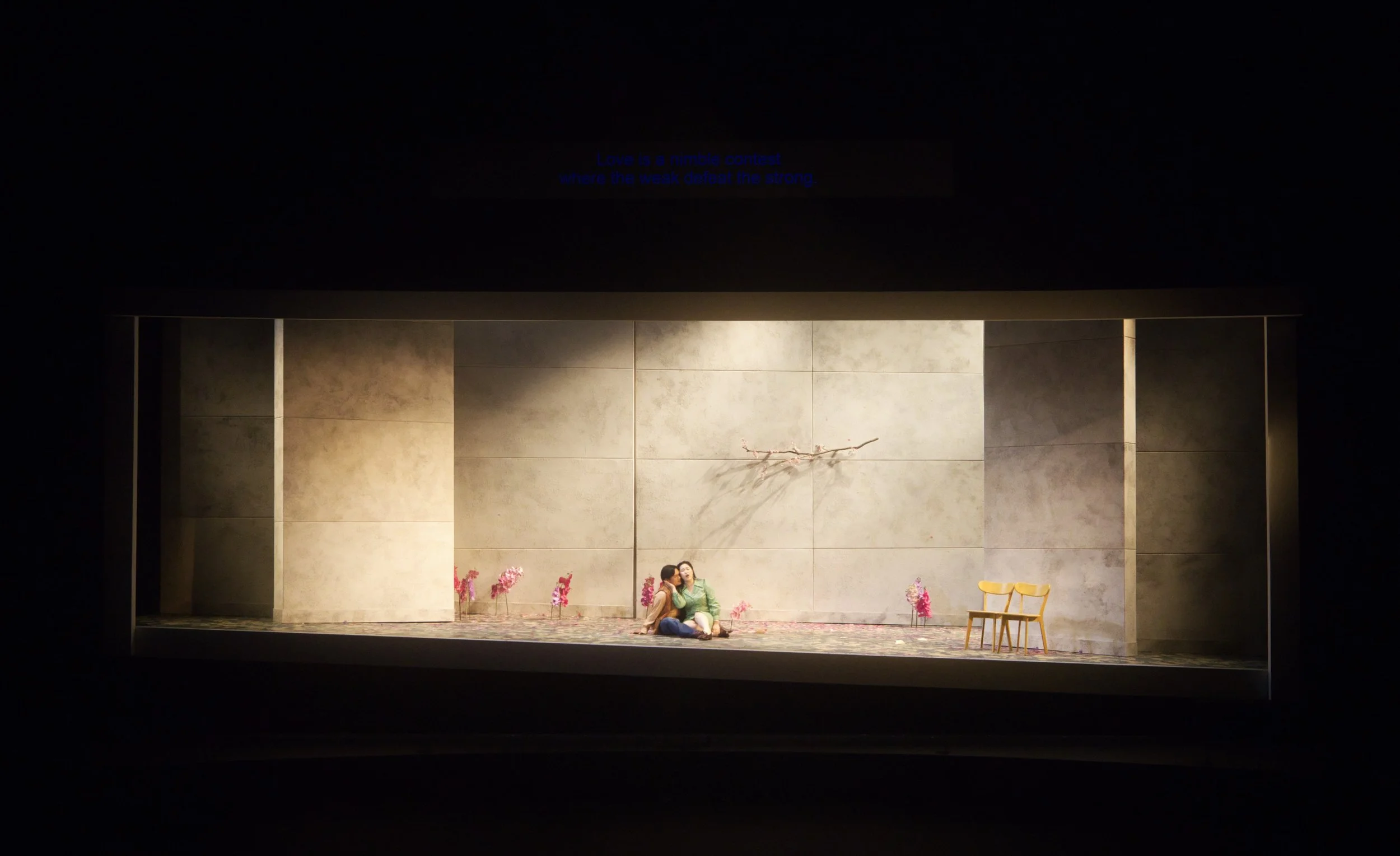
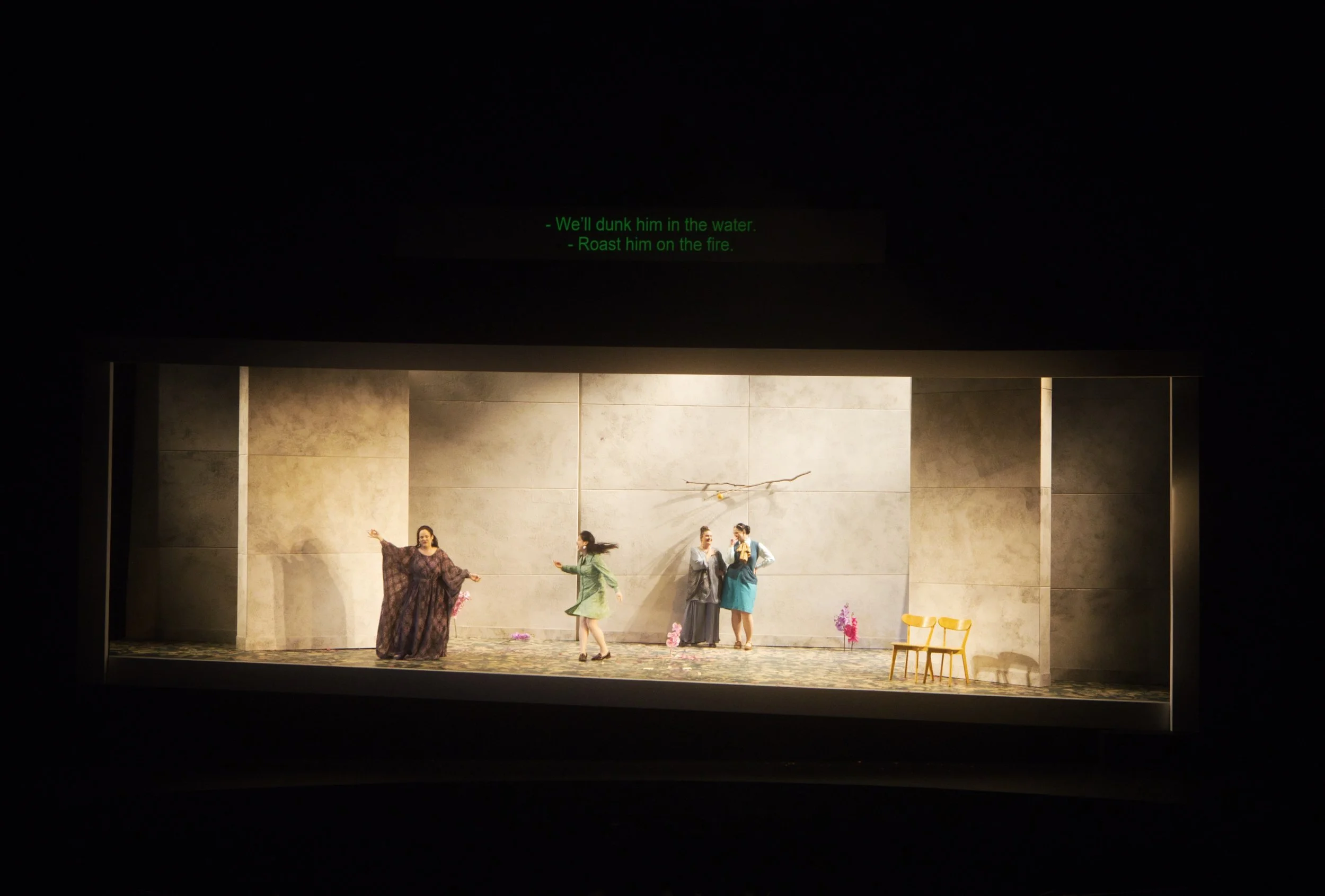
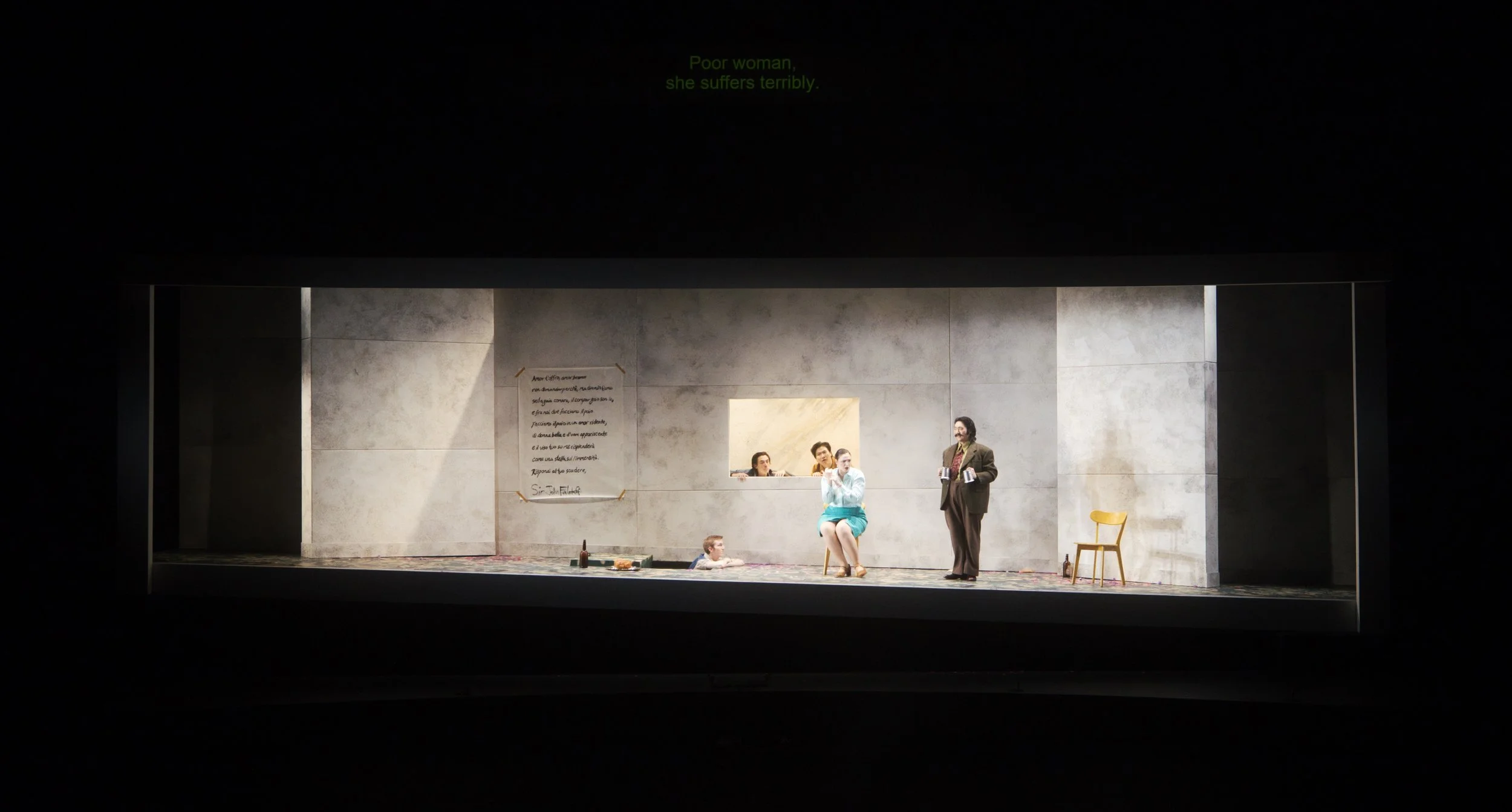
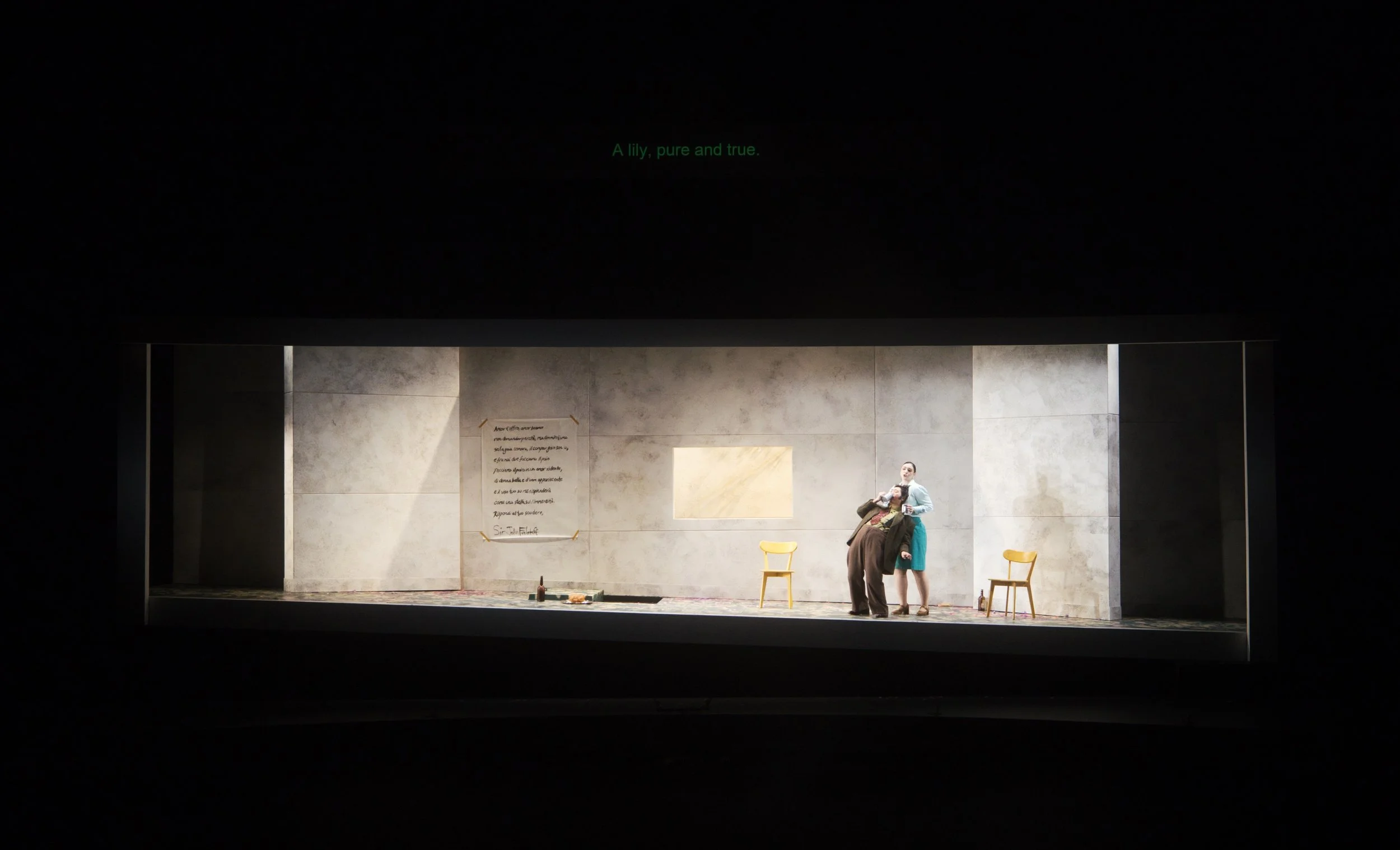
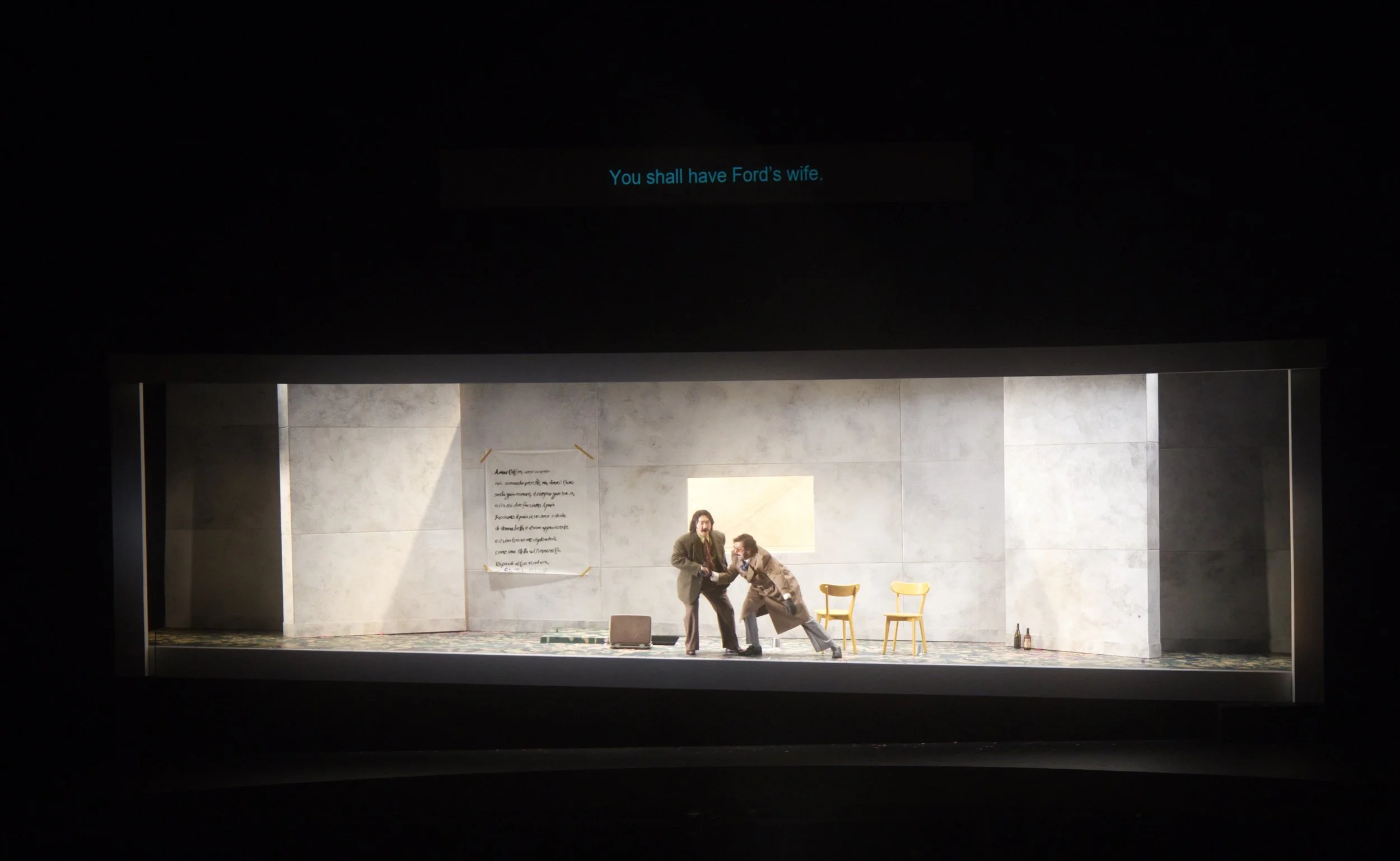
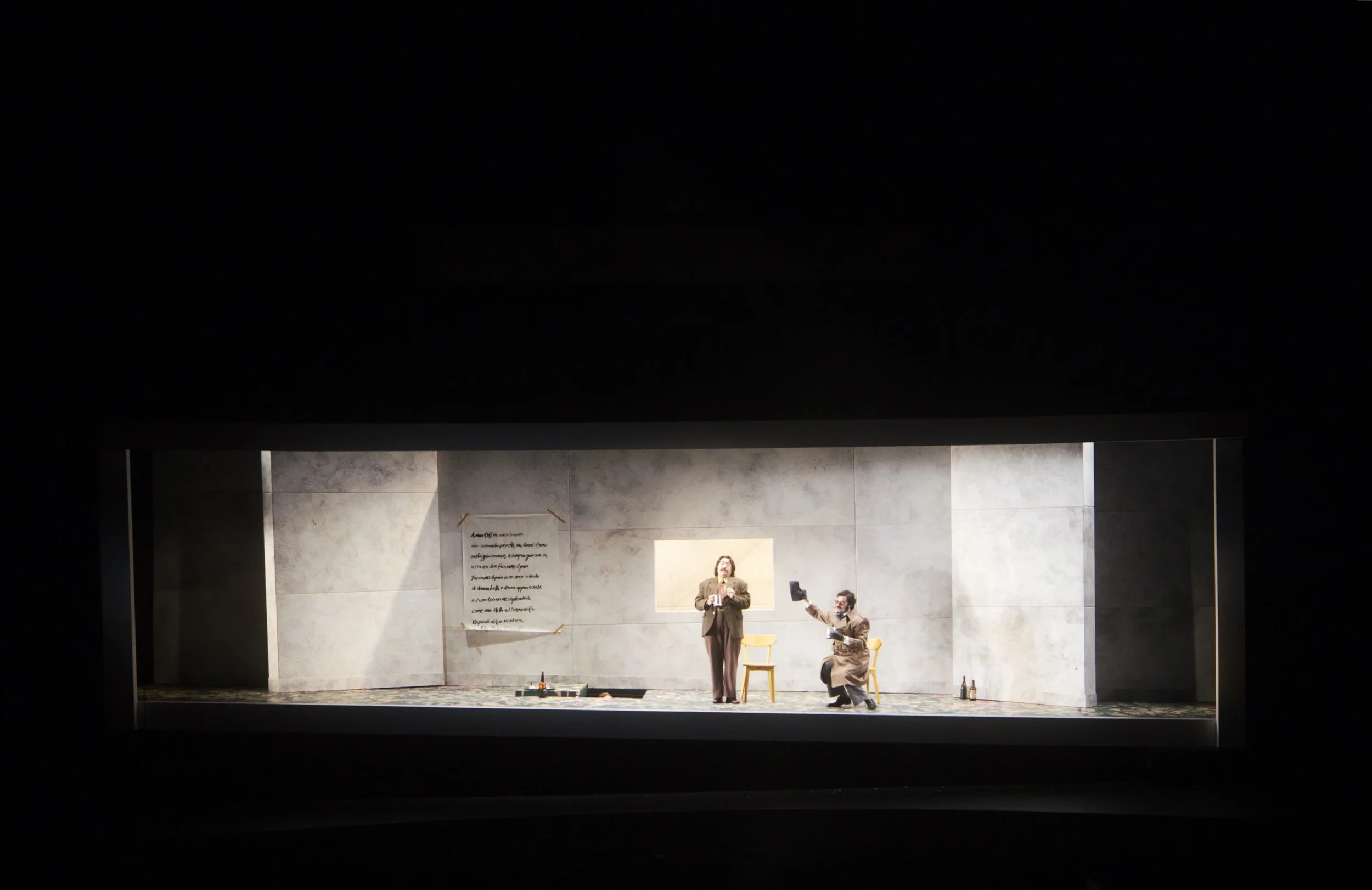
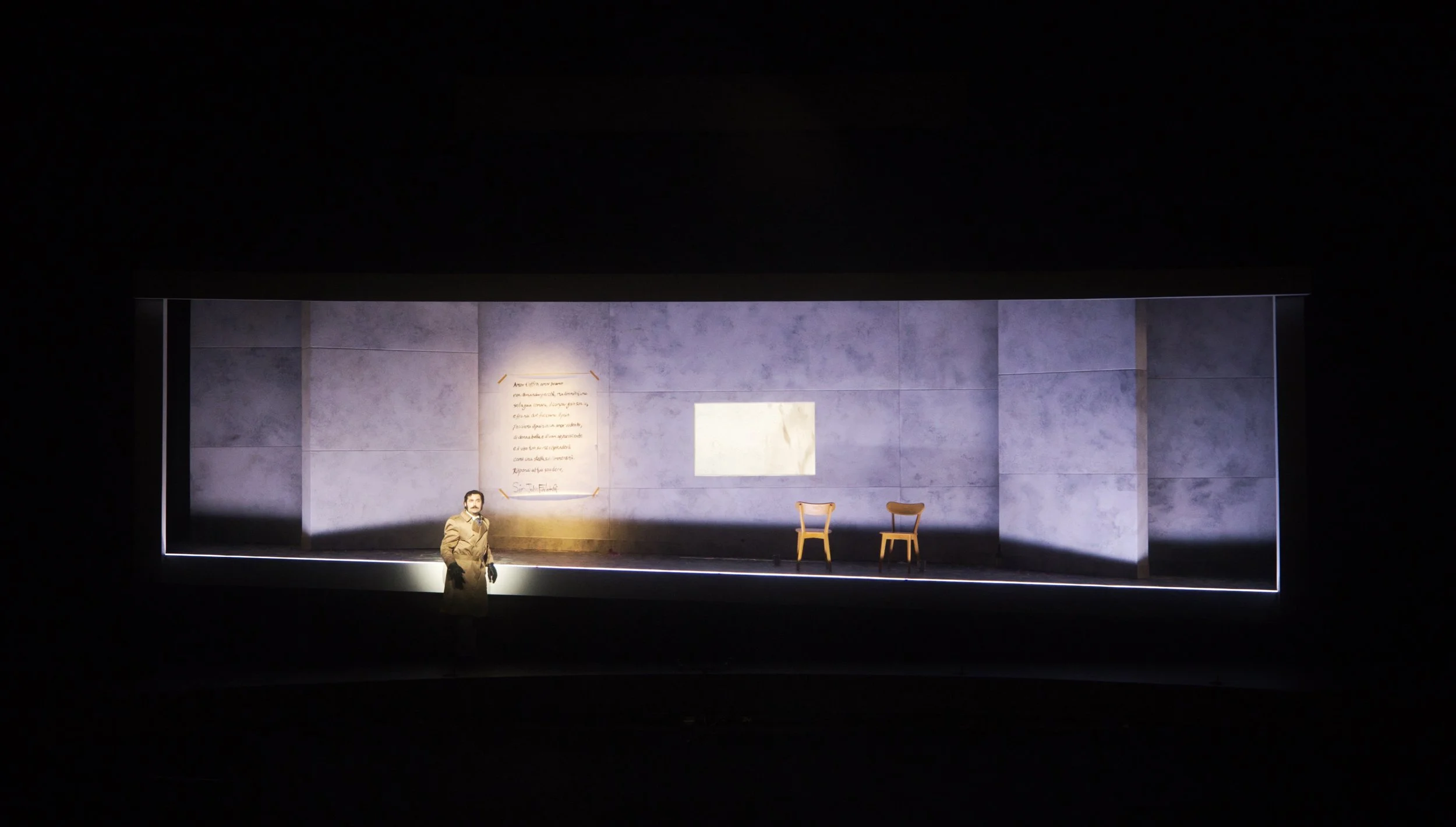
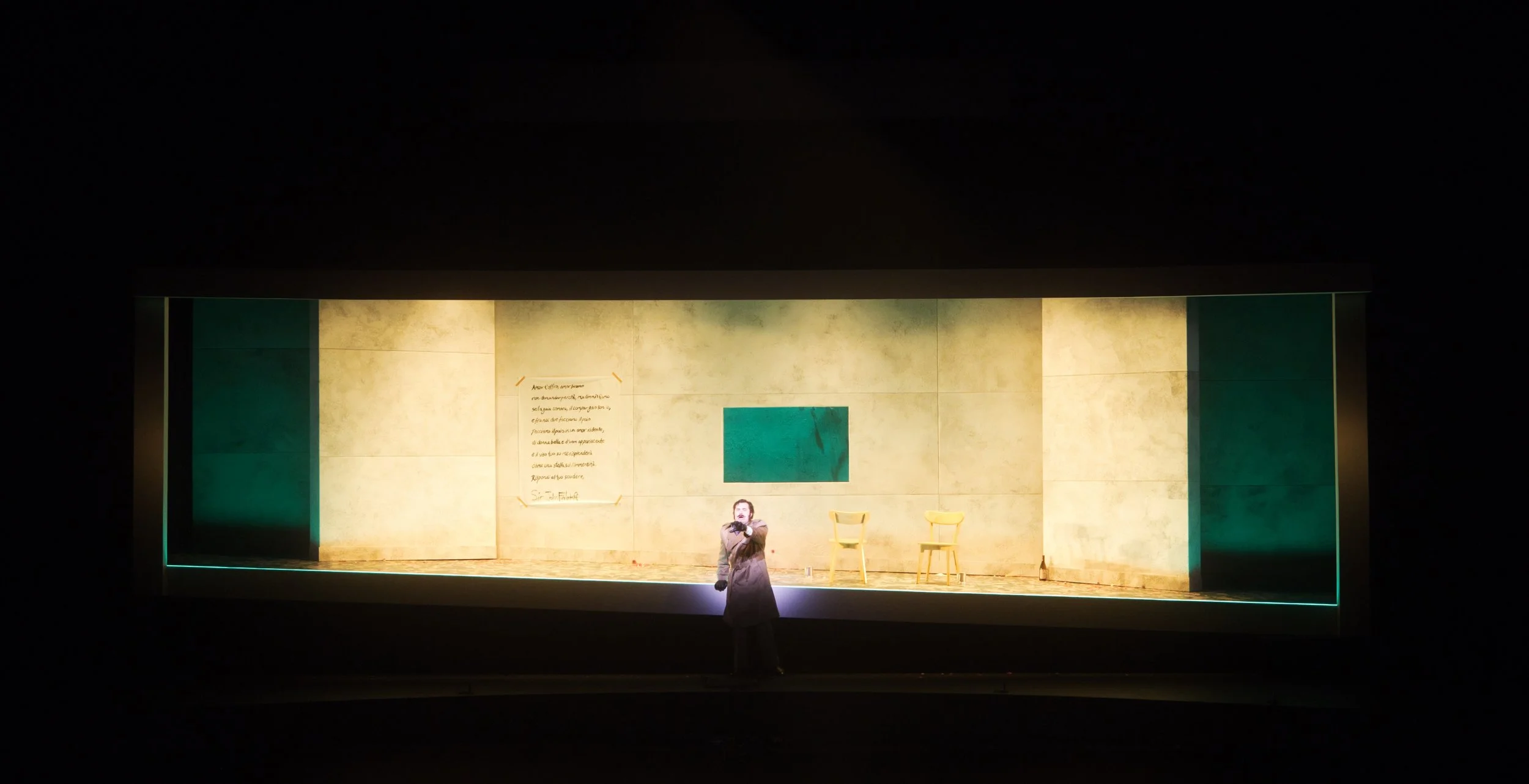
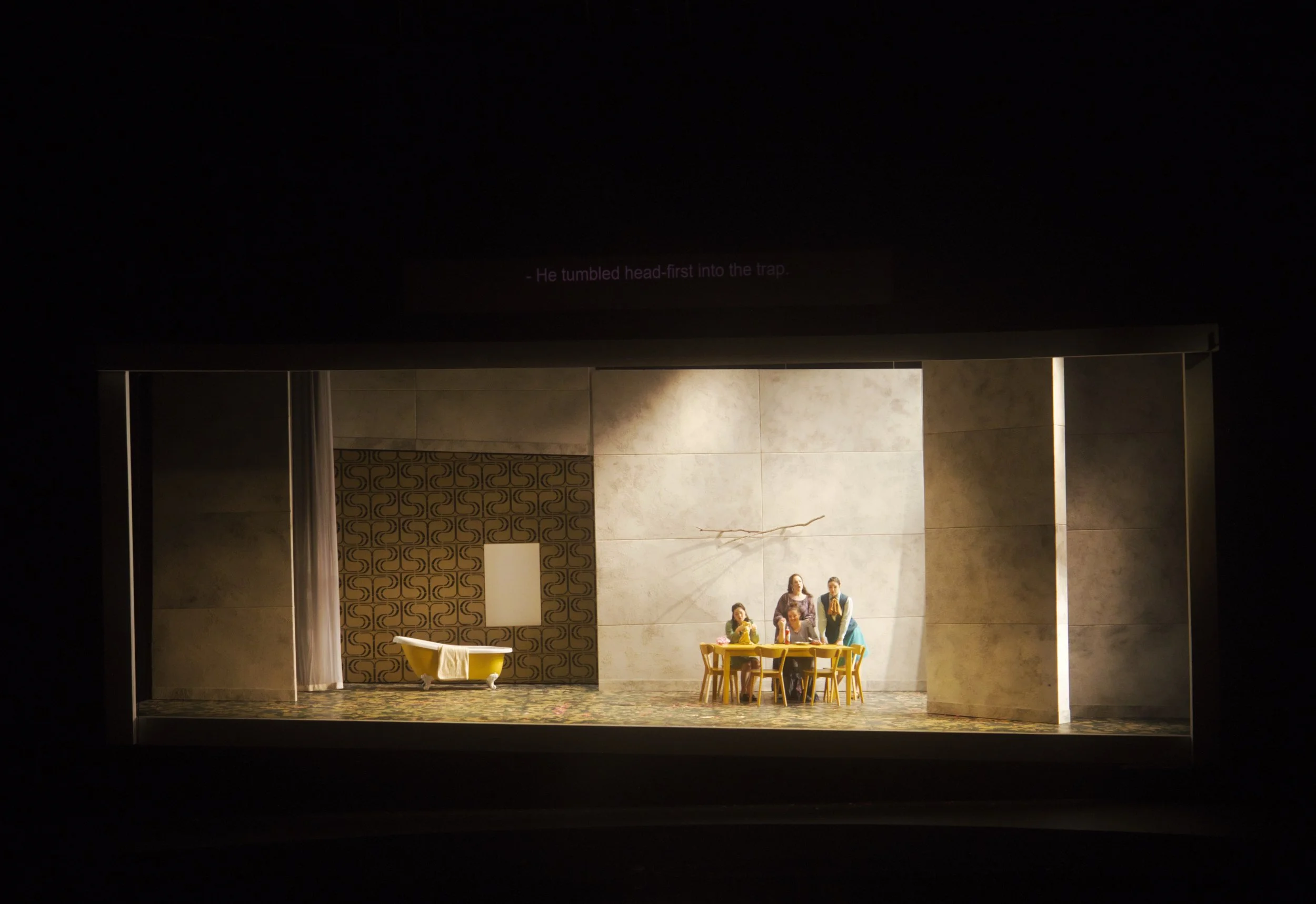
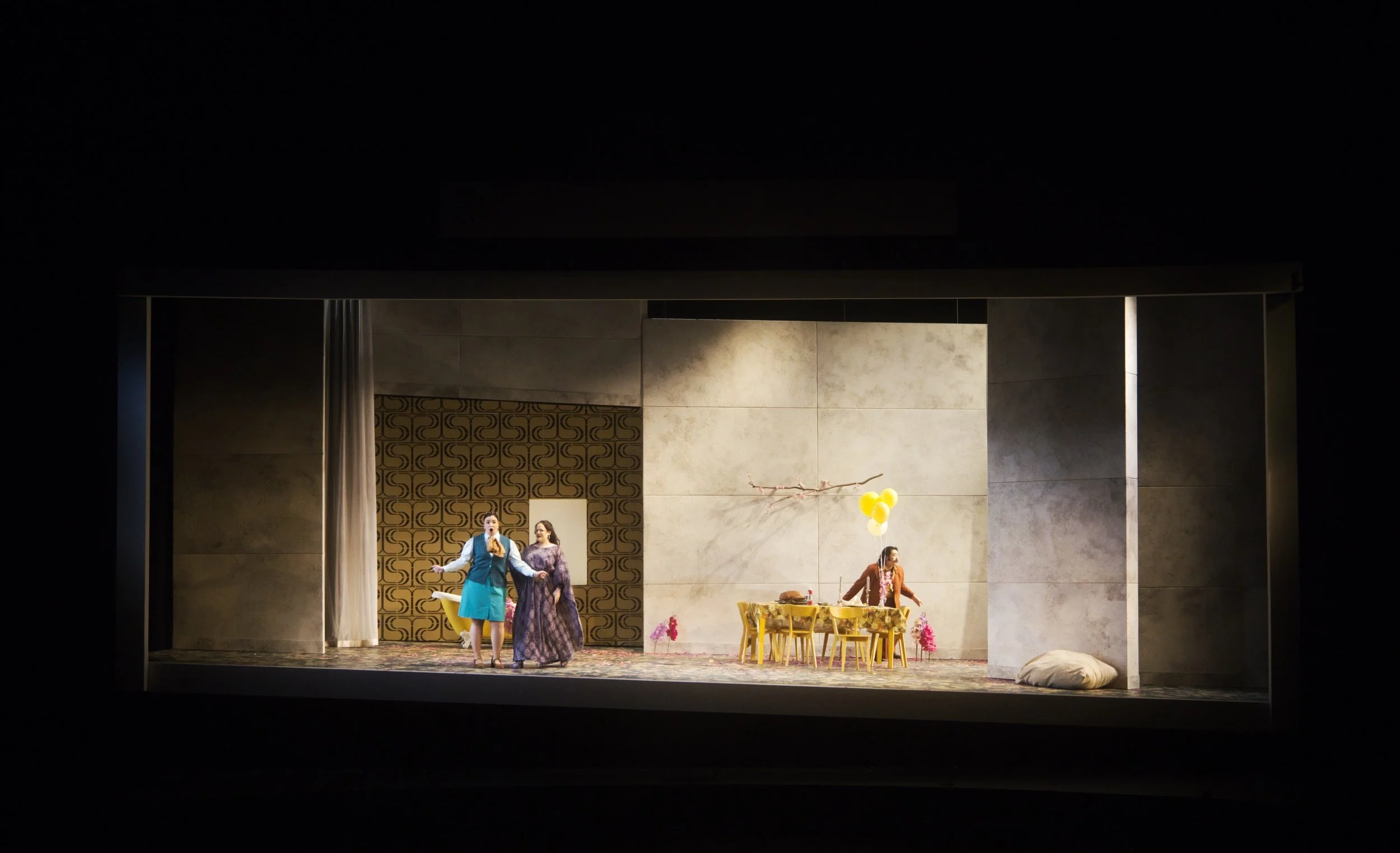
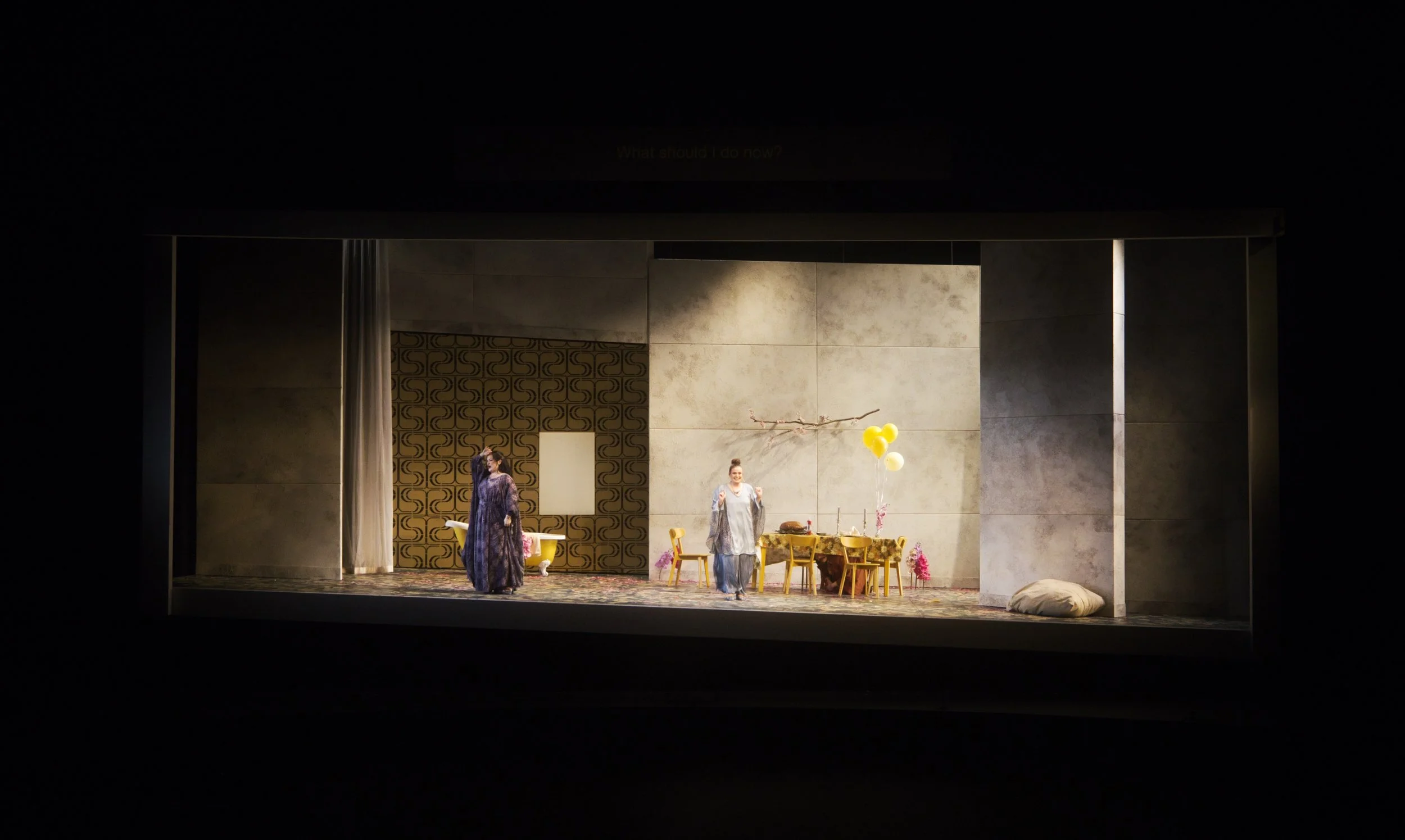
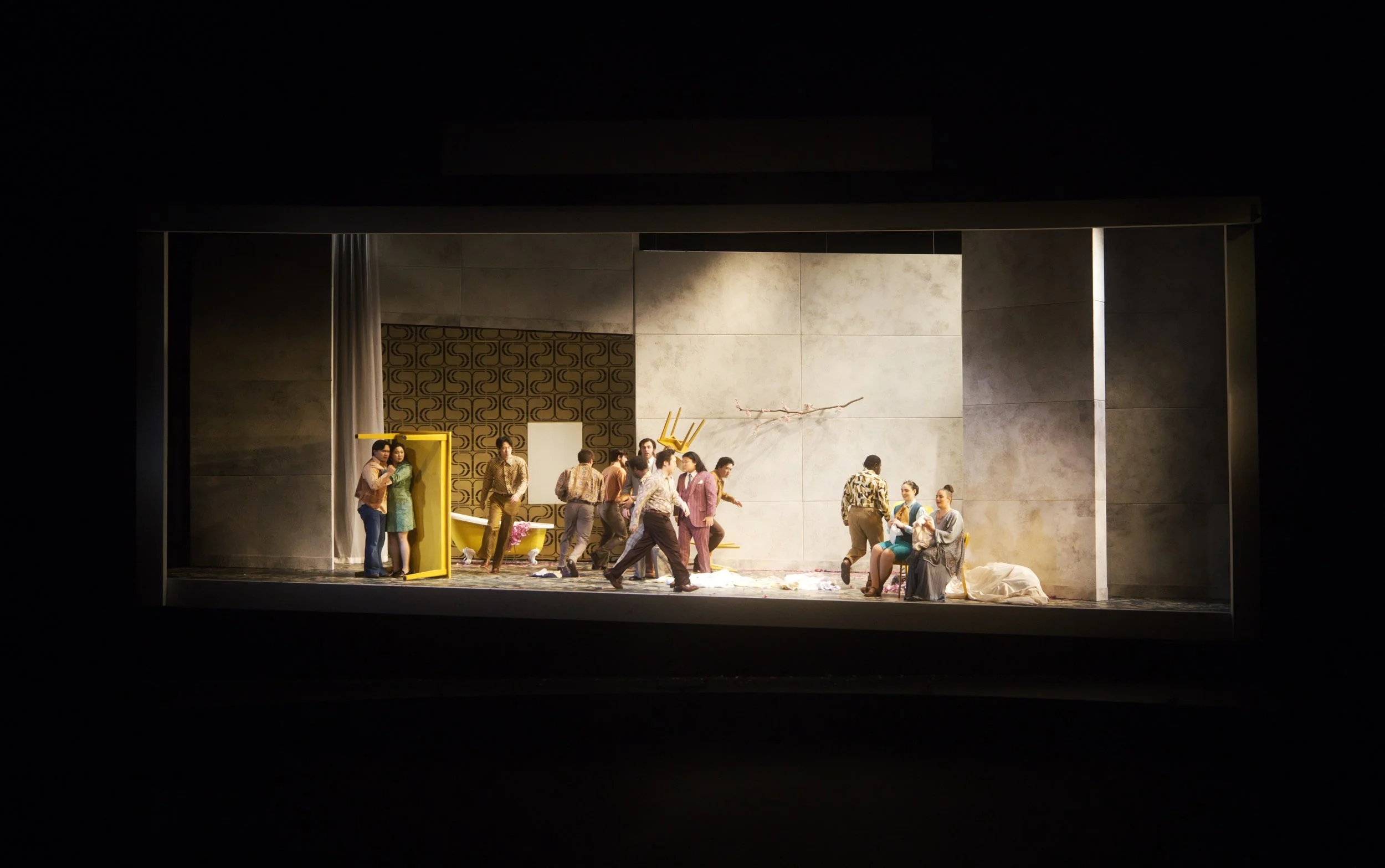
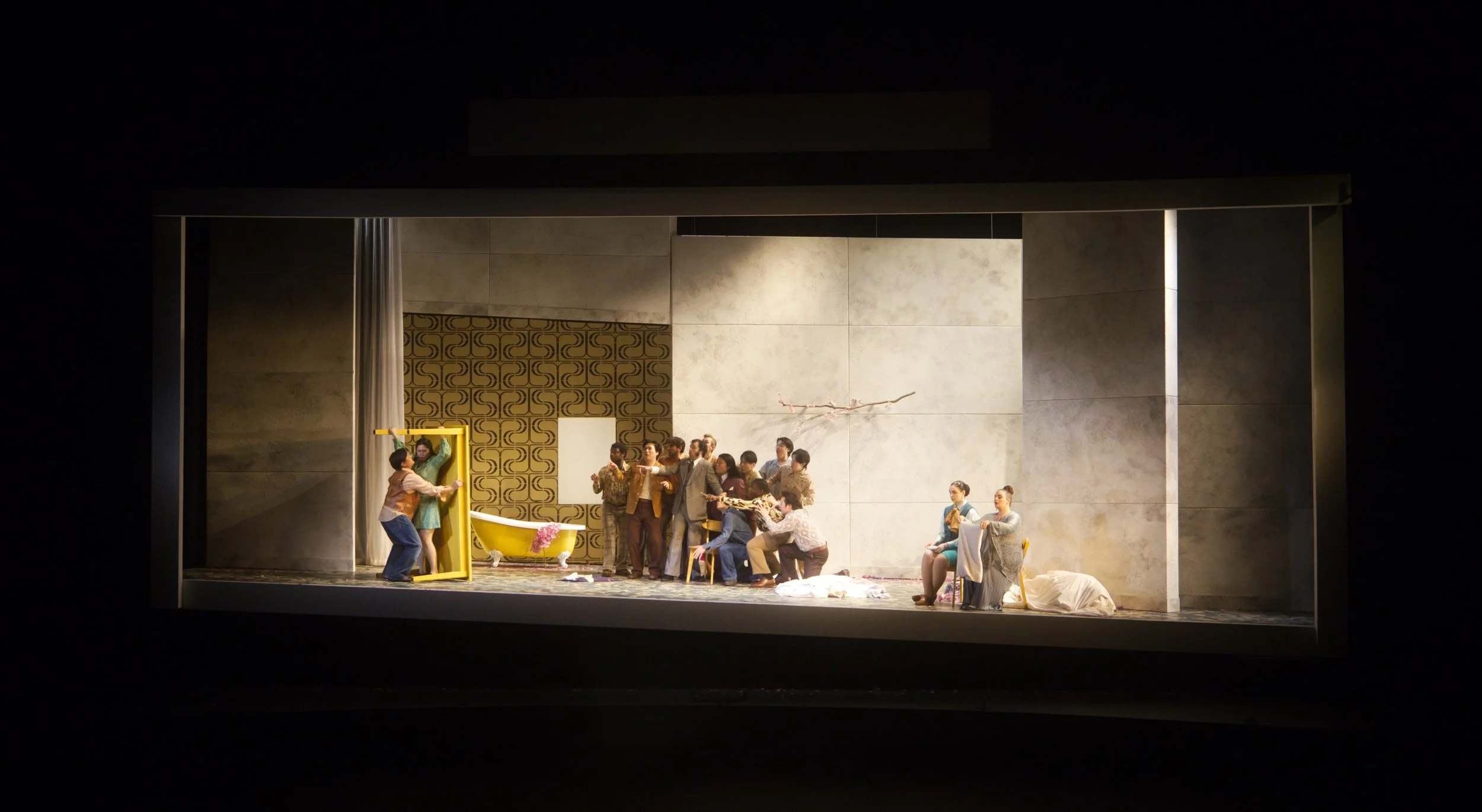
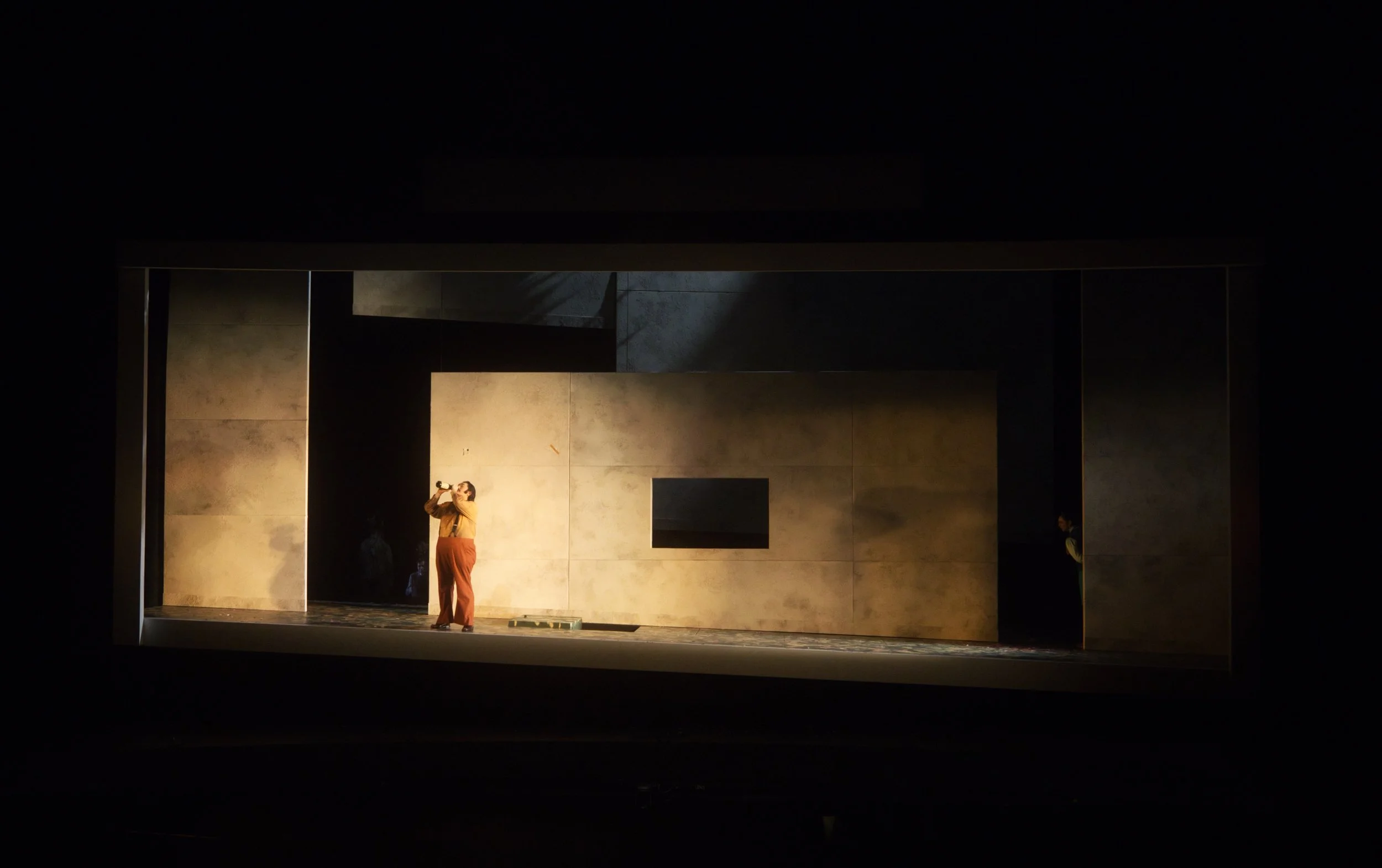
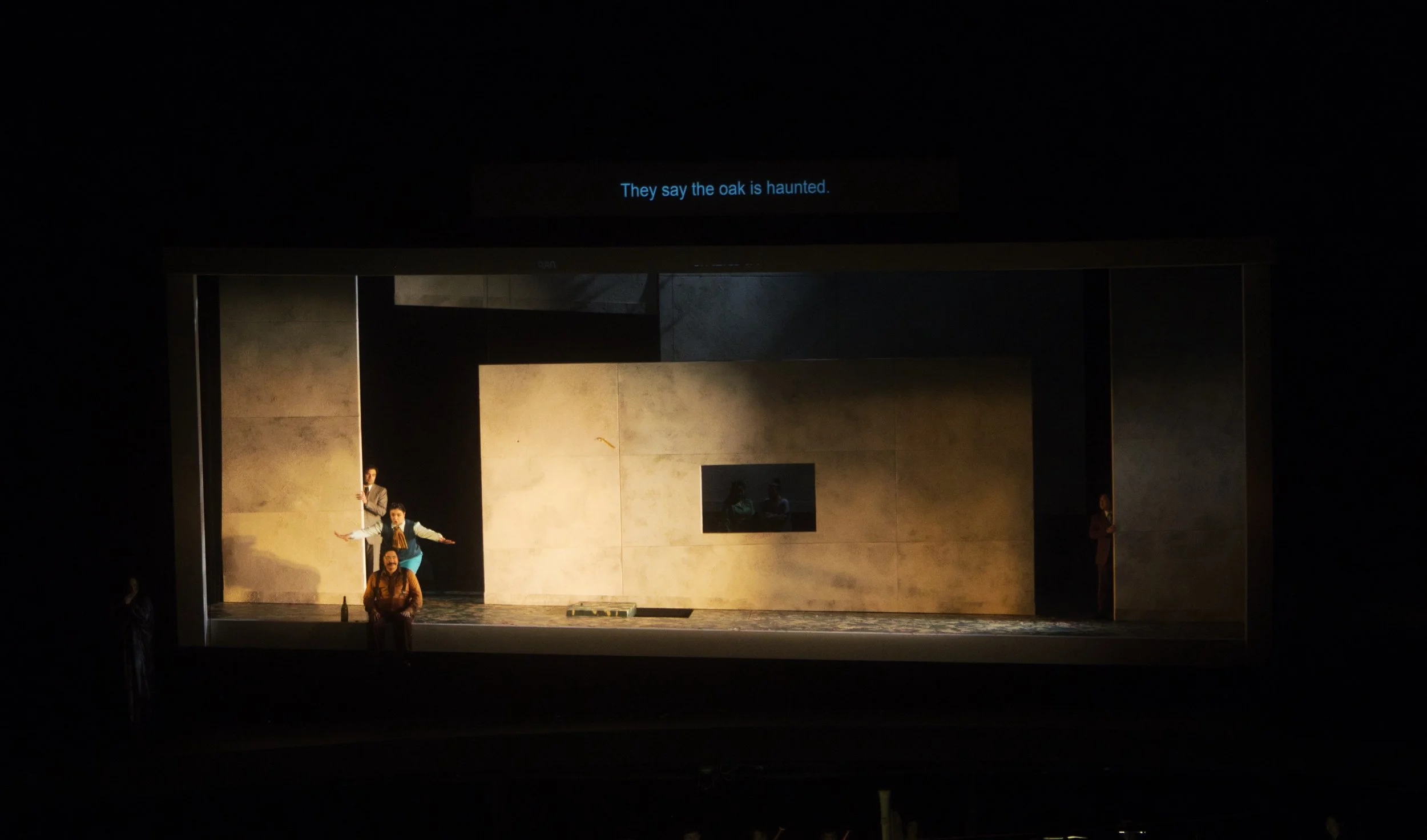
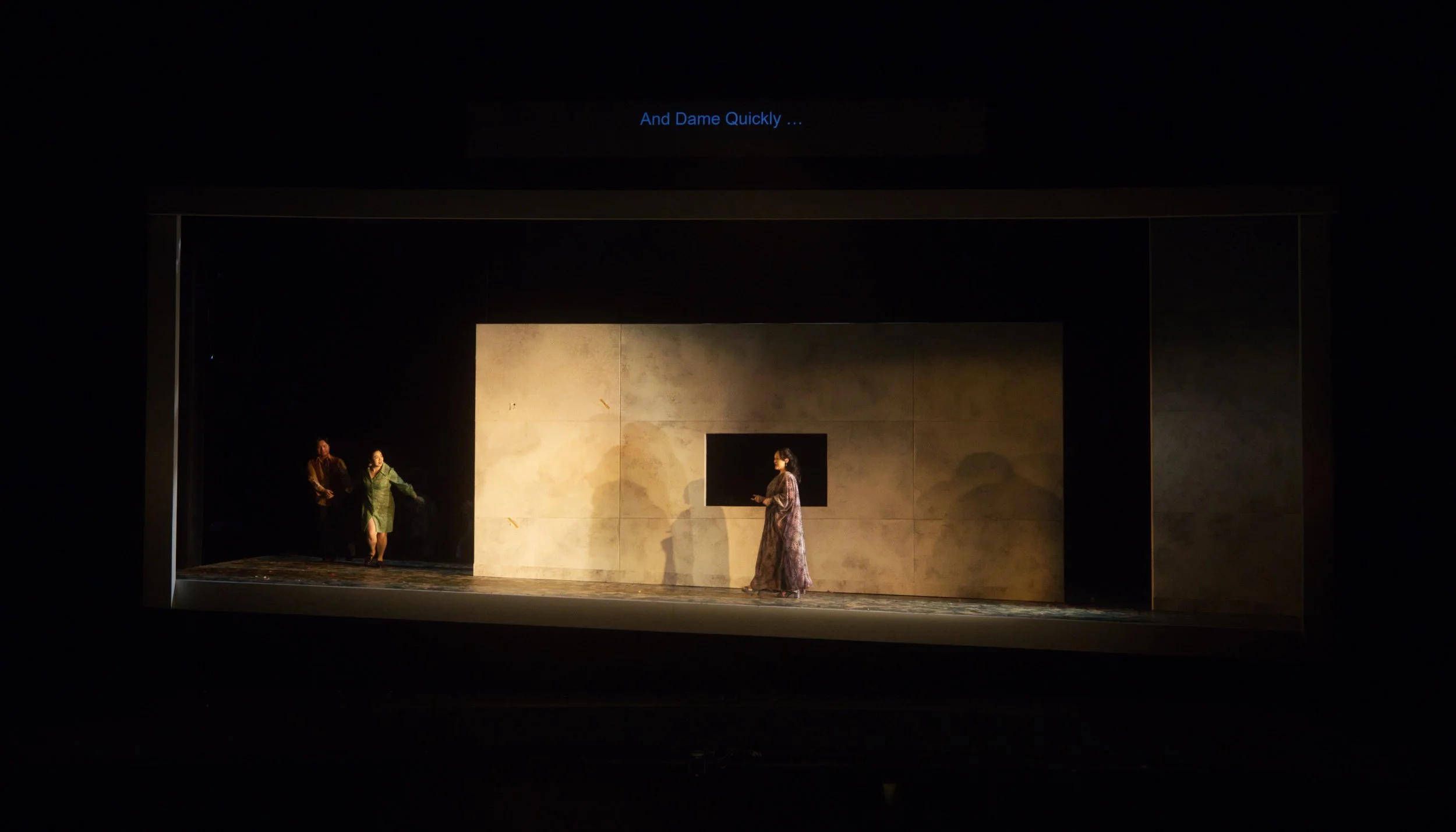
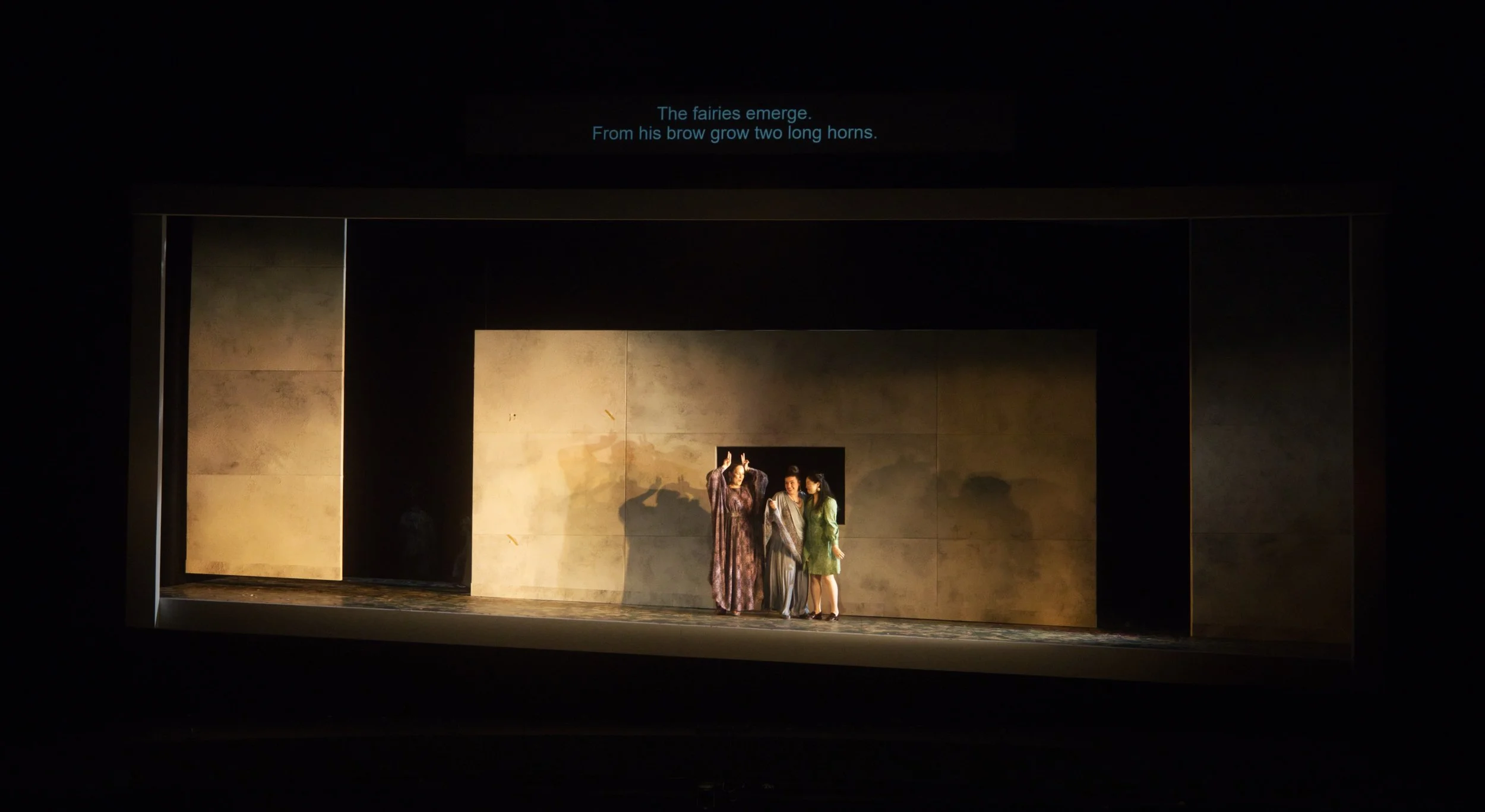
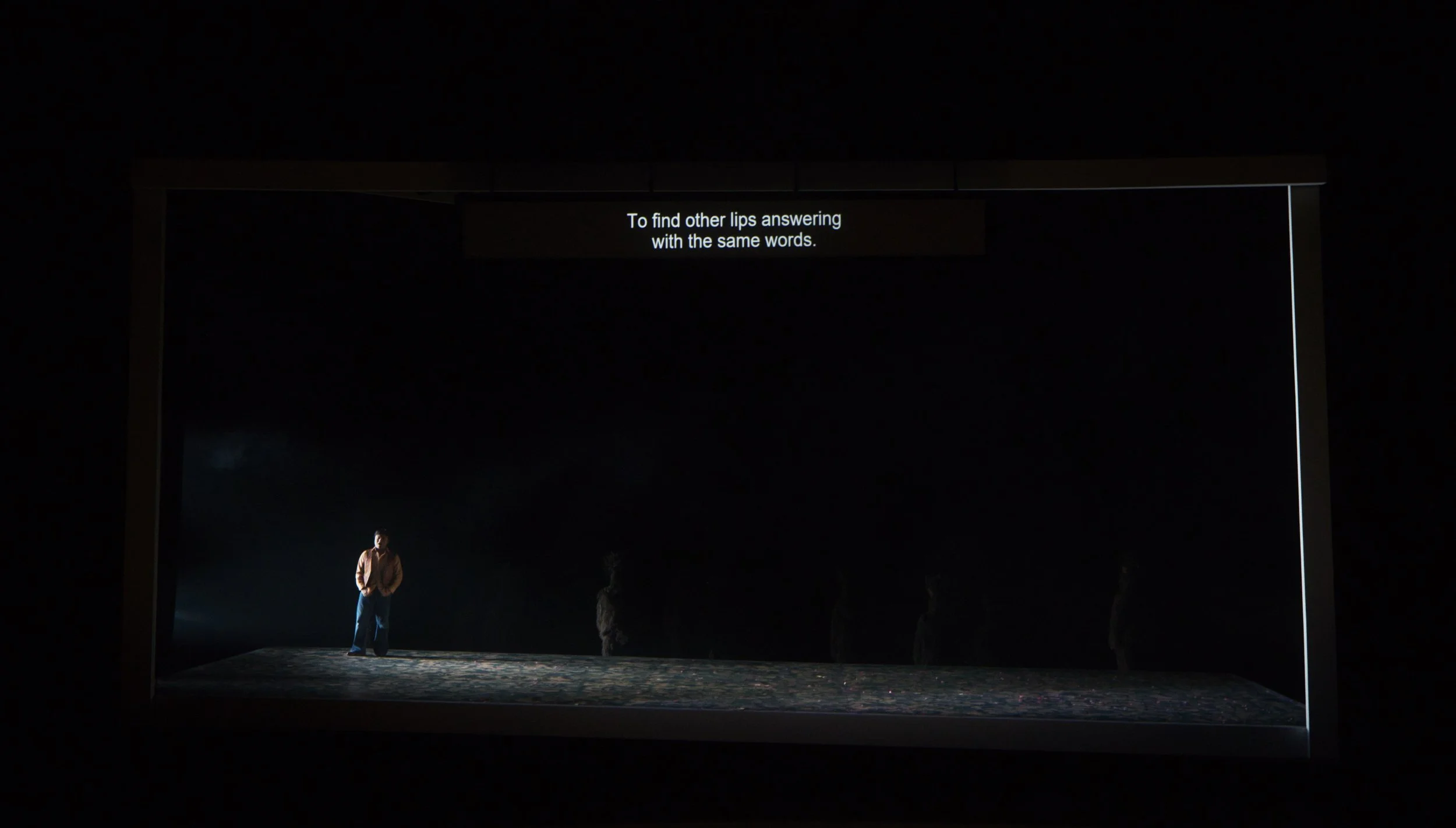
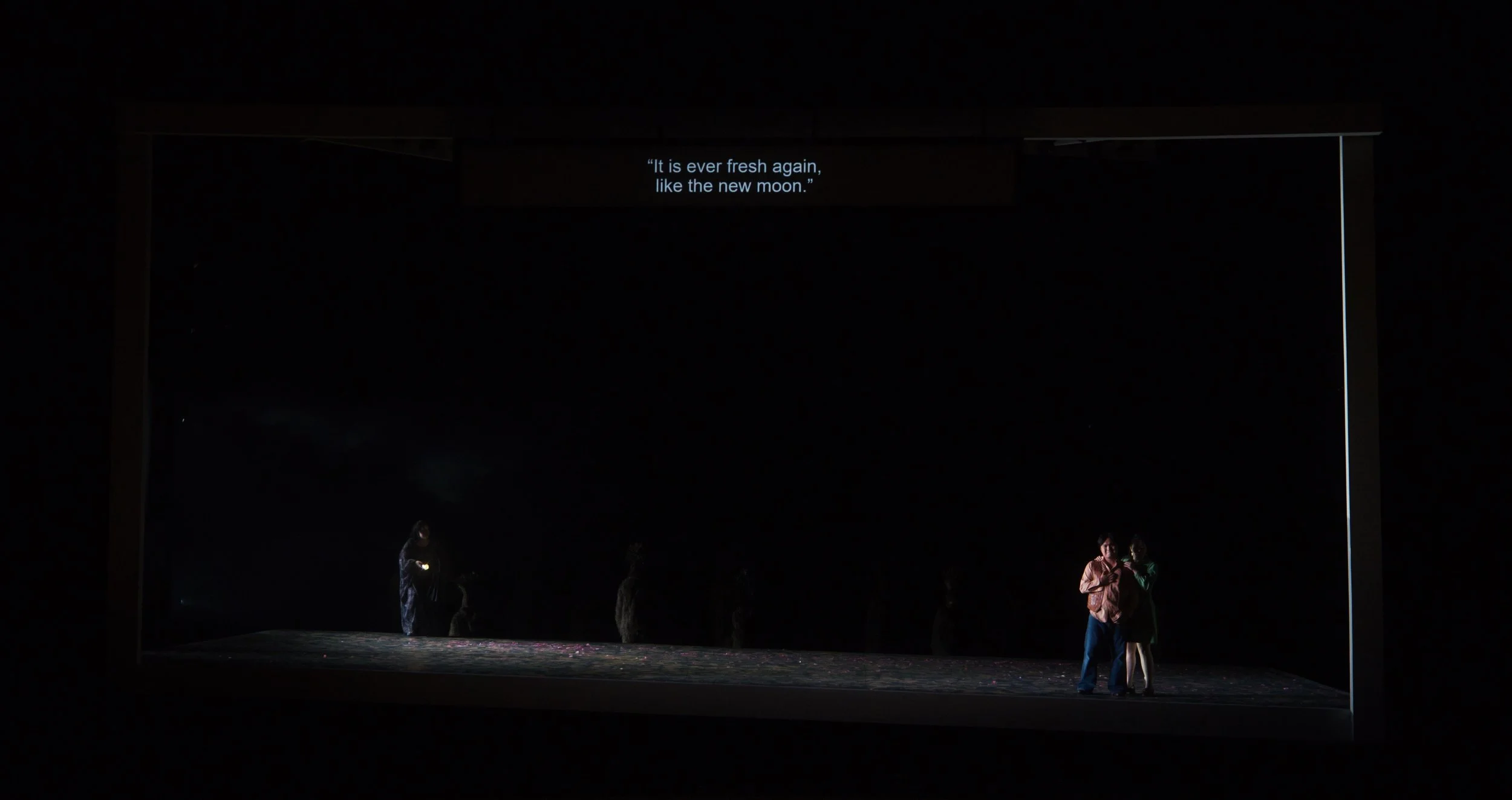
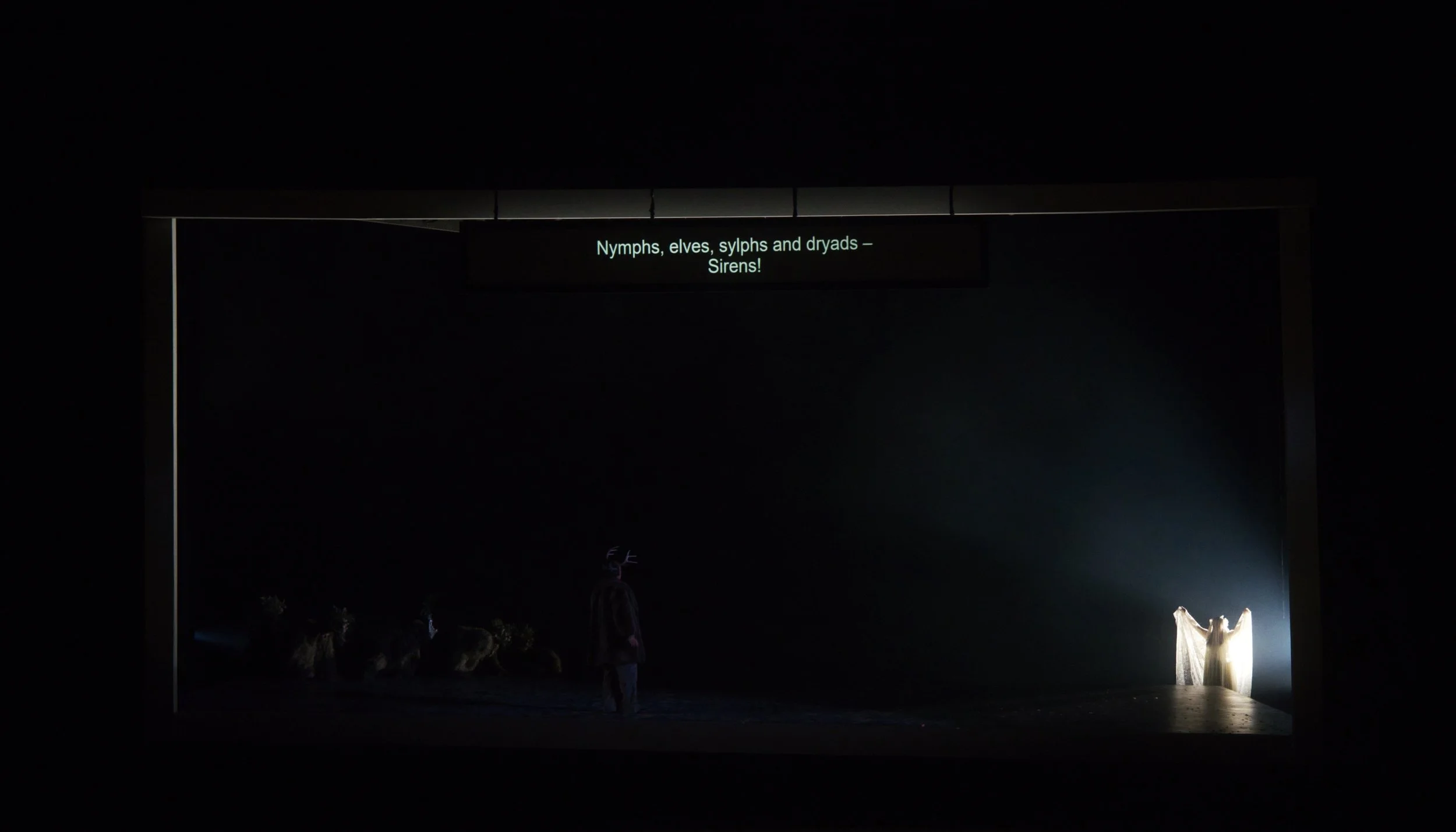
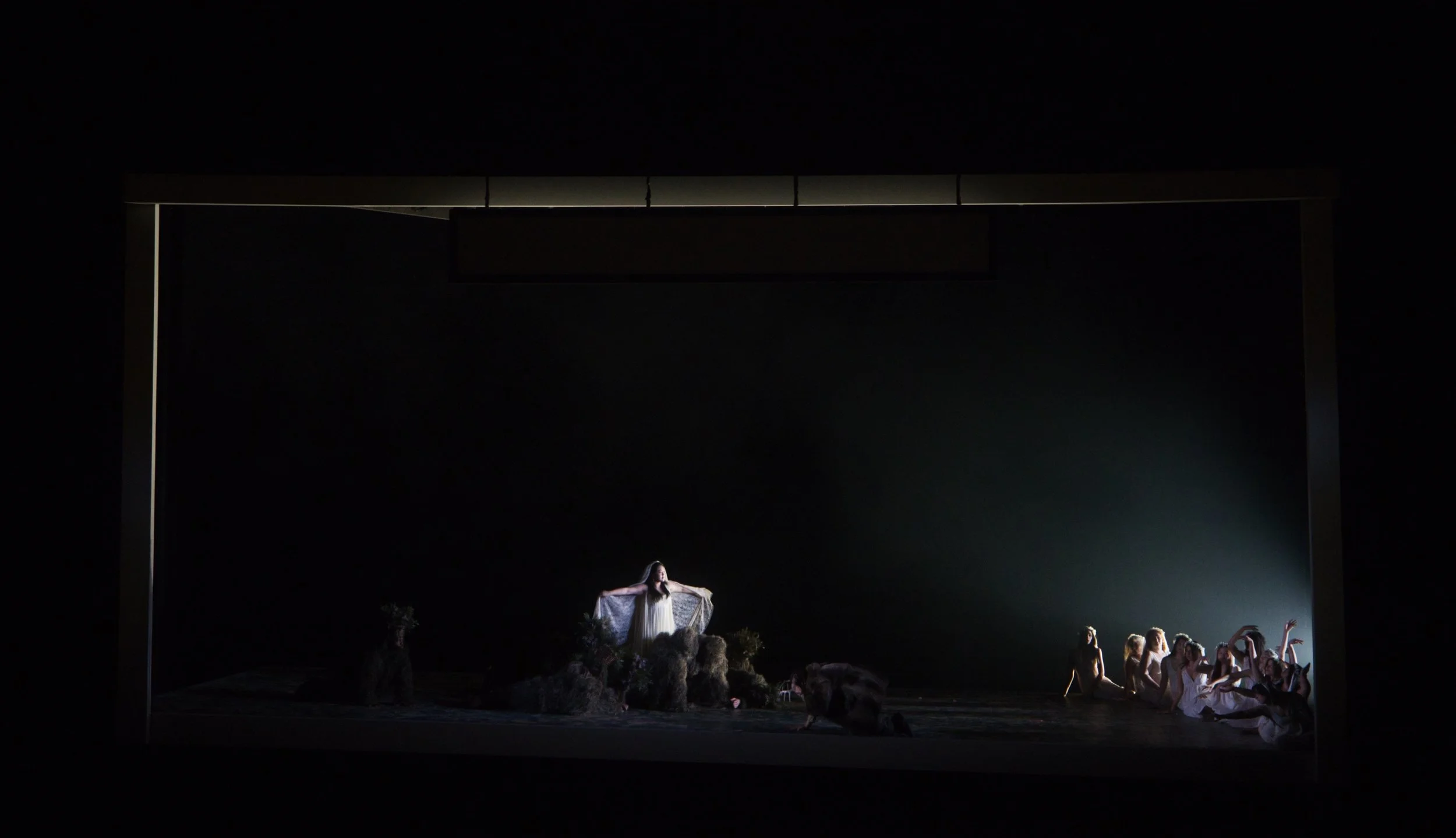
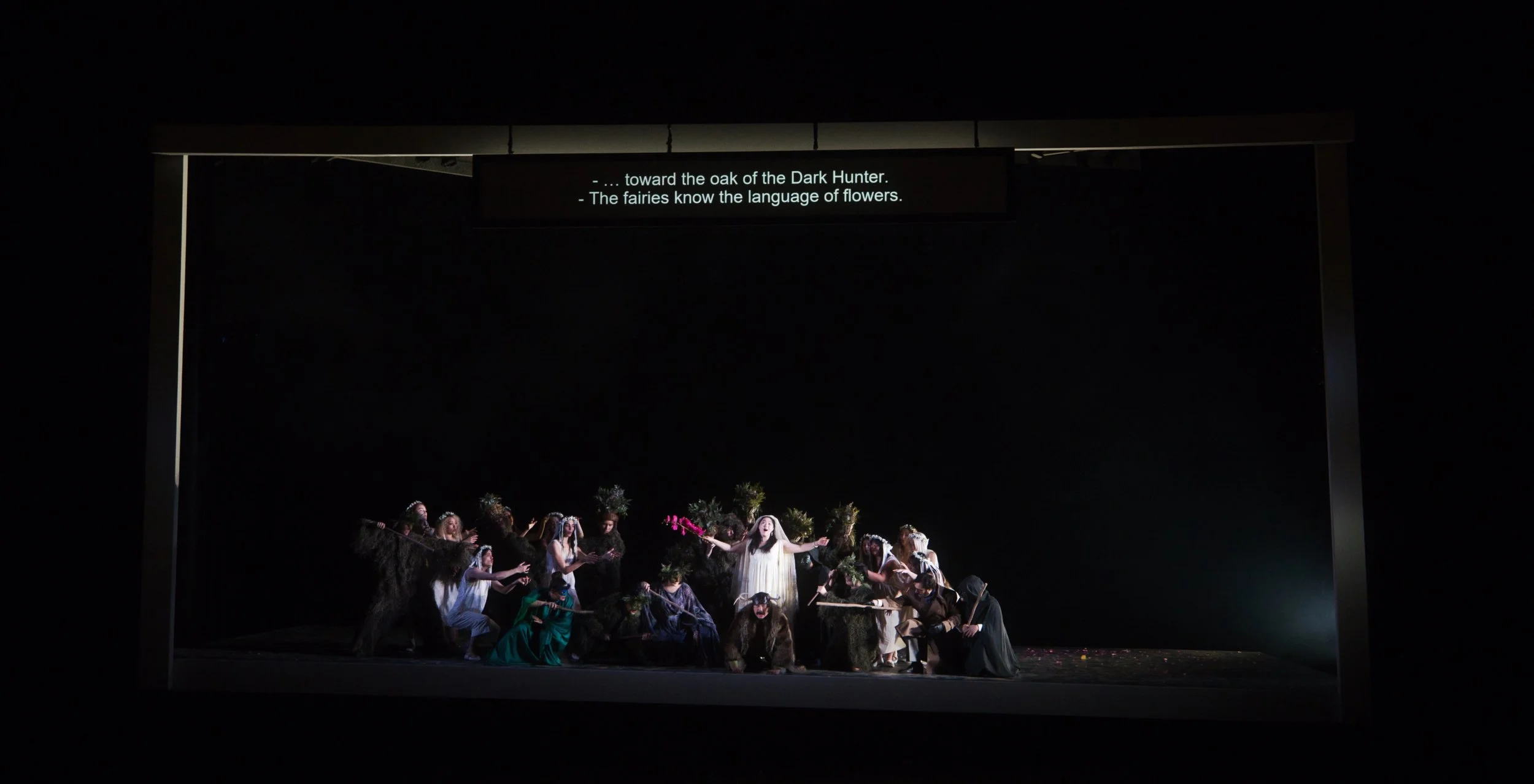
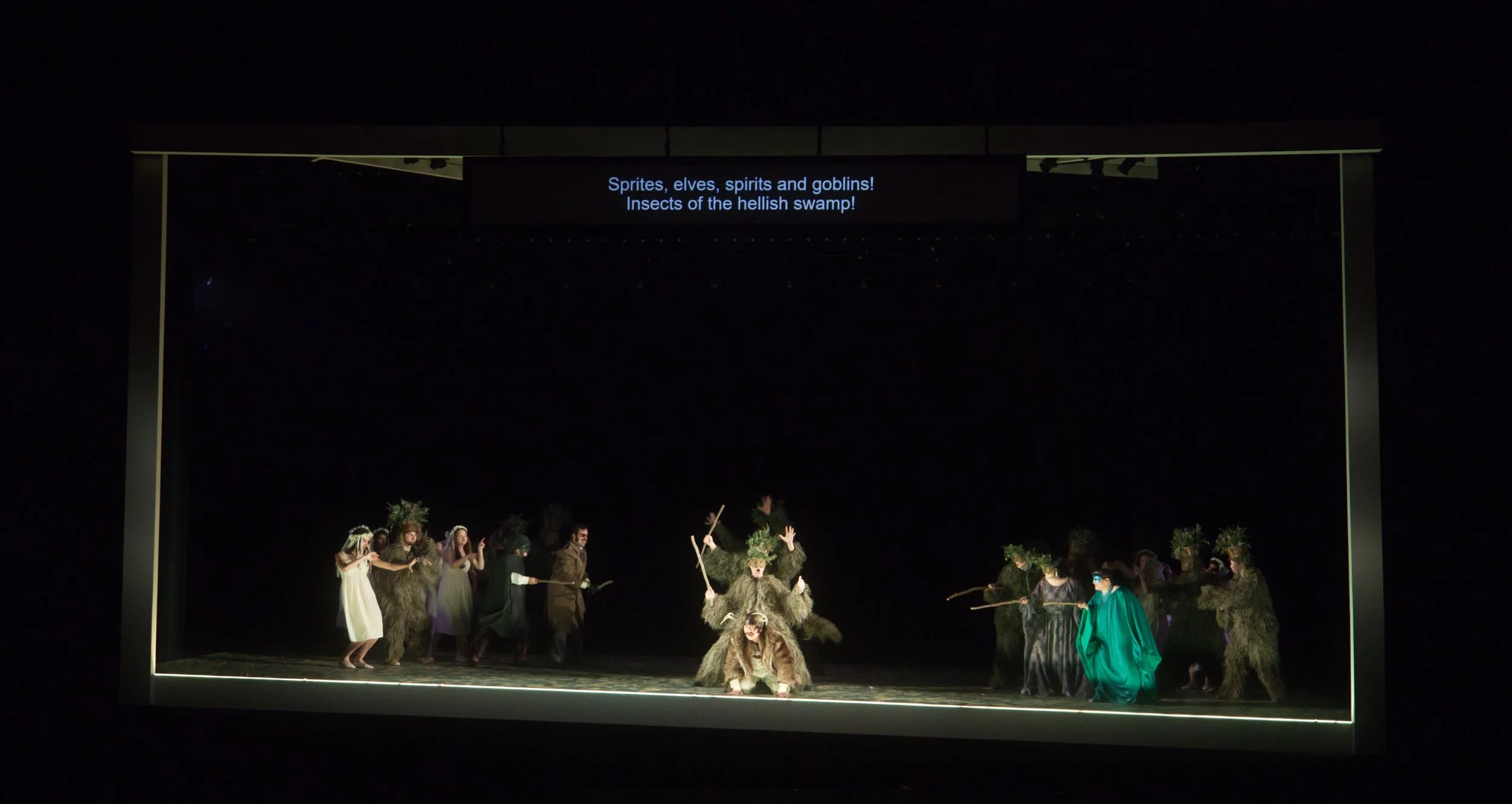
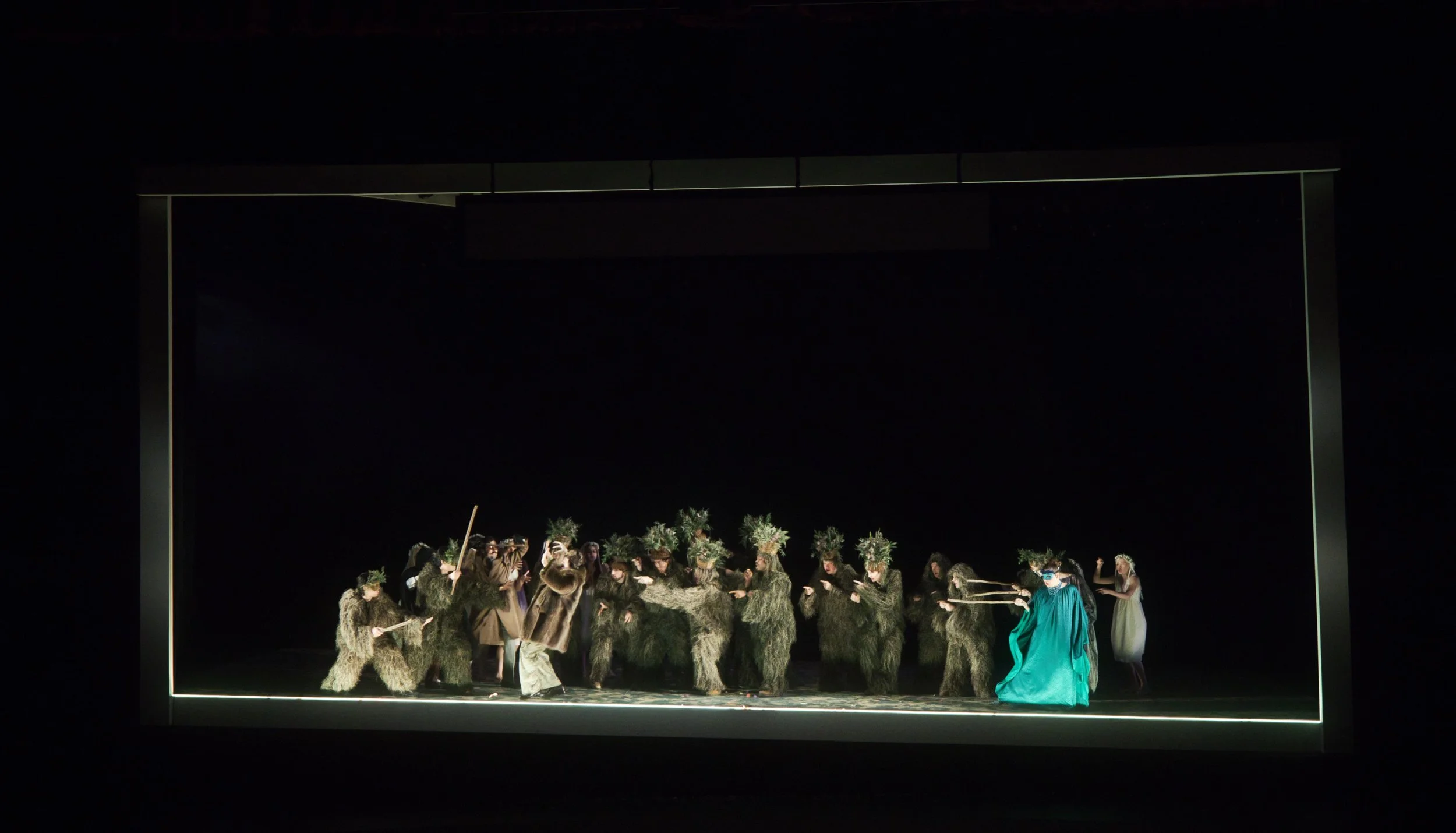
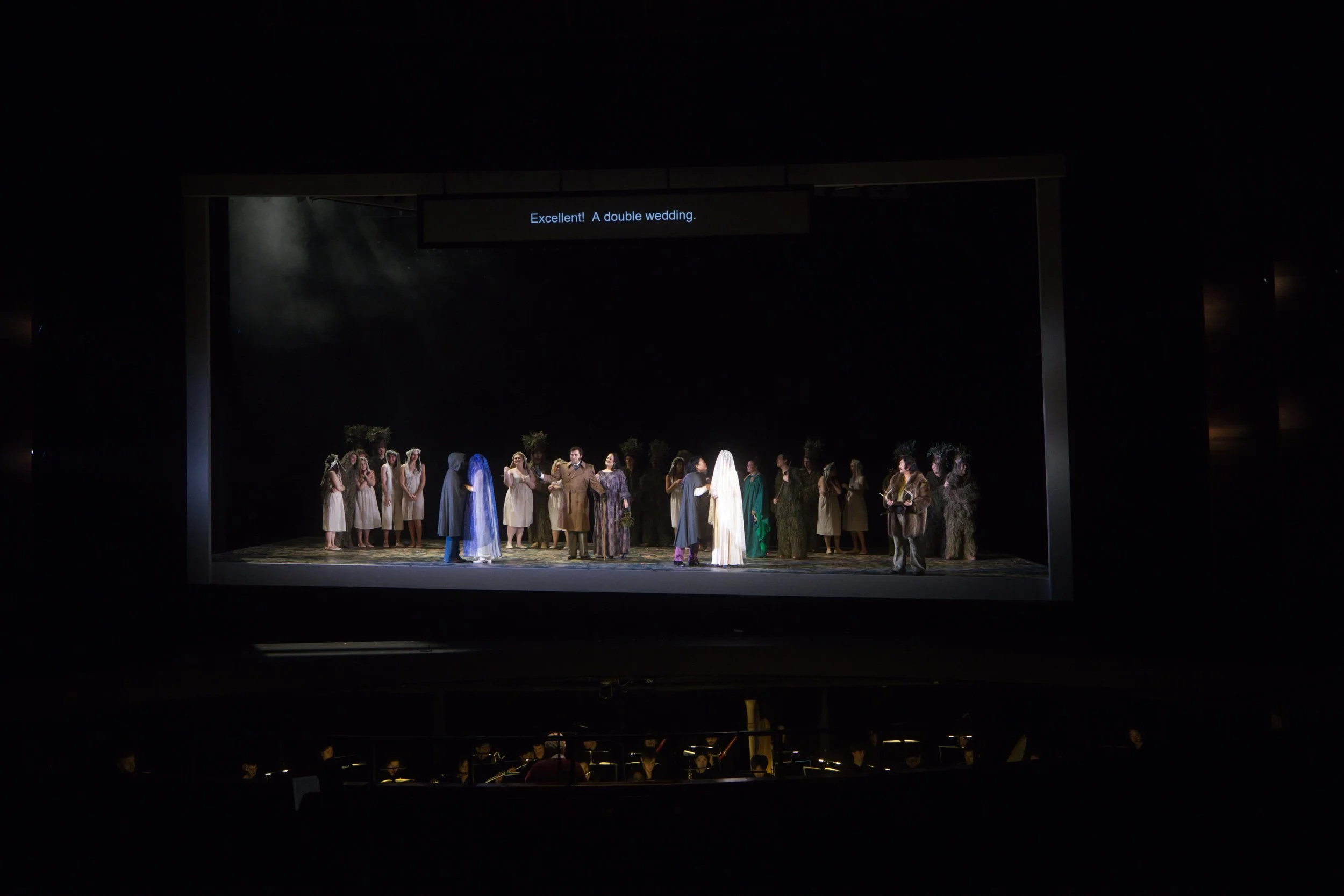
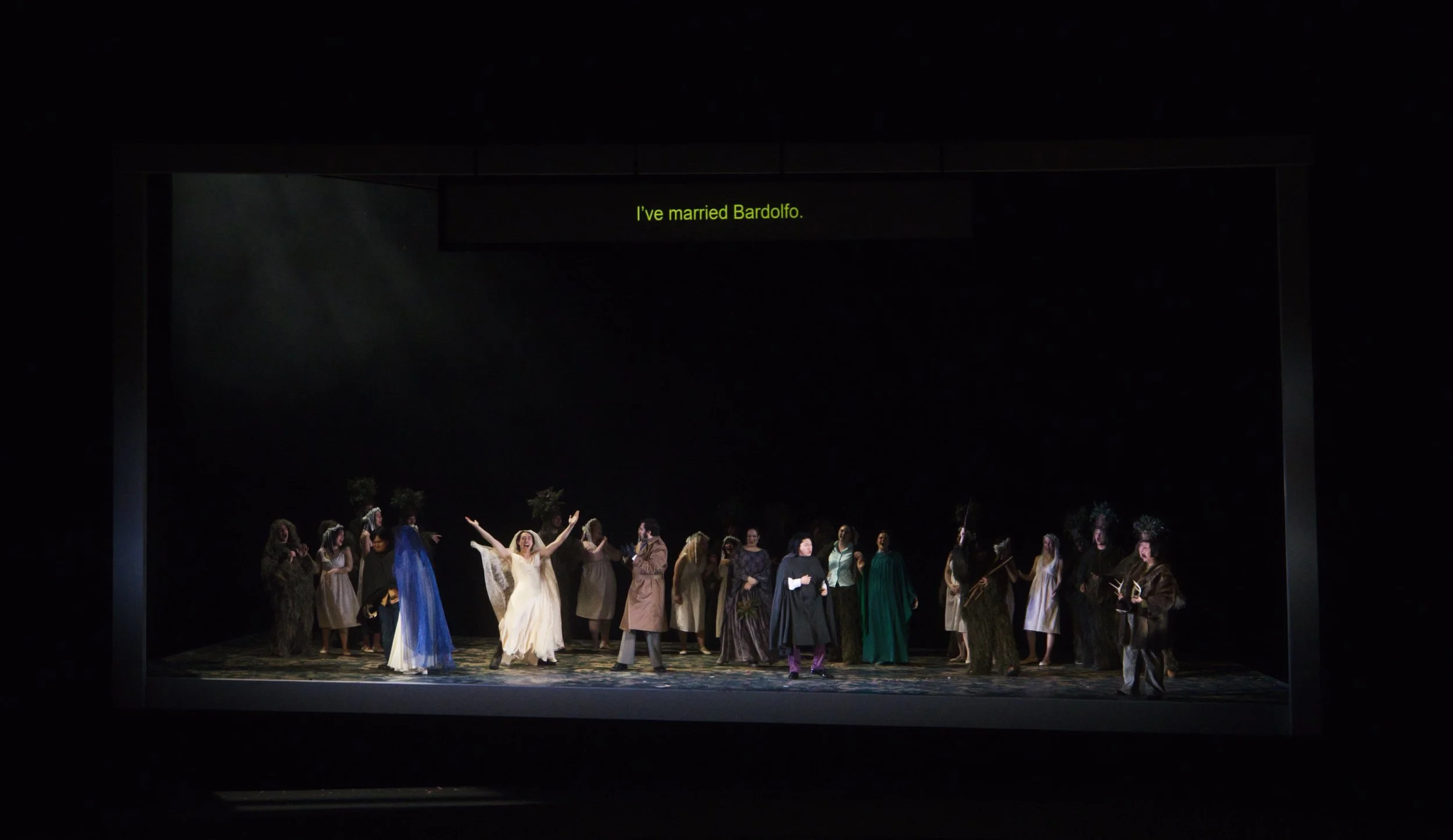
The scenic language is simple: a counter-raked deck with a trap door, eleven walls, two curtains, a set of chairs and tables, and a few additional elements, a flower drop and plastic orchids. It is a limited vocabulary, but one that can move.
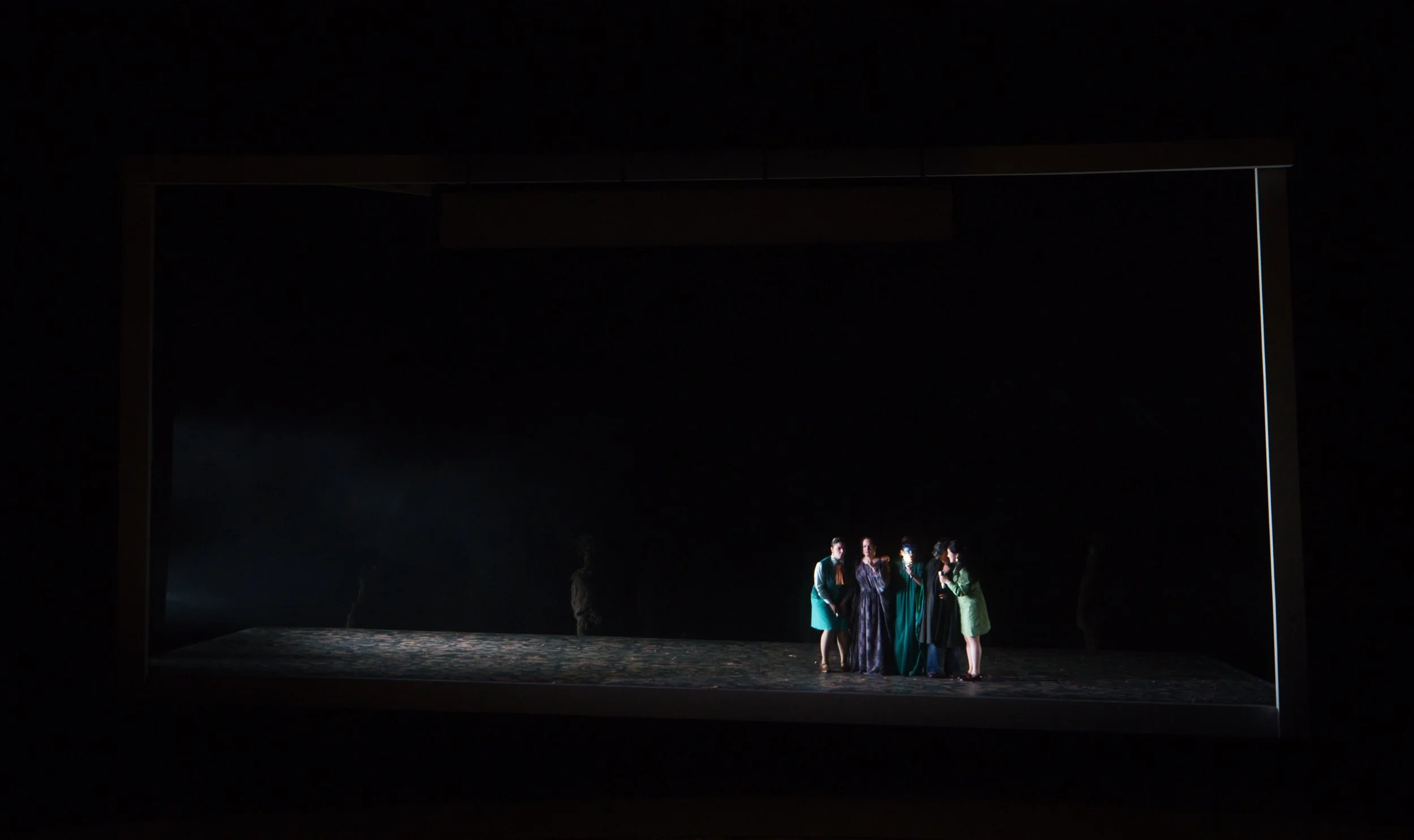
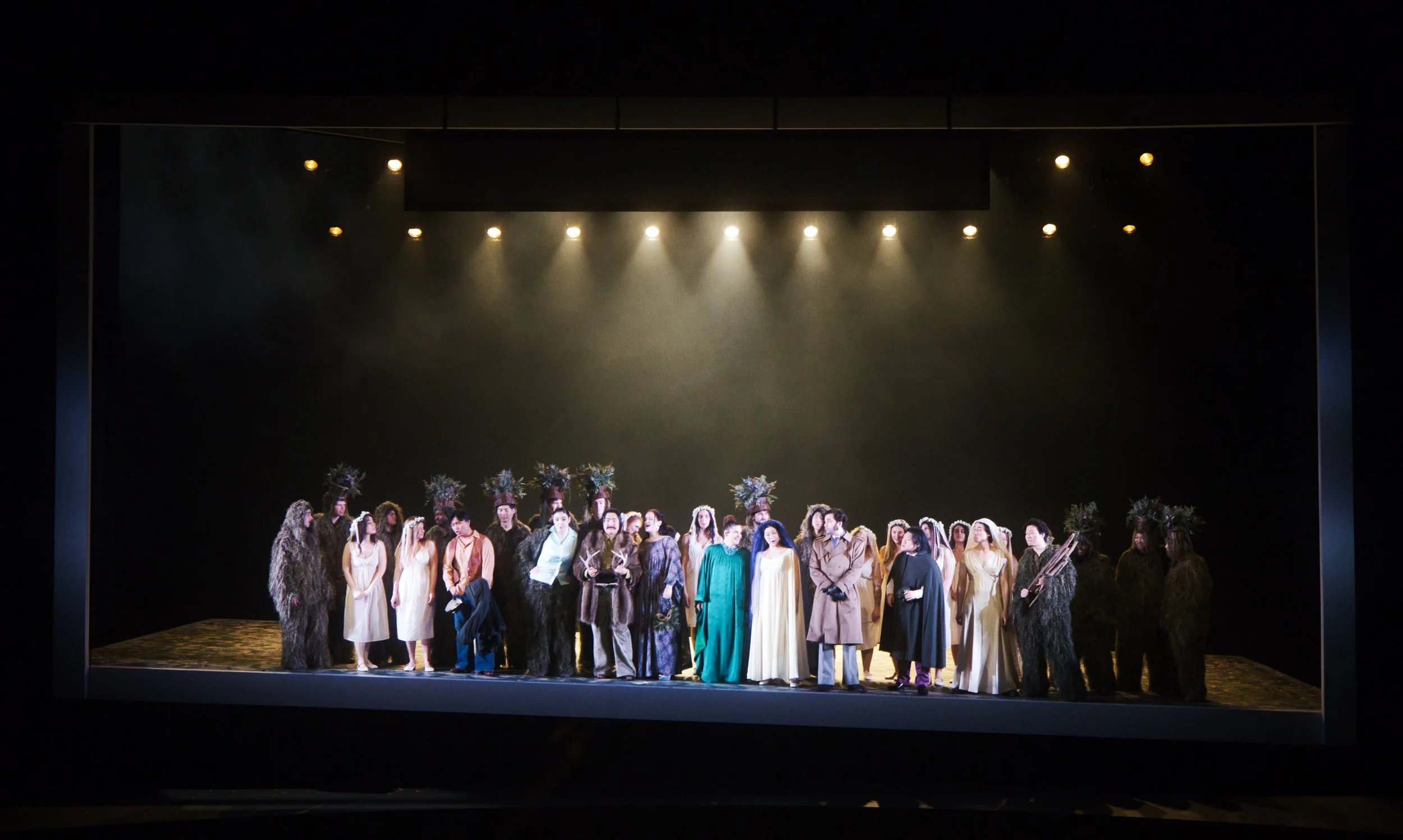
As a point of tension against the scenic abstraction, we chose 1970s Britain. It gave us a palette and a set of textures. It also offered a silhouette that feels close to the present. Many of the outfits Avery designed could read as contemporary without much adjustment.
Visually, we compose images as if each still could be a painting. I care that the mise en scène holds a contrast between light and dark, and that there is energy and depth across the image.
When you make work in an academic environment, even one as extraordinary as Juilliard, you encounter what I think of as the “conservatory effect.” An opera populated by characters of many ages is performed by artists who are all roughly the same age. This is not inherently a problem, but it creates a certain surface.
We wanted to minimize that. The proximity between 1970s silhouettes and contemporary clothing created a useful continuity, a small closing of distance between the piece and the people performing it
Falstaff, like Figaro, is tightly wound around story. Within our aesthetic frame, we worked to tell that story clearly. Some mechanics are adjusted, mostly for reasons of logistics and clarity rather than explicit interpretation.
Opera requires an enormous amount of stage energy to meet the energy of the orchestra. The most compelling sense of character often comes not from transformation, but from amplification, when a performer maximizes their own presence and the costume and small behavioral shifts do the rest.
There are certain instances when directing is about pure vision but most of the time, you are working within a very specific set of constraints: budget, casting, time, the quirks of a theater, institutional pressures, personality dynamics. All of it forms a problem set.
The way a creative team solves those problems becomes the interpretation. A team’s voice emerges through those accumulated decisions. When those decisions combine with the totally mysterious and wonderful way that the performers bend the production around themselves, the result is totally different than what we set out to make. And hopefully way more interestin
process text