la passion de simone
Saariaho + MAALOUF
2026, 70 minutes. staged oratorio. light, sound, space, costume, prerecorded audio, prerecorded video, sound design. CURTIS institute of music. Curtis new music ensemble. Prince Film center, philadelphia, Pennsylvania
La passion de Simone
Kaija Saariaho, Amin Maalouf
Curtis Opera Theater + Curtis New Music Ensemble
Conductor - Marc Lowenstein
Director - Marcus Shields
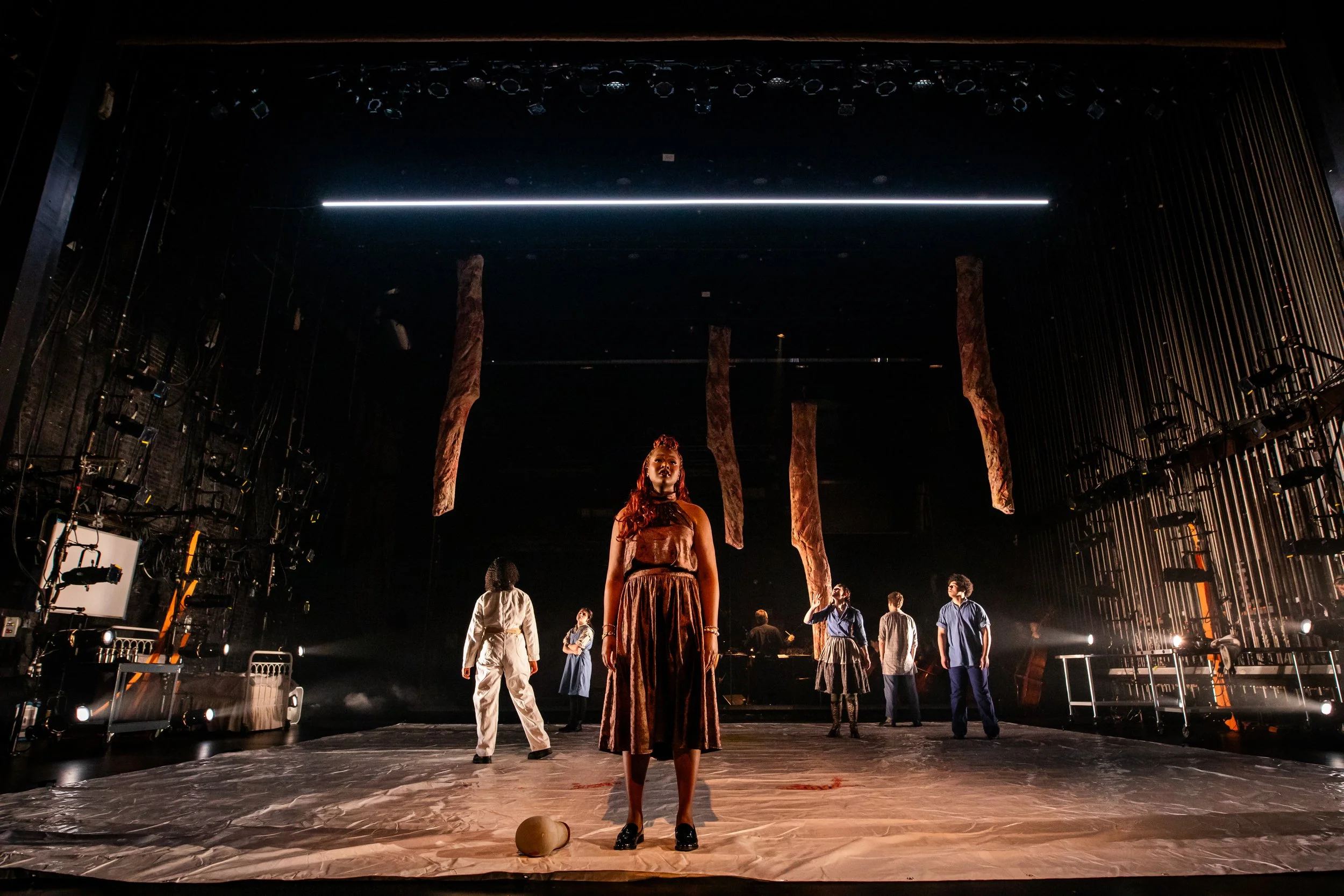
Set and Light - Frank Oliva
Associate set and light - Adrien Yuen
Costume - Amanda Gladu
Sound - Chris Sannino
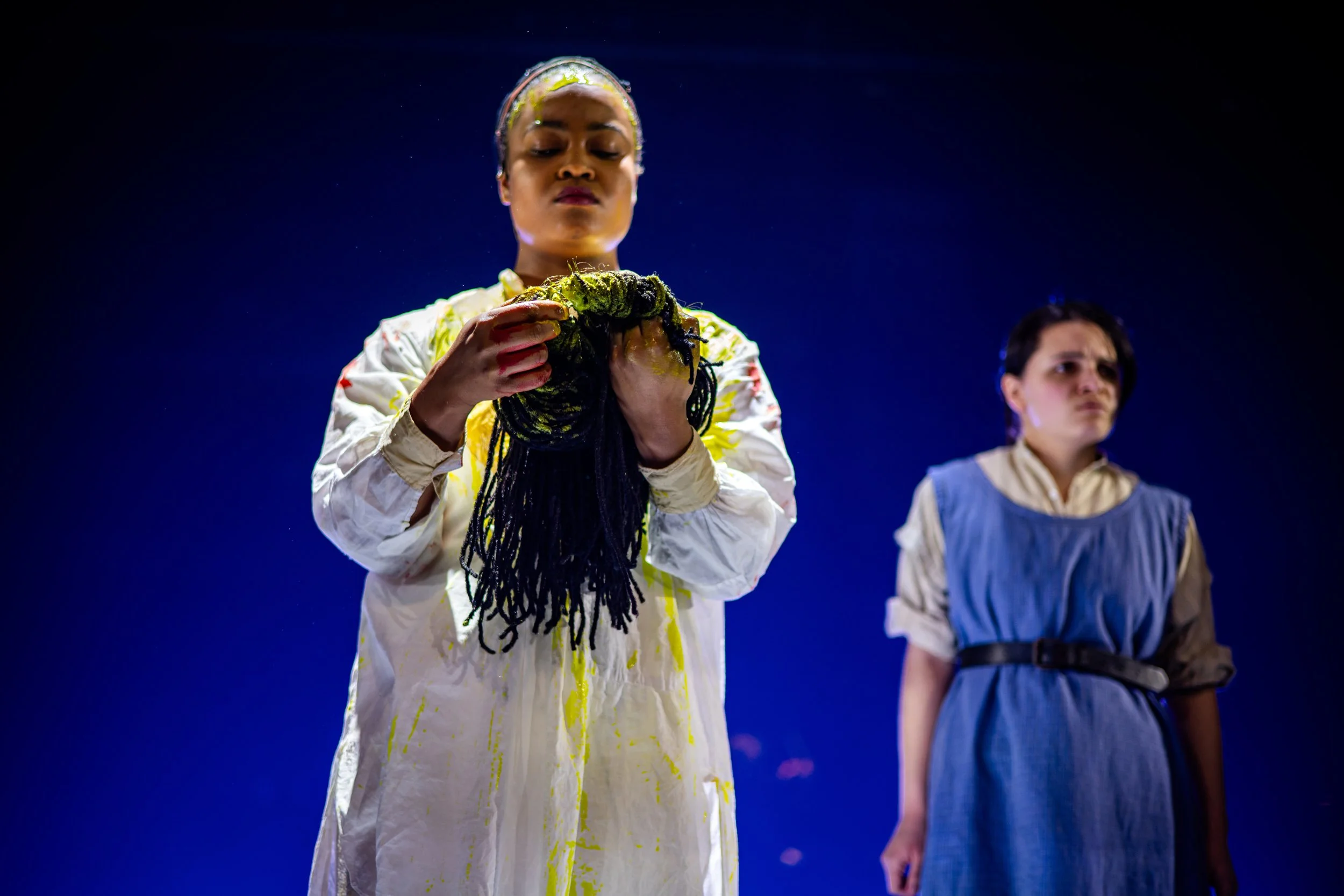
Wigs + Makeup - Brittney Rappise
Narrator - Nikan Ingabire Kanate | Juliet Rand (cover)
Reader - Jeysla Rosario Santos
Soprano - Maya Mor Mitrani
Alto - Carlyle Quinn
Tenor - Henry Drangel
Bass - Sebastian Wittmoser Herrera
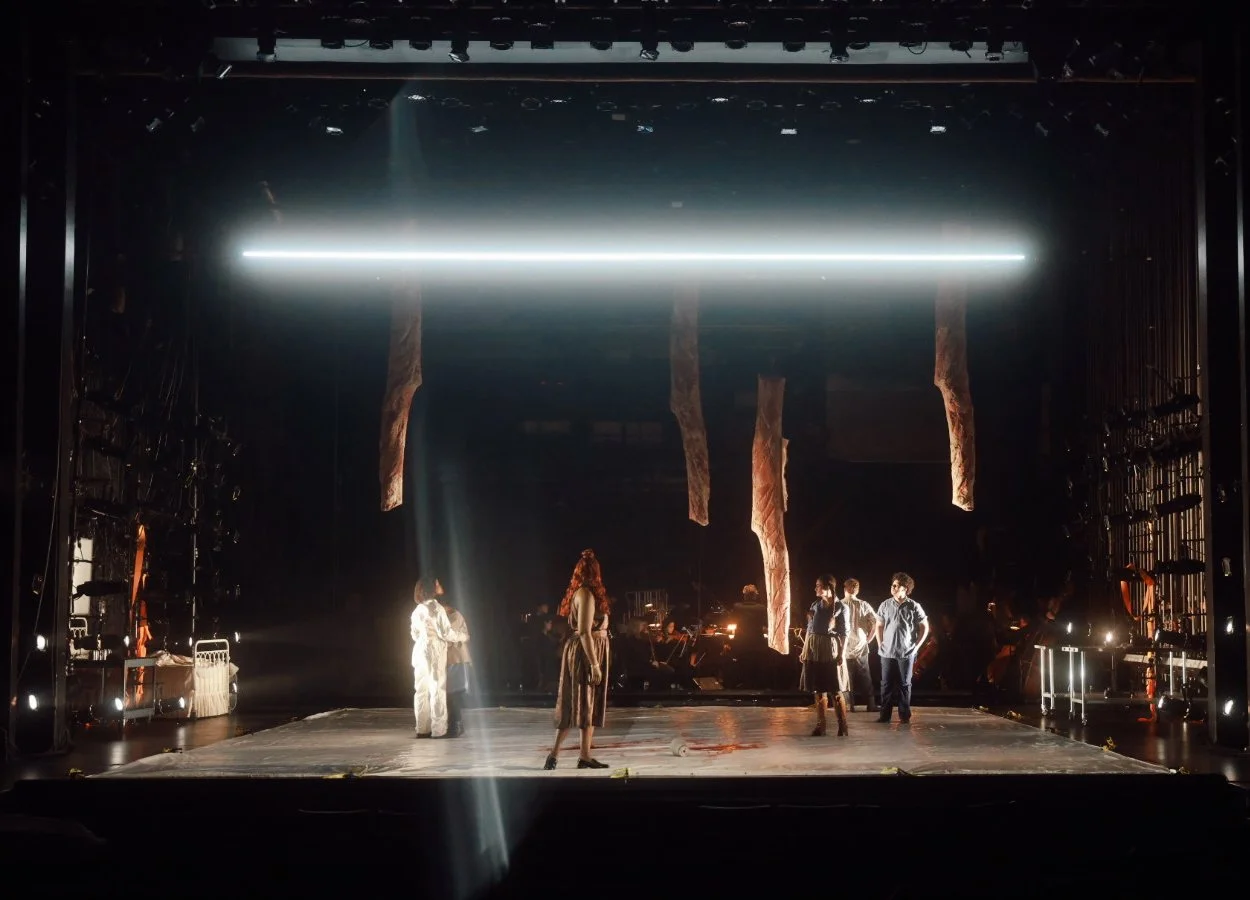
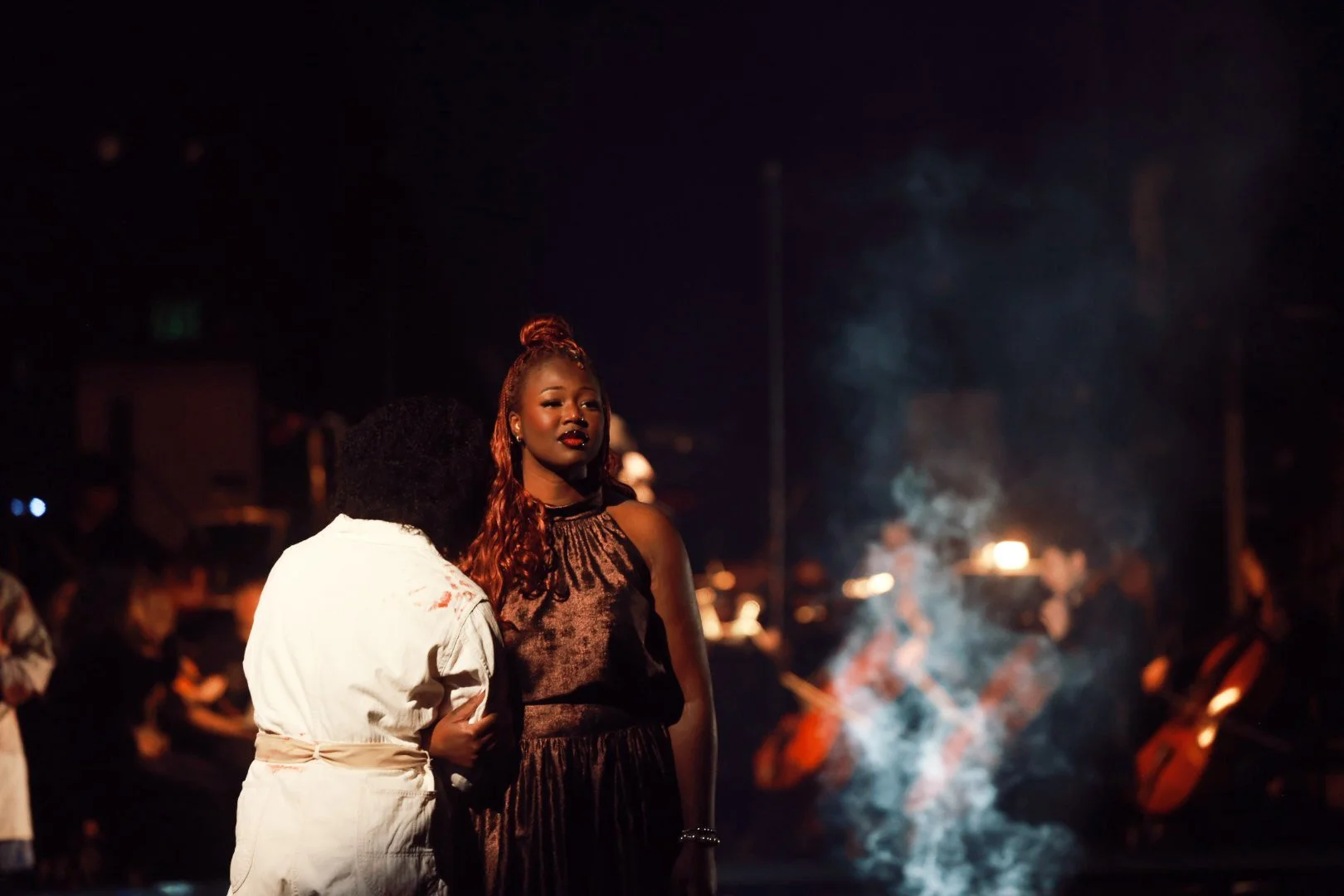
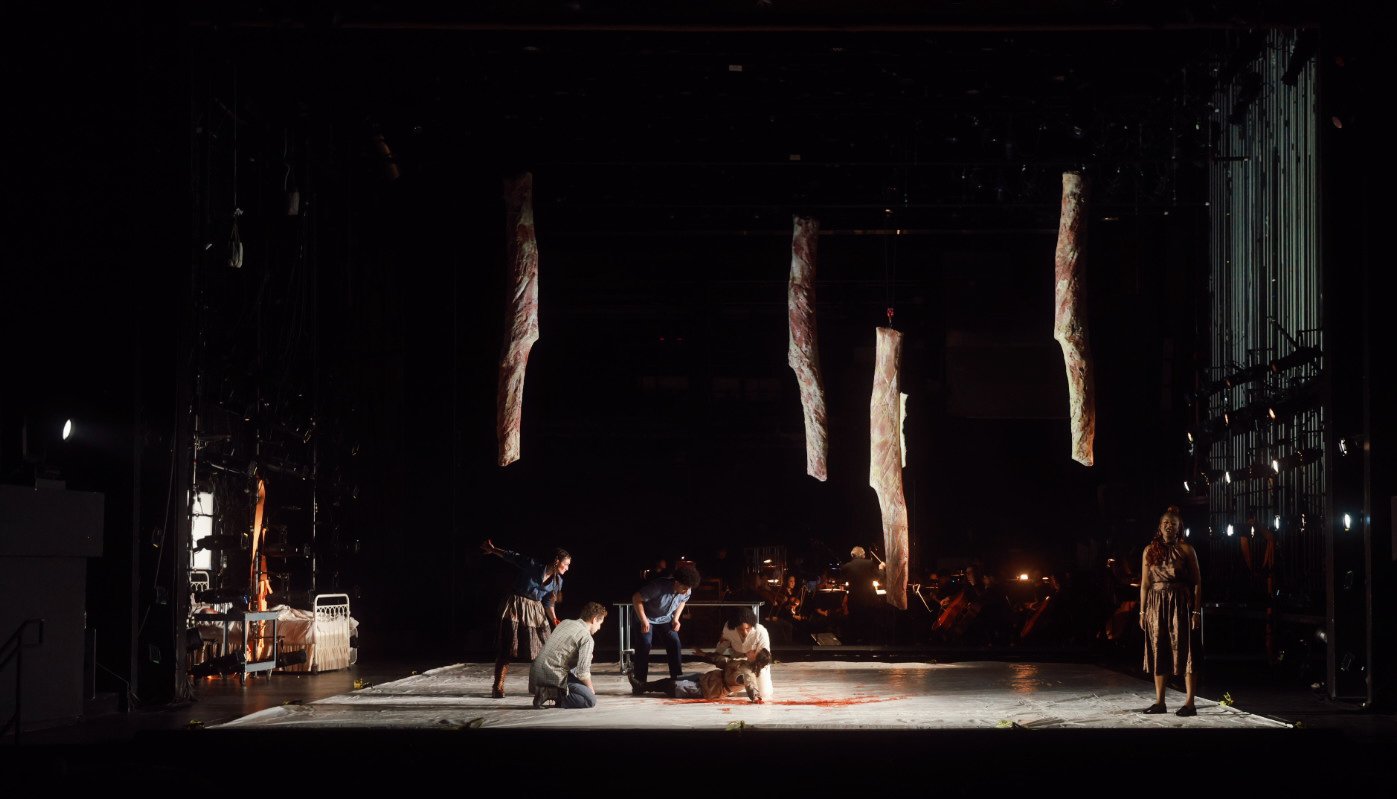
For a long time, I struggled to connect with La Passion de Simone. The work is neither narrative nor conventionally dramatic. It takes the form of a reflective oratorio, built from contemplation and oblique pathways into the life and mind of Simone Weil.
The piece also tells us surprisingly little about Weil herself. It is structured around fifteen stations that suggest a progression through a life, but the character of Simone remains only lightly sketched. What the work offers instead is atmosphere, texture, and philosophical reflection.
It is also a piece whose full impact is difficult to grasp outside the room. The musical writing is extraordinarily subtle and colorful, but its depth only reveals itself when experienced live, in close proximity to the orchestra and singers.
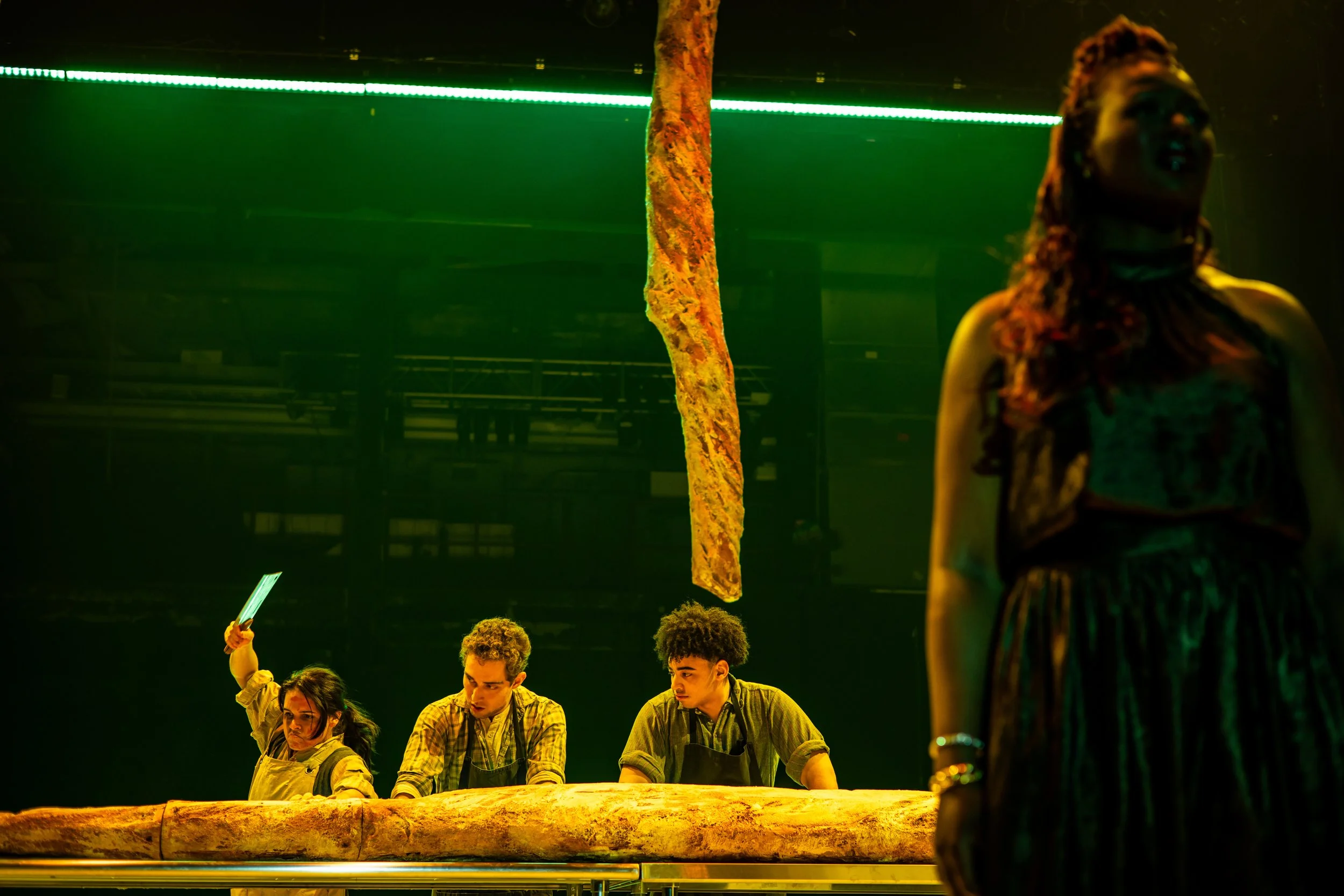
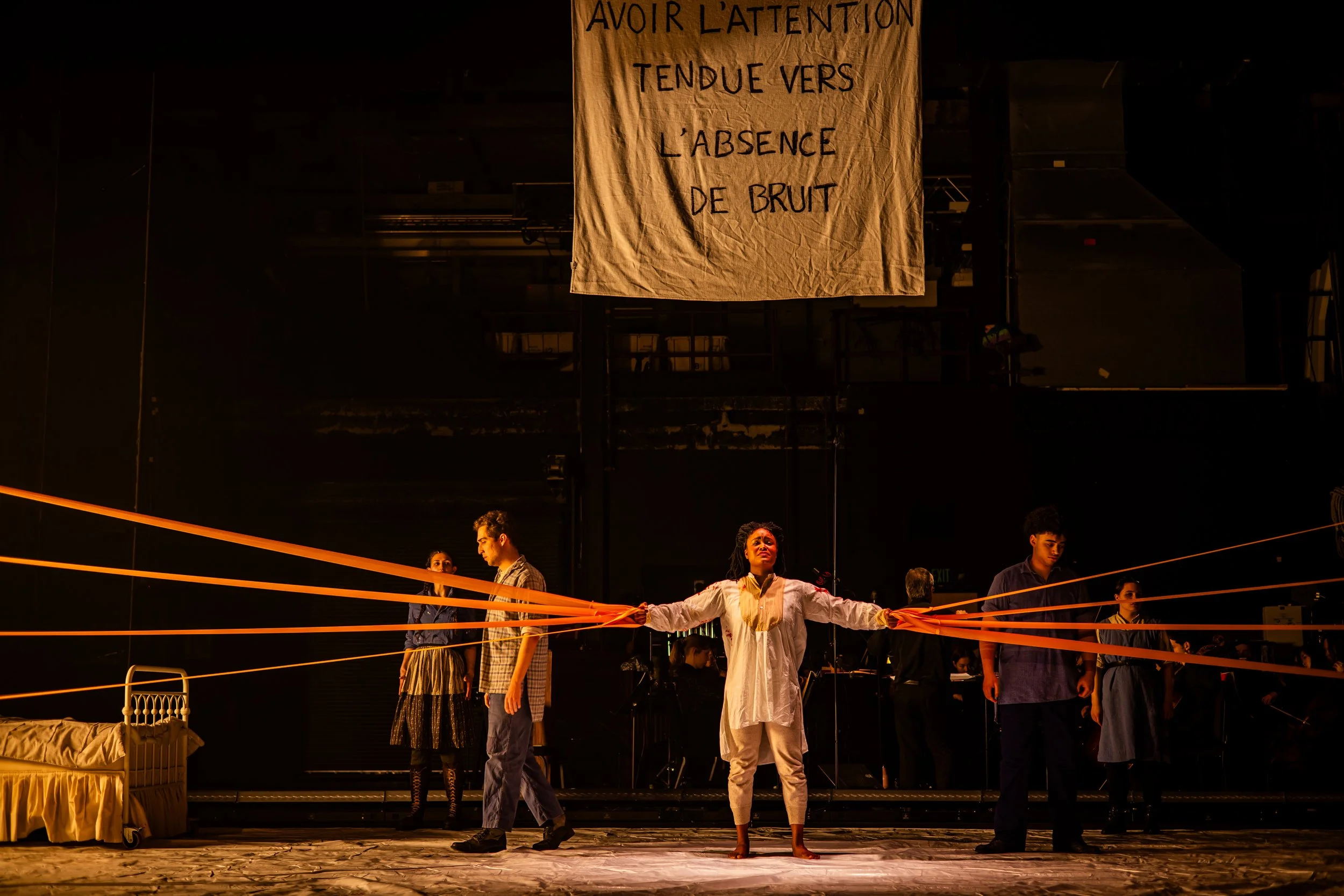
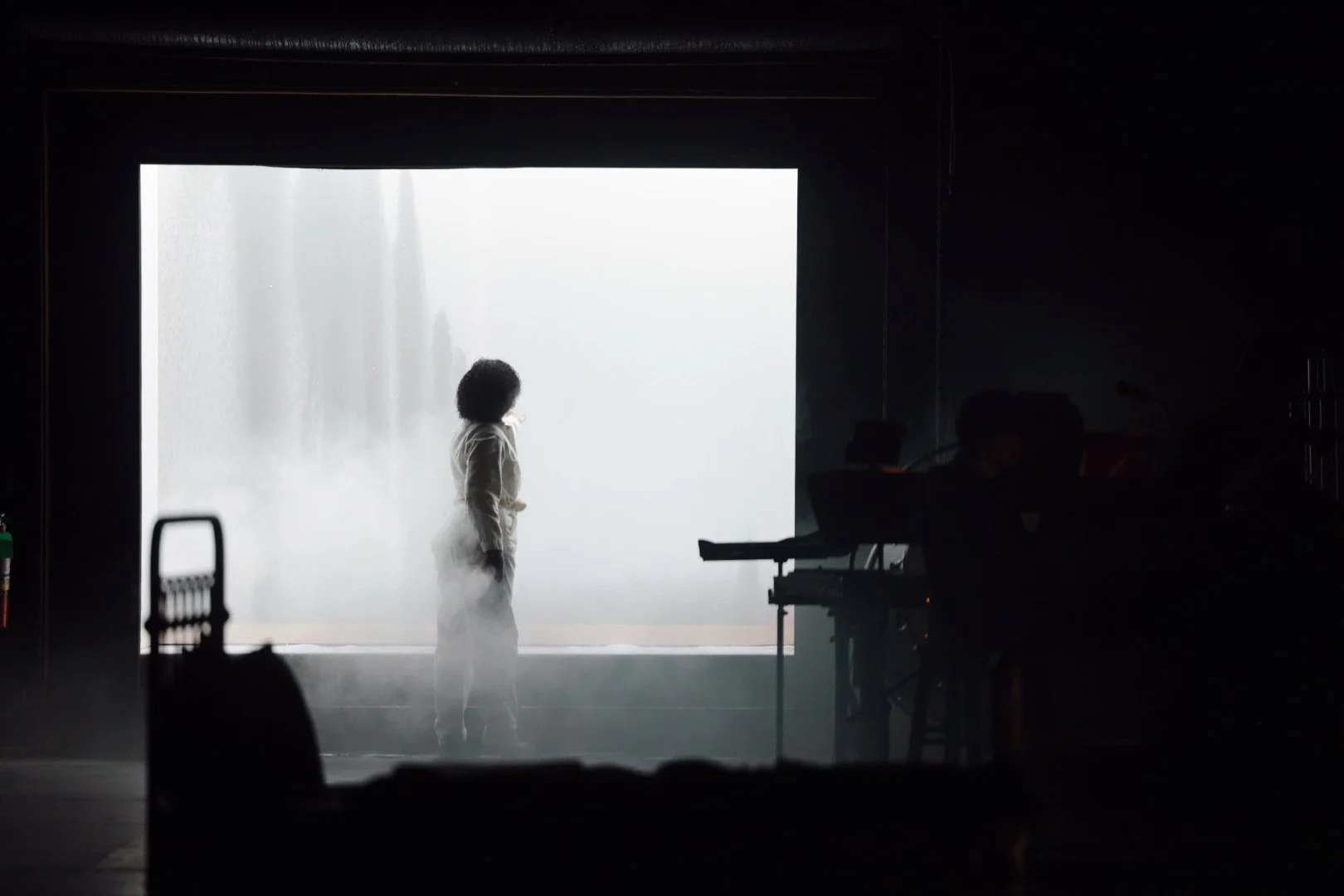
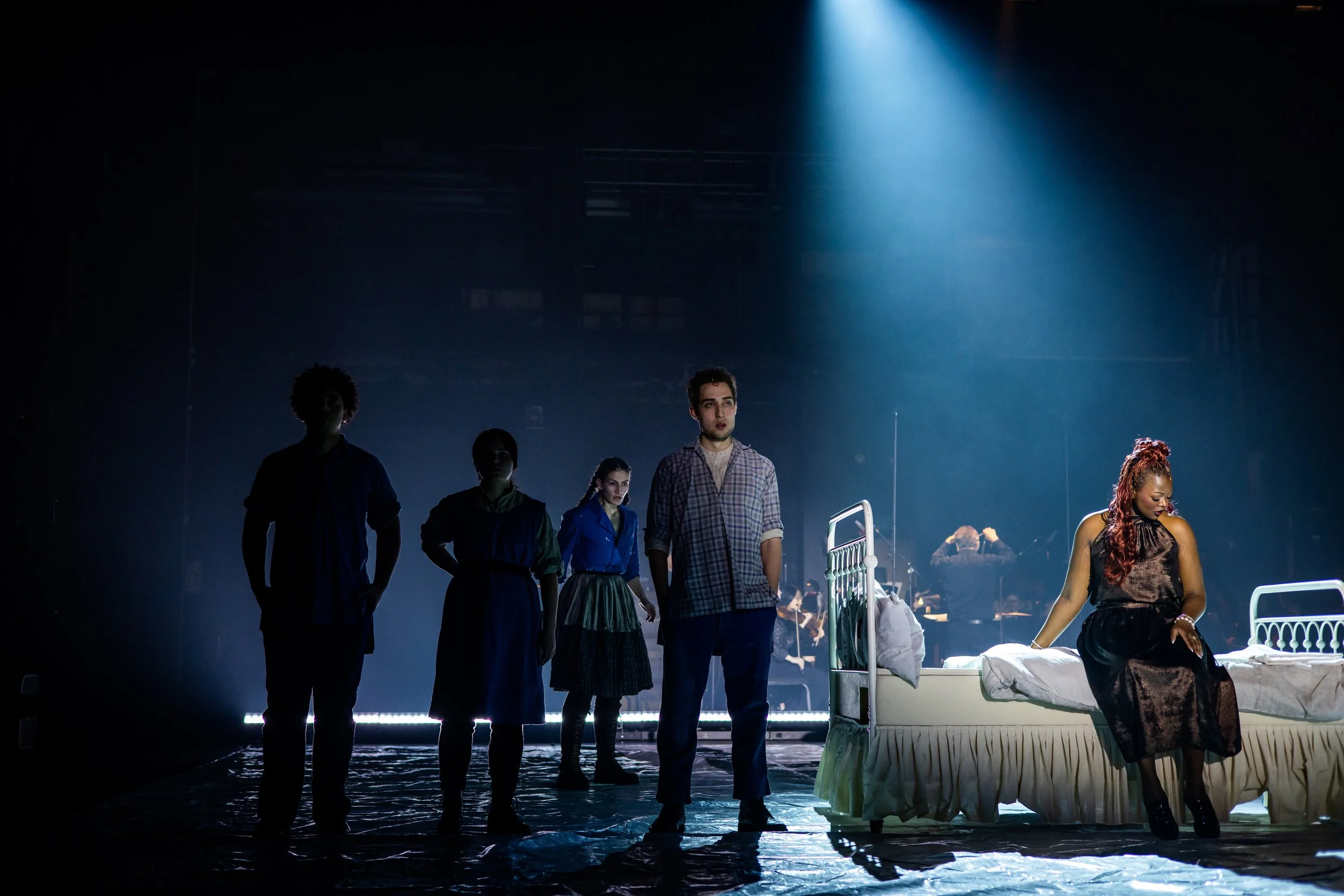
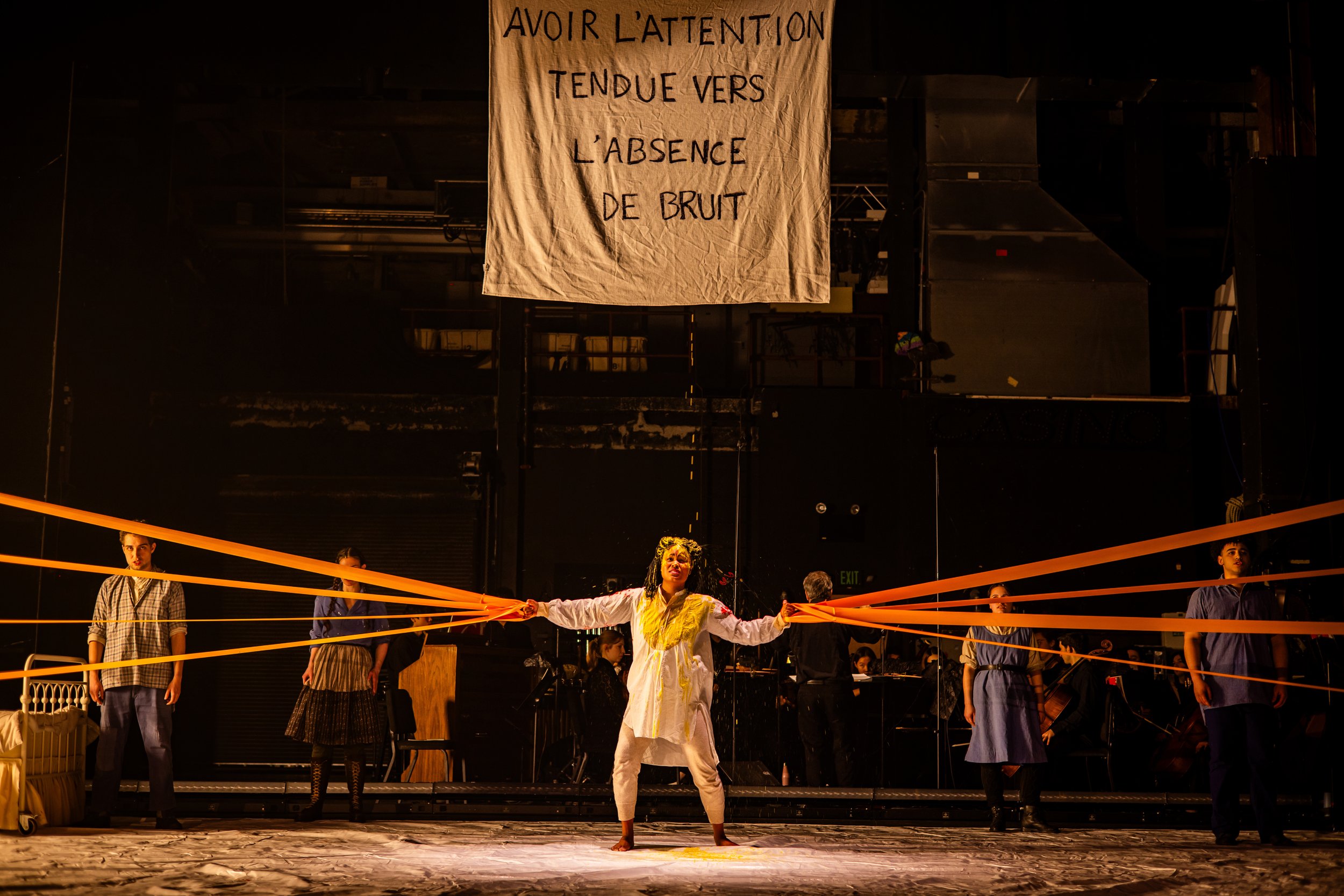
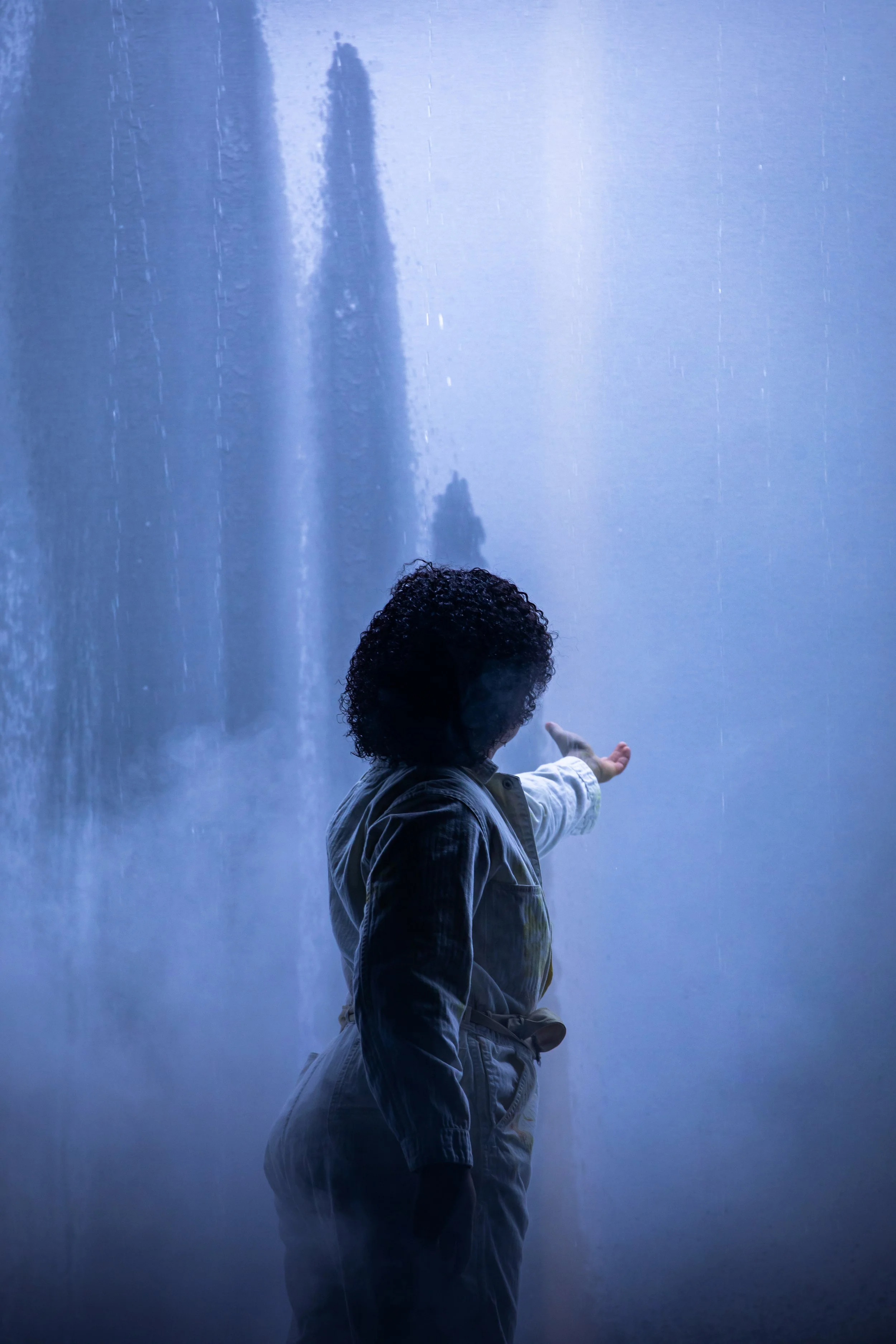
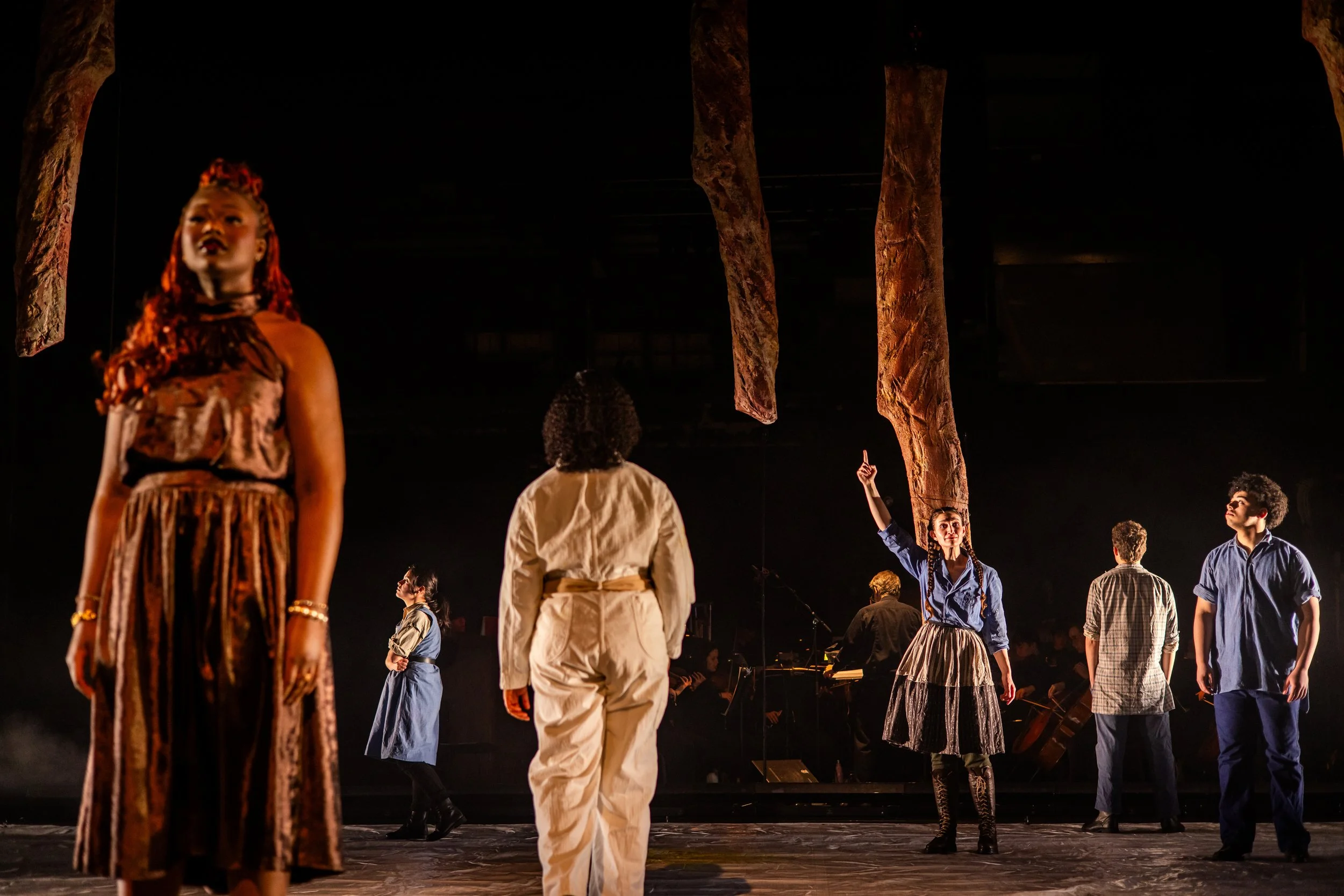
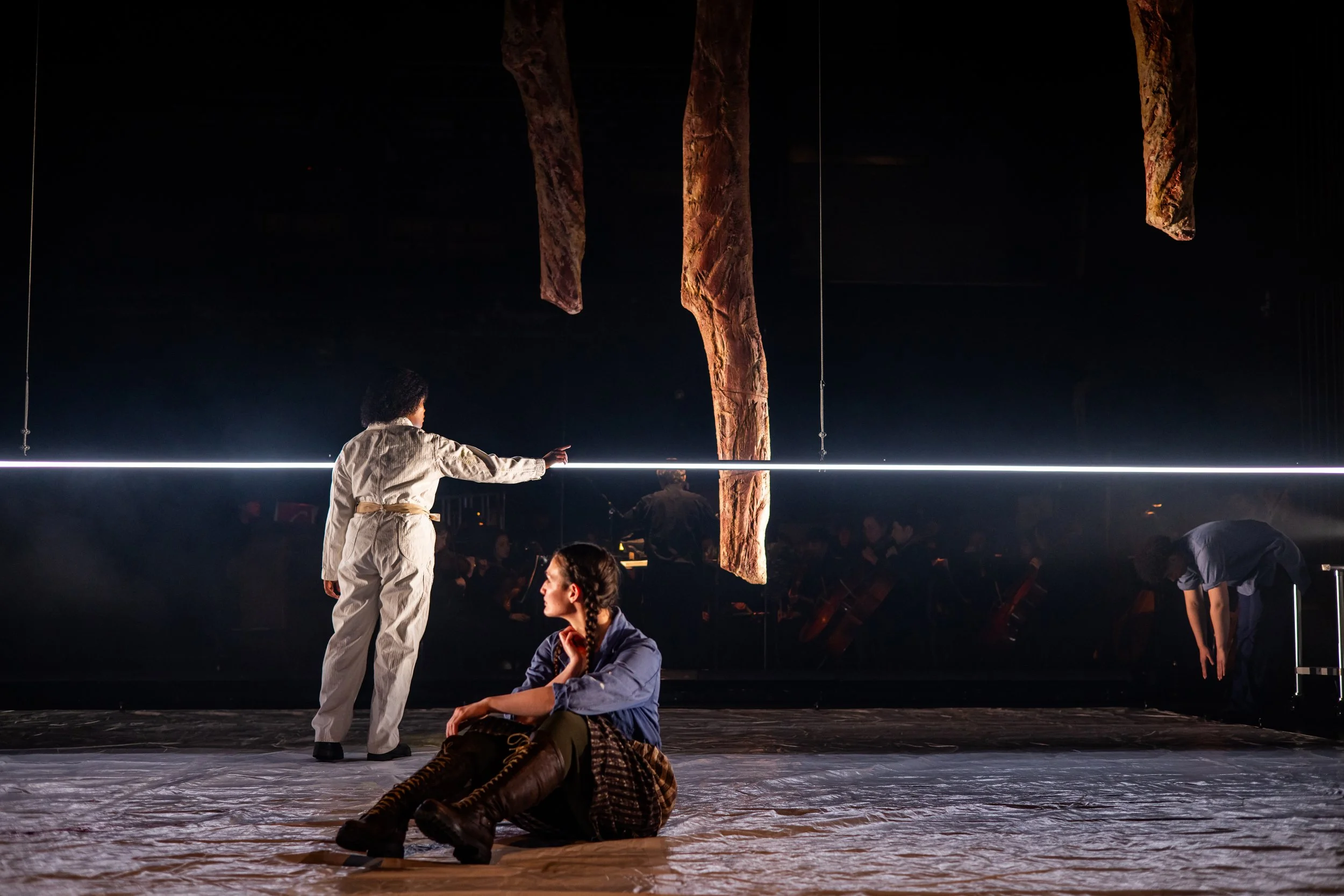
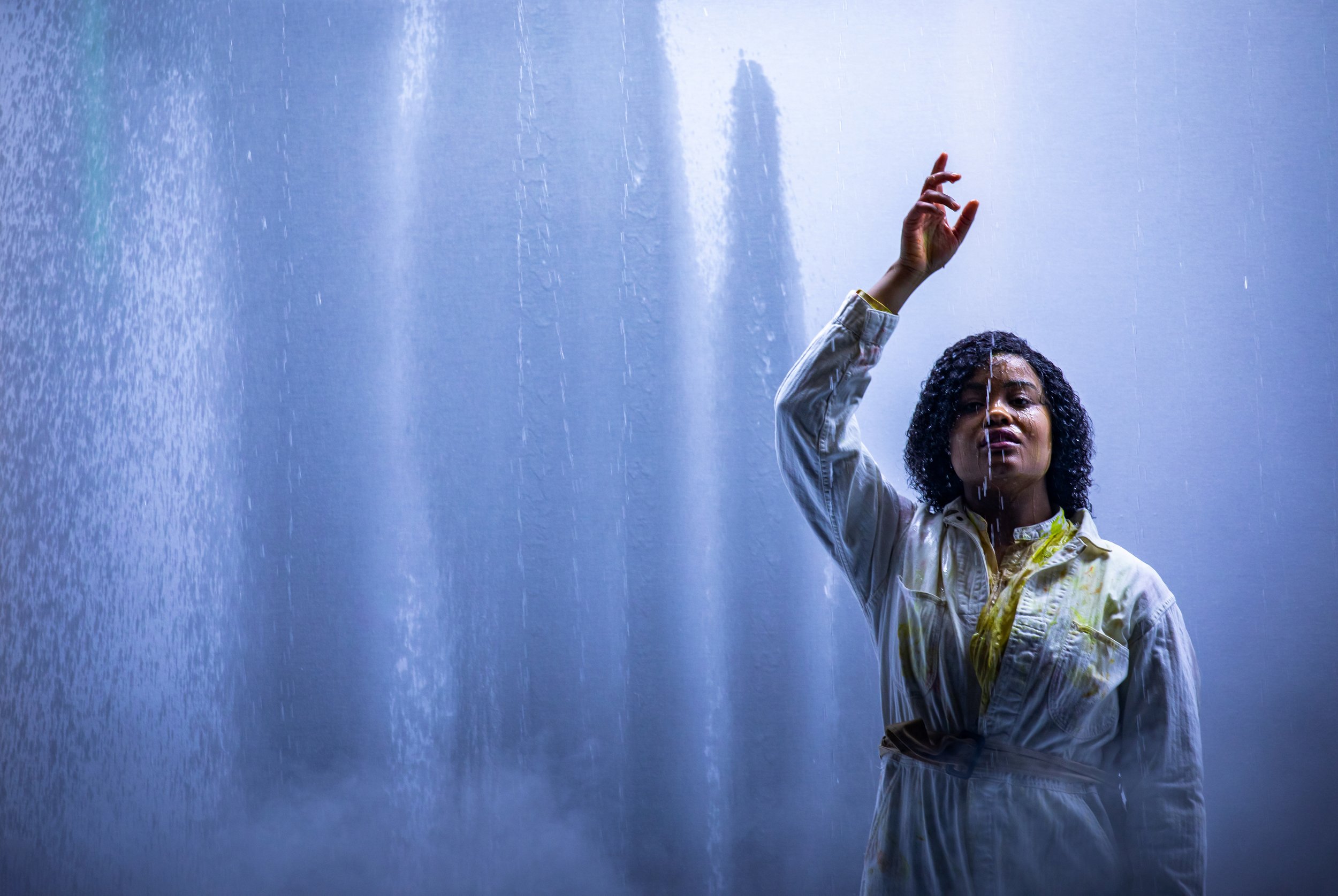
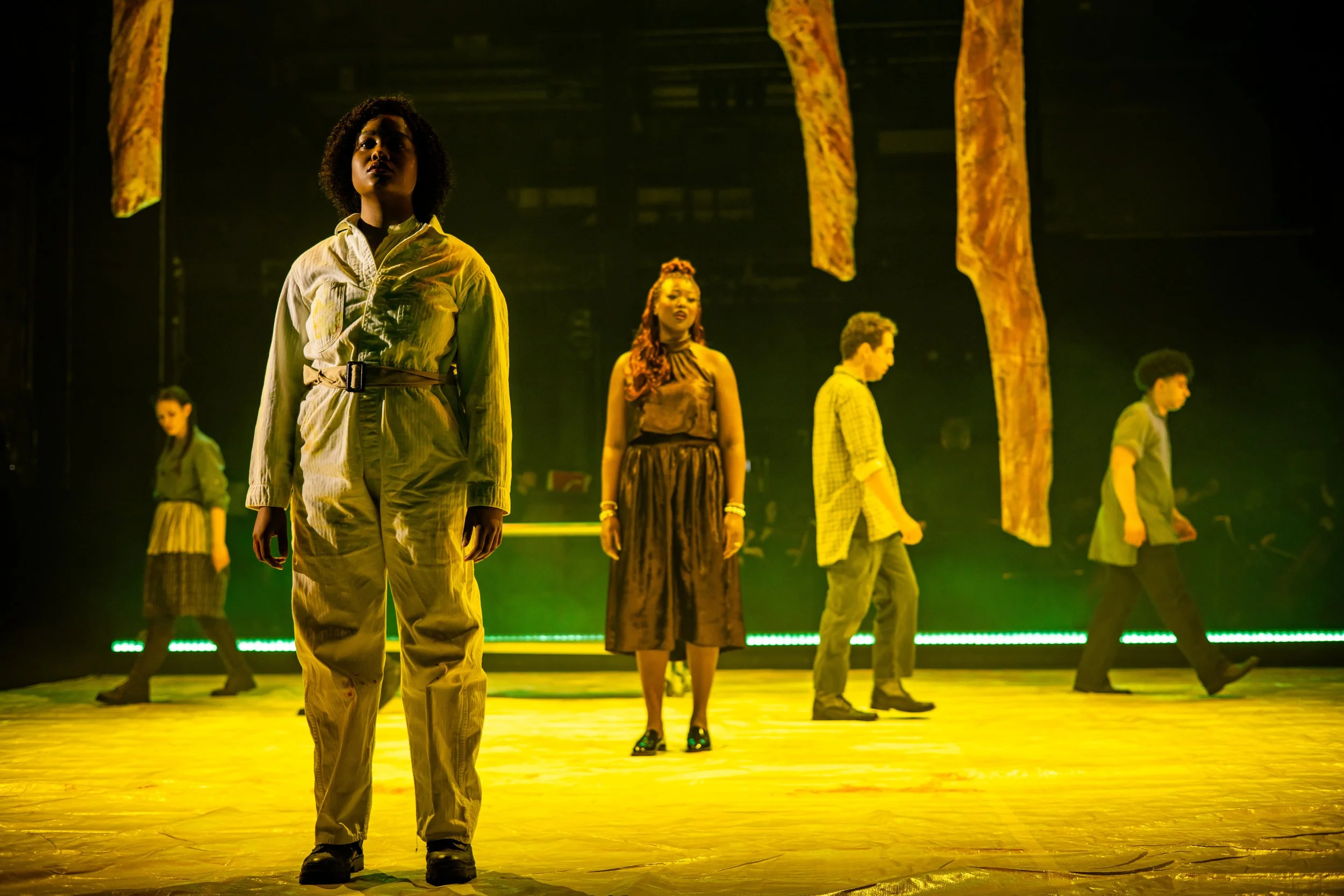
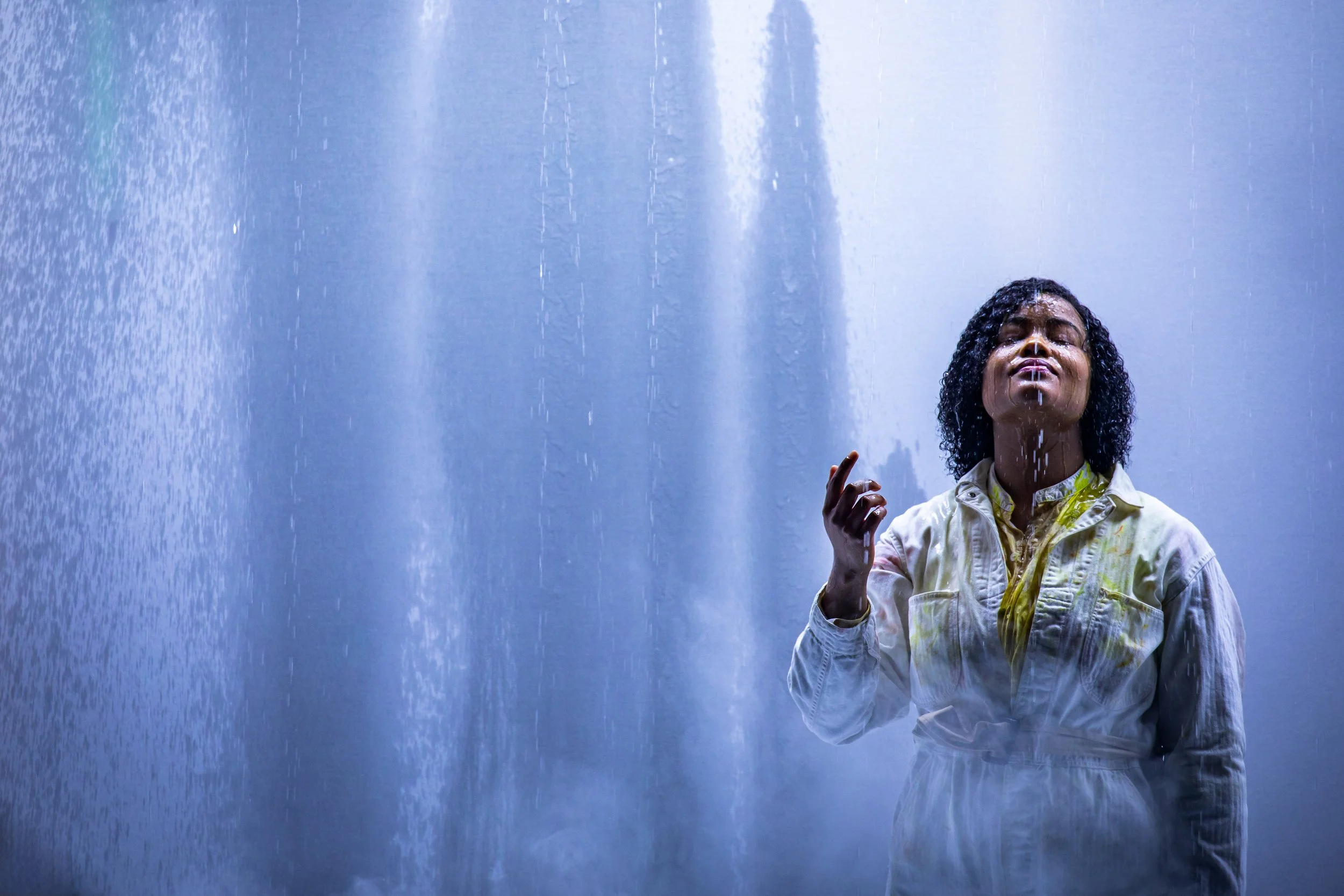
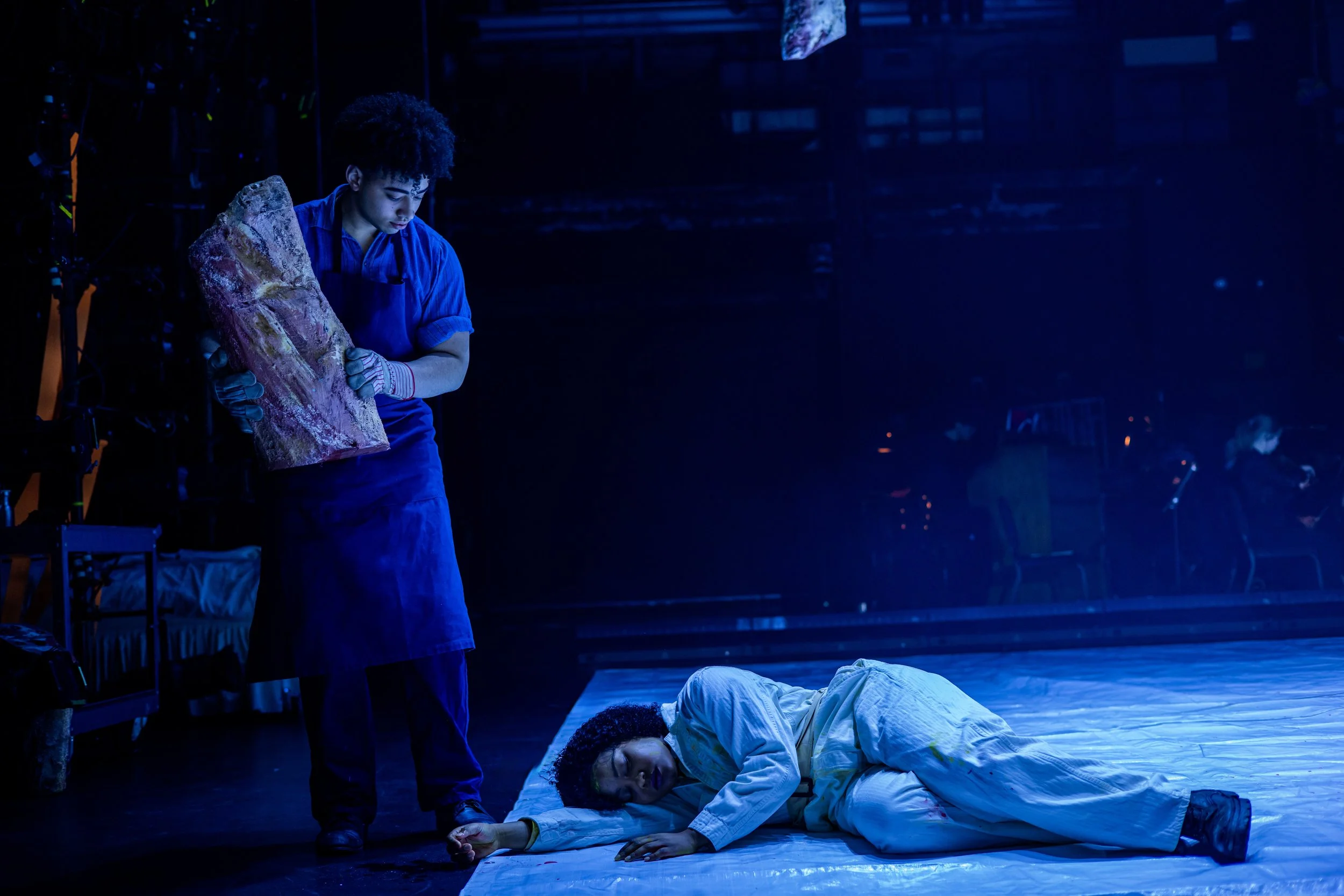
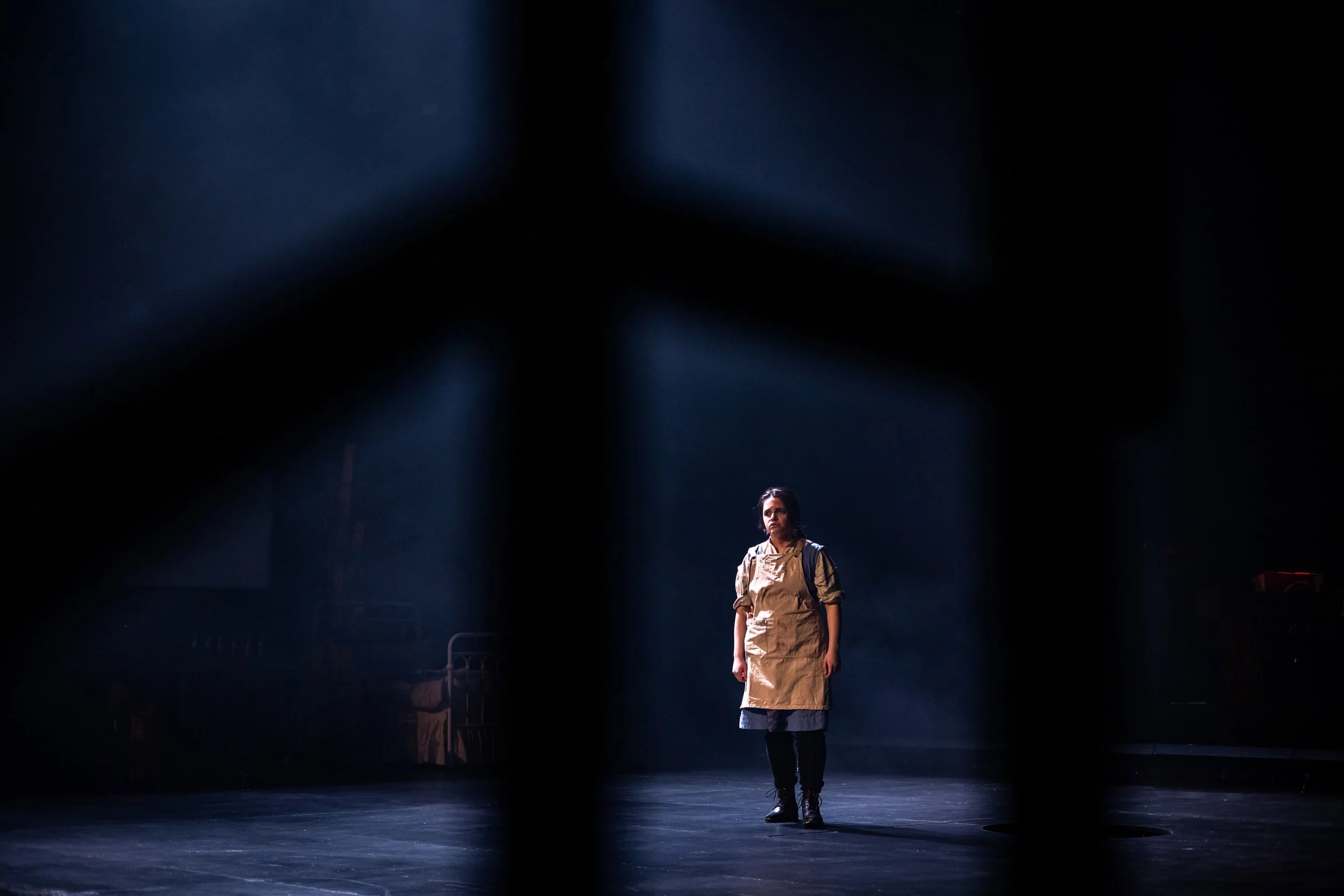
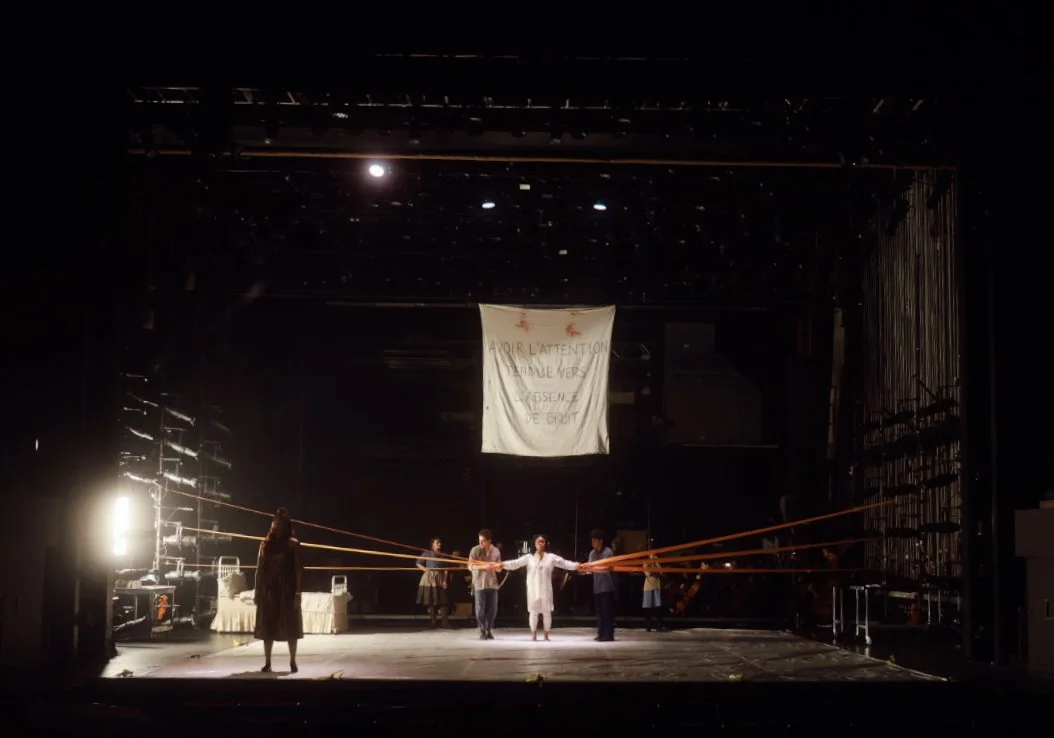
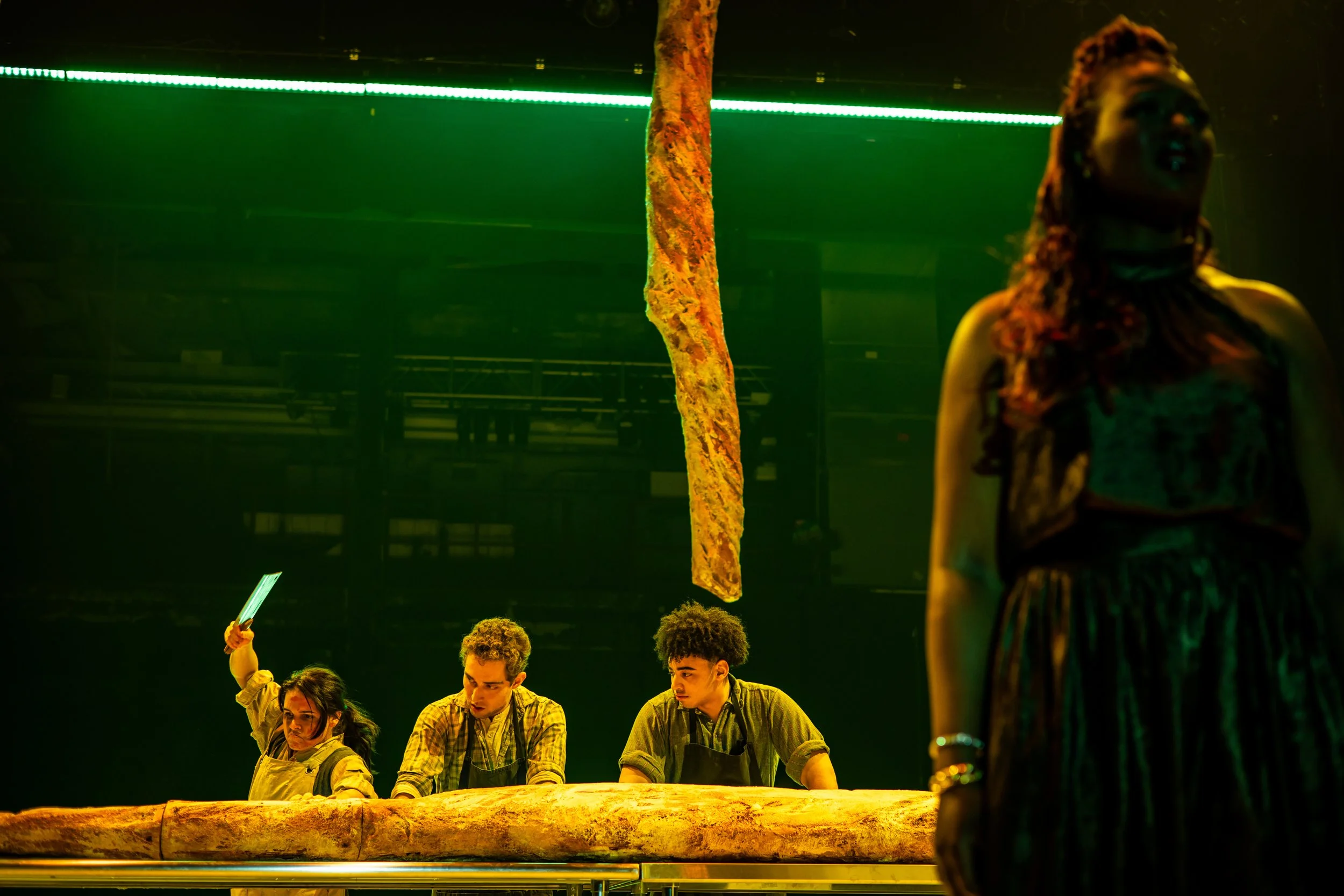
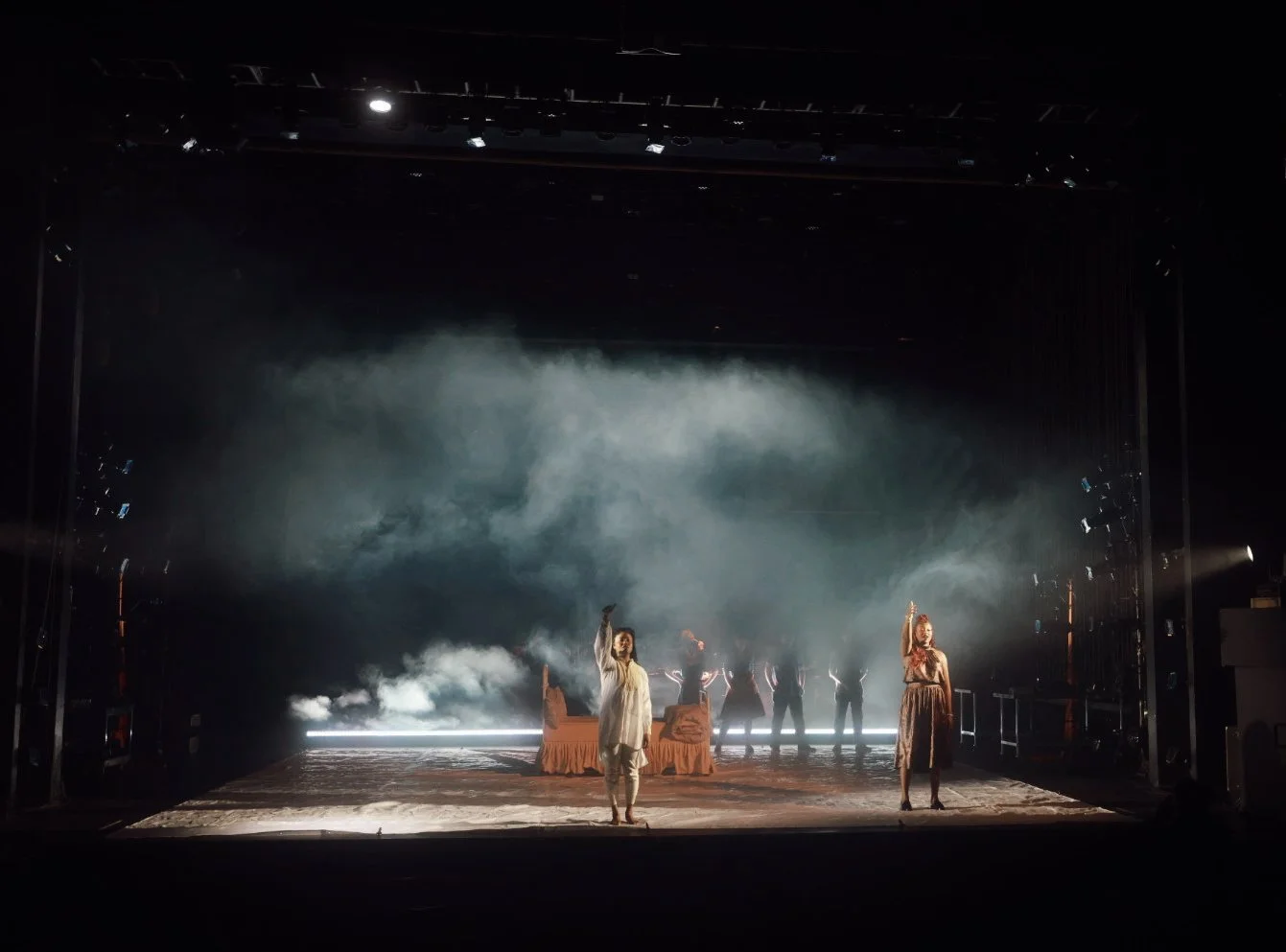
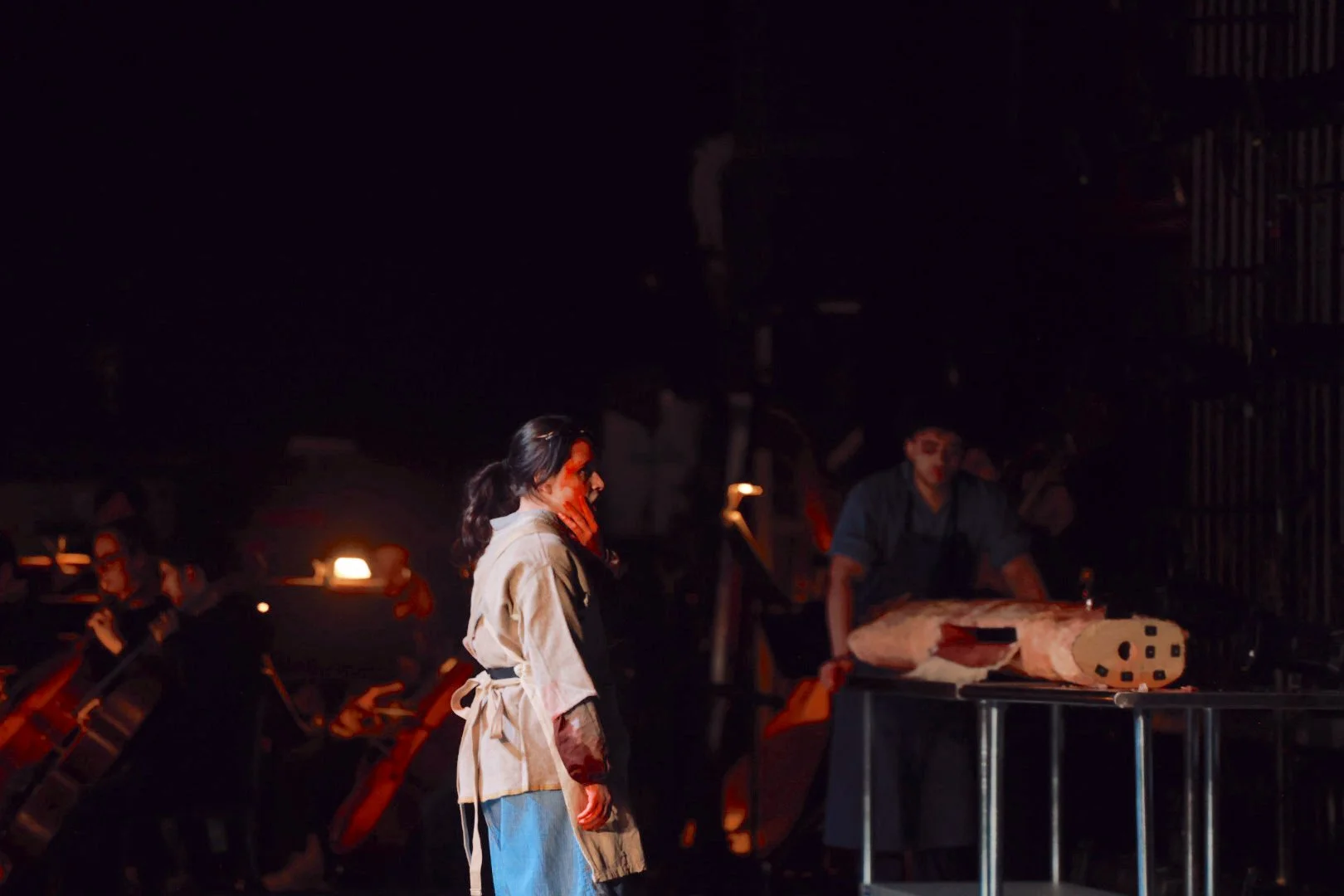
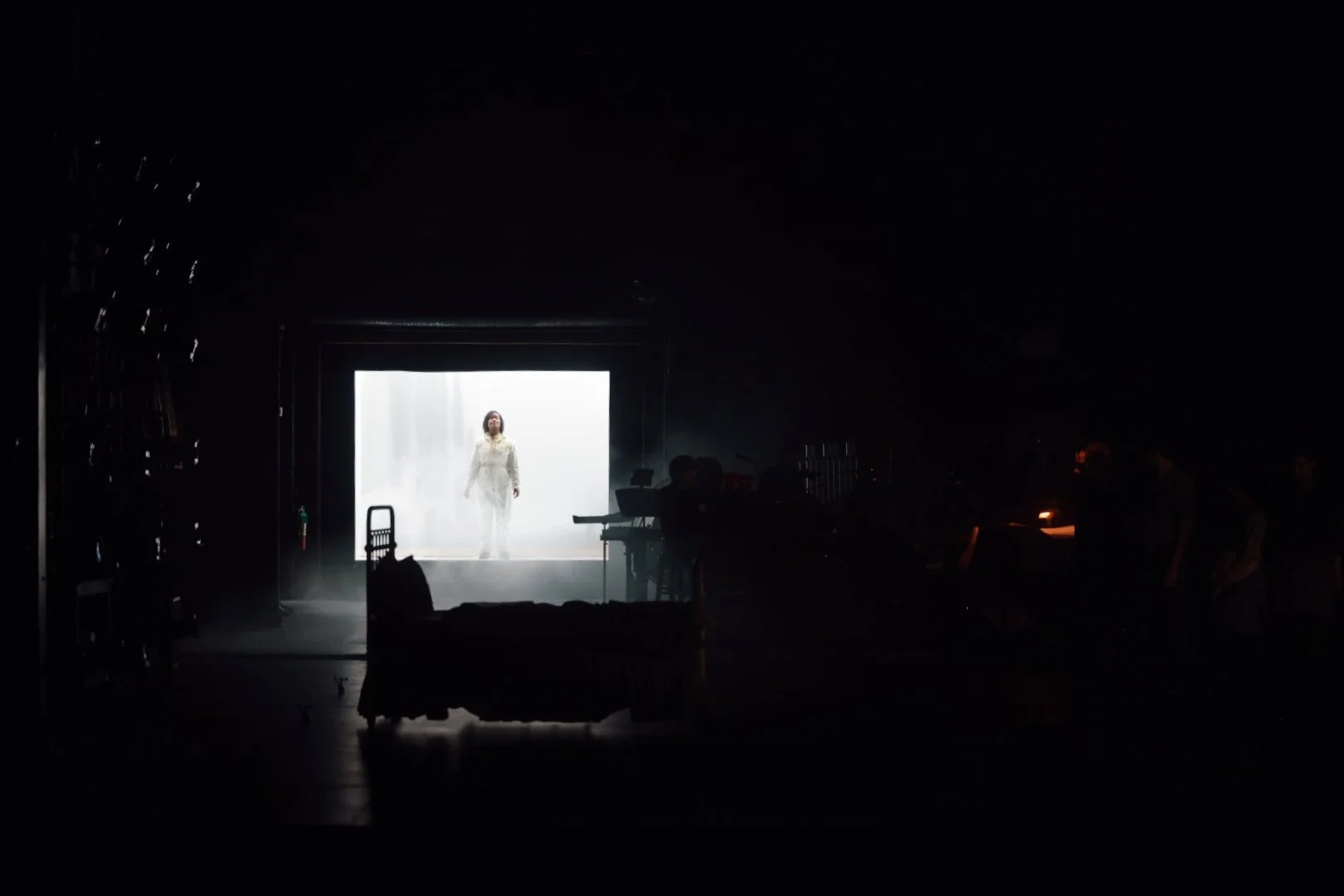
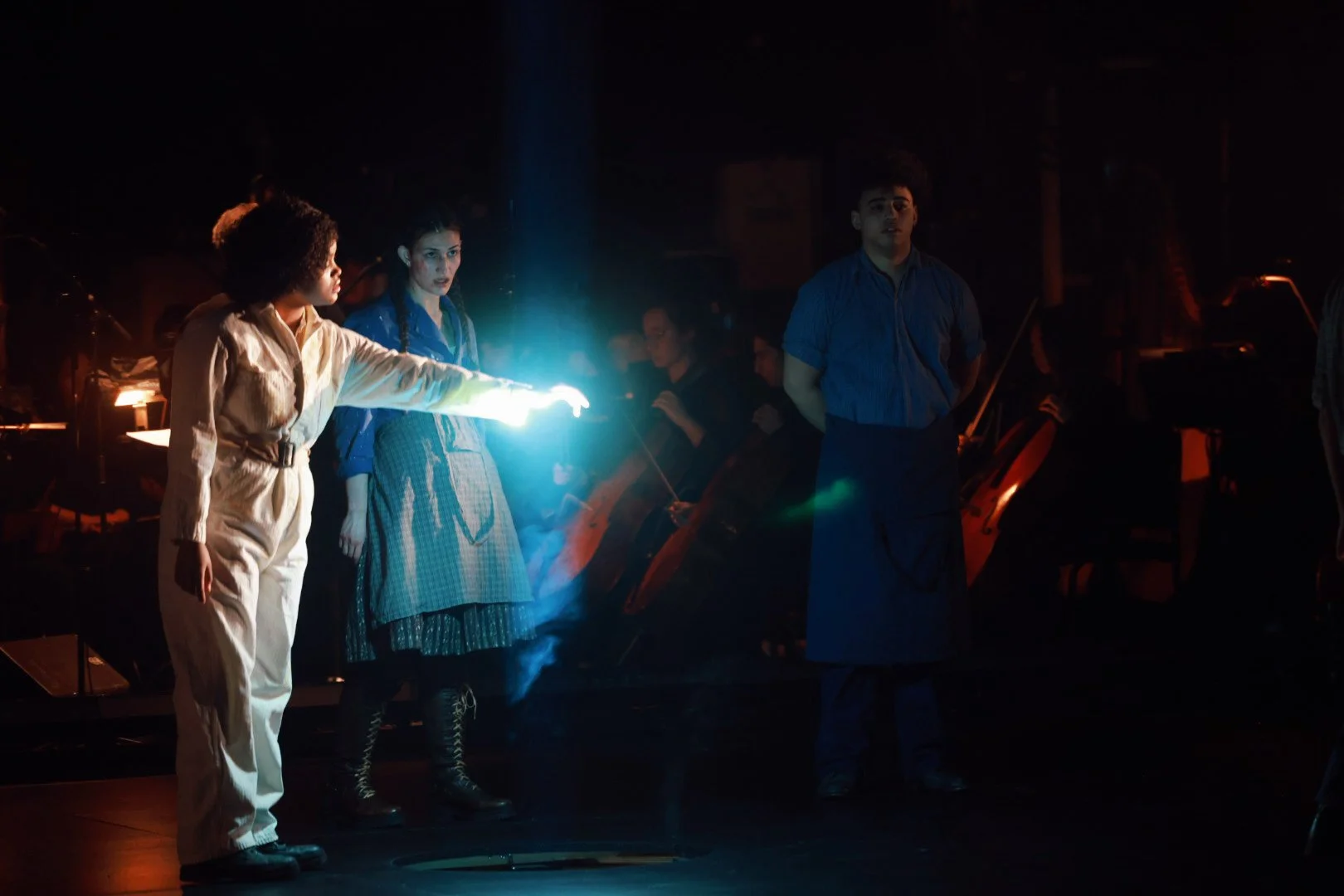
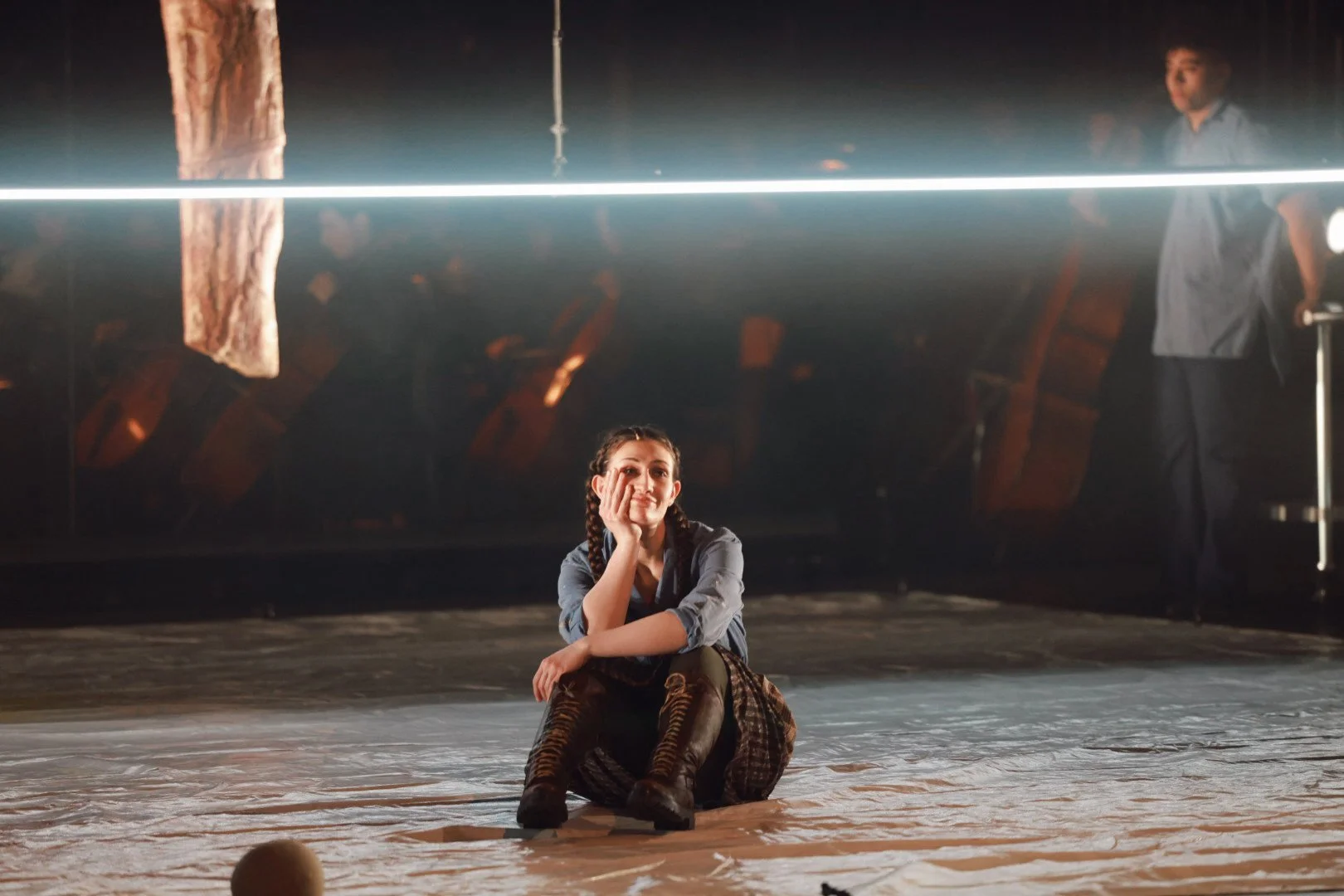
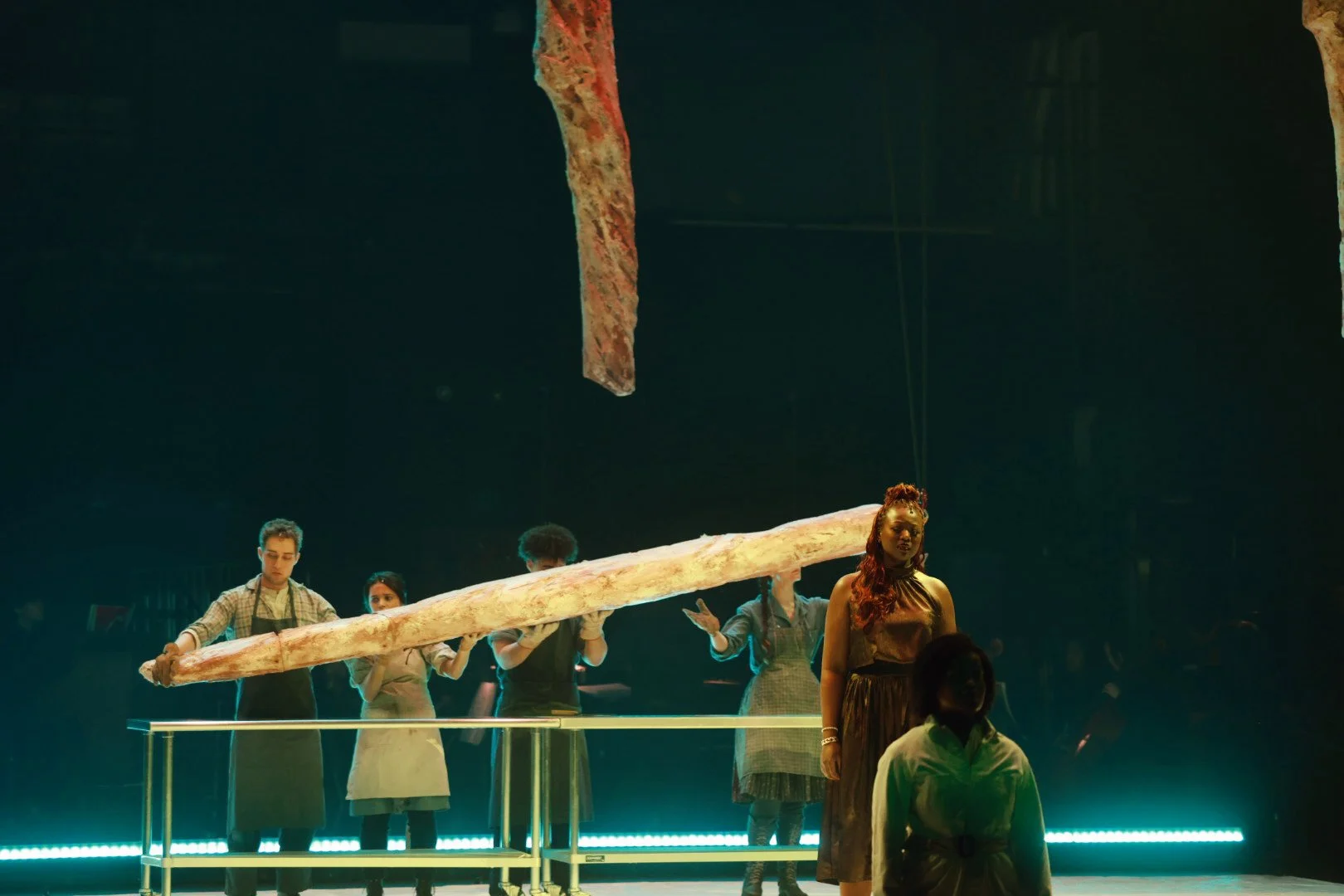
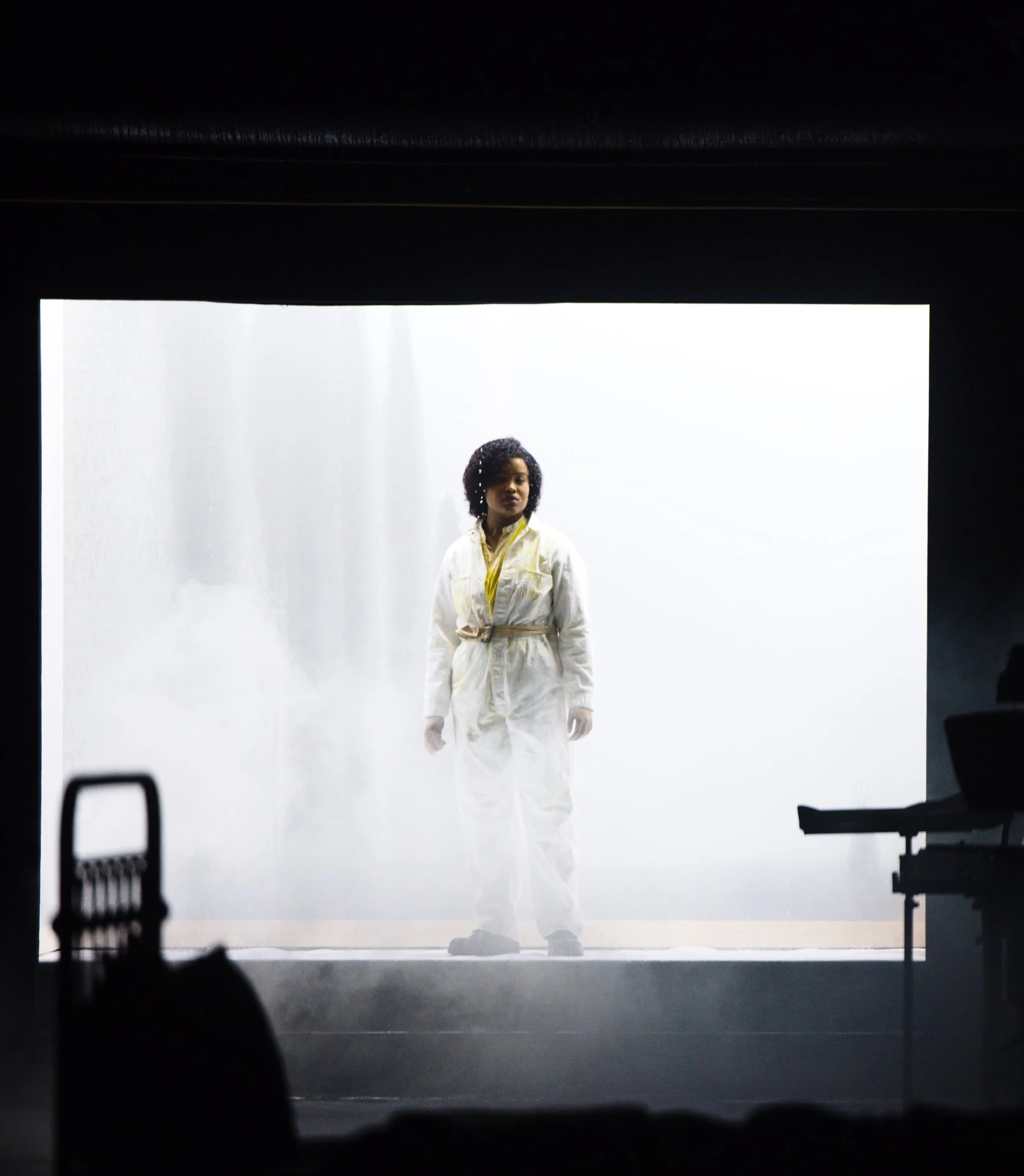
When we began imagining a staging, we focused on slow transformations of space that would test and reward the audience’s perception. We made long lists of unusual theatrical events drawn from the raw mechanics of the theater: batons flying in from above, objects disappearing into trap doors, garage doors slowly opening. From these elements we constructed a sequence of images that gradually formed a visual analogue to the fifteen stations.=
Our primary goal was to create a visual environment that could sustain the audience’s attention and guide it toward the music. That became the central challenge of the production. The music is demanding. The subject matter is demanding. And in a moment when attention itself feels fragile, the only way to truly encounter this piece is to listen long enough to sink into the textures of its sound world.
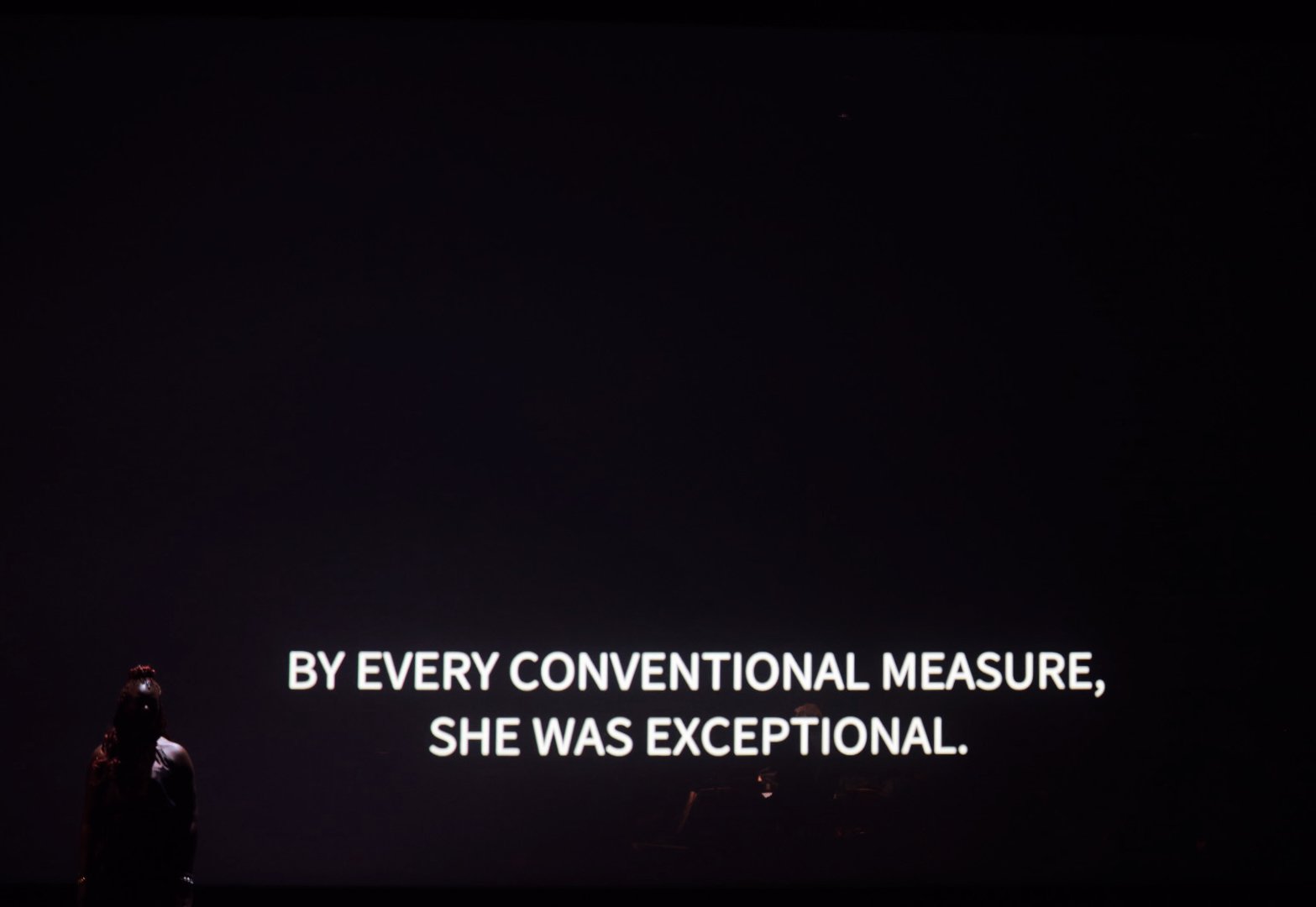
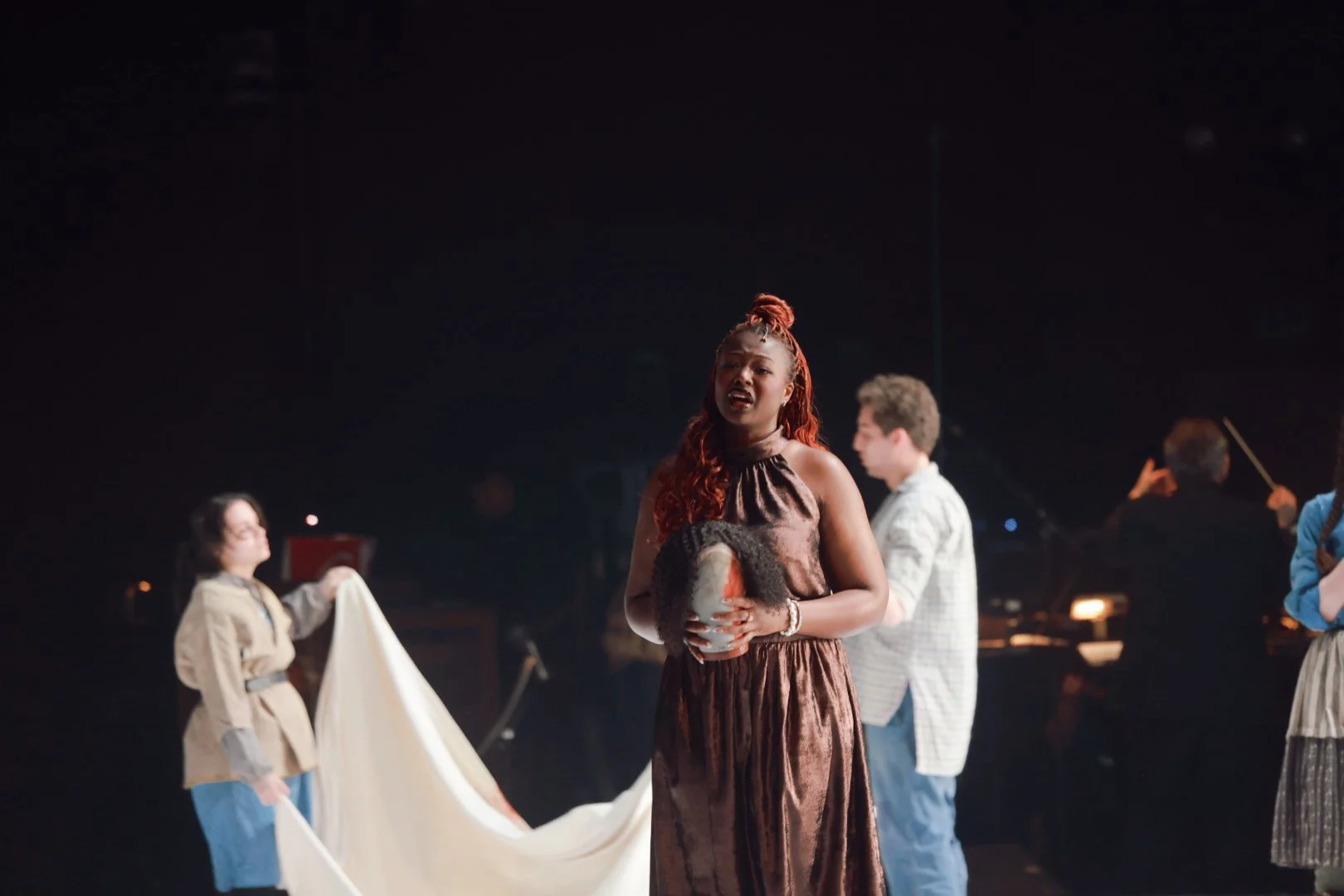
Our process drew inspiration from several artists whose work explores attention and perception: Robert Wilson, Barnett Newman, Ingmar Bergman, and Kari Upton. We also studied visual traditions surrounding the Christian Stations of the Cross. At the same time, we searched for ways to introduce concrete biographical fragments about Simone Weil so the audience would have points of orientation before entering the more abstract portions of the piece.
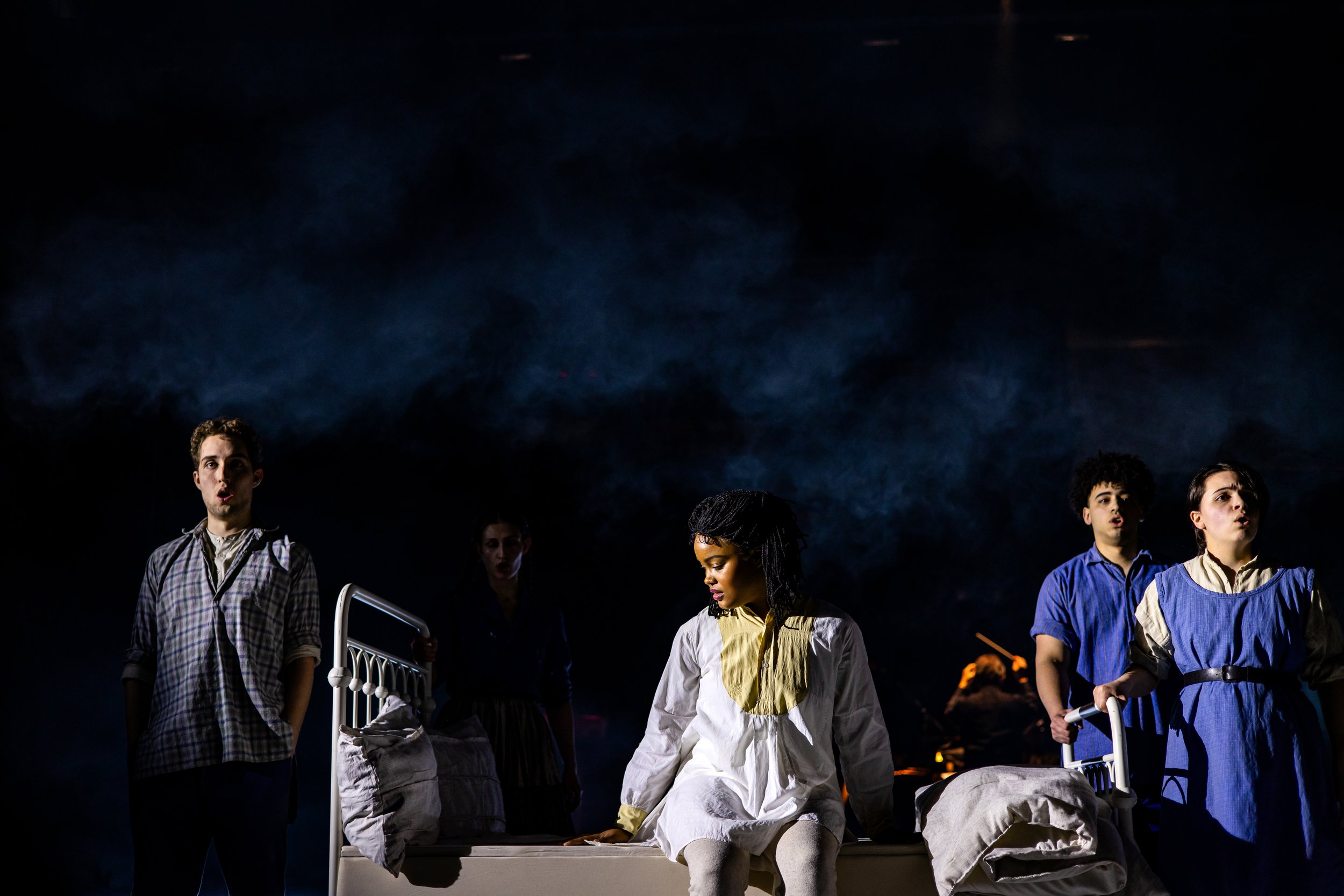
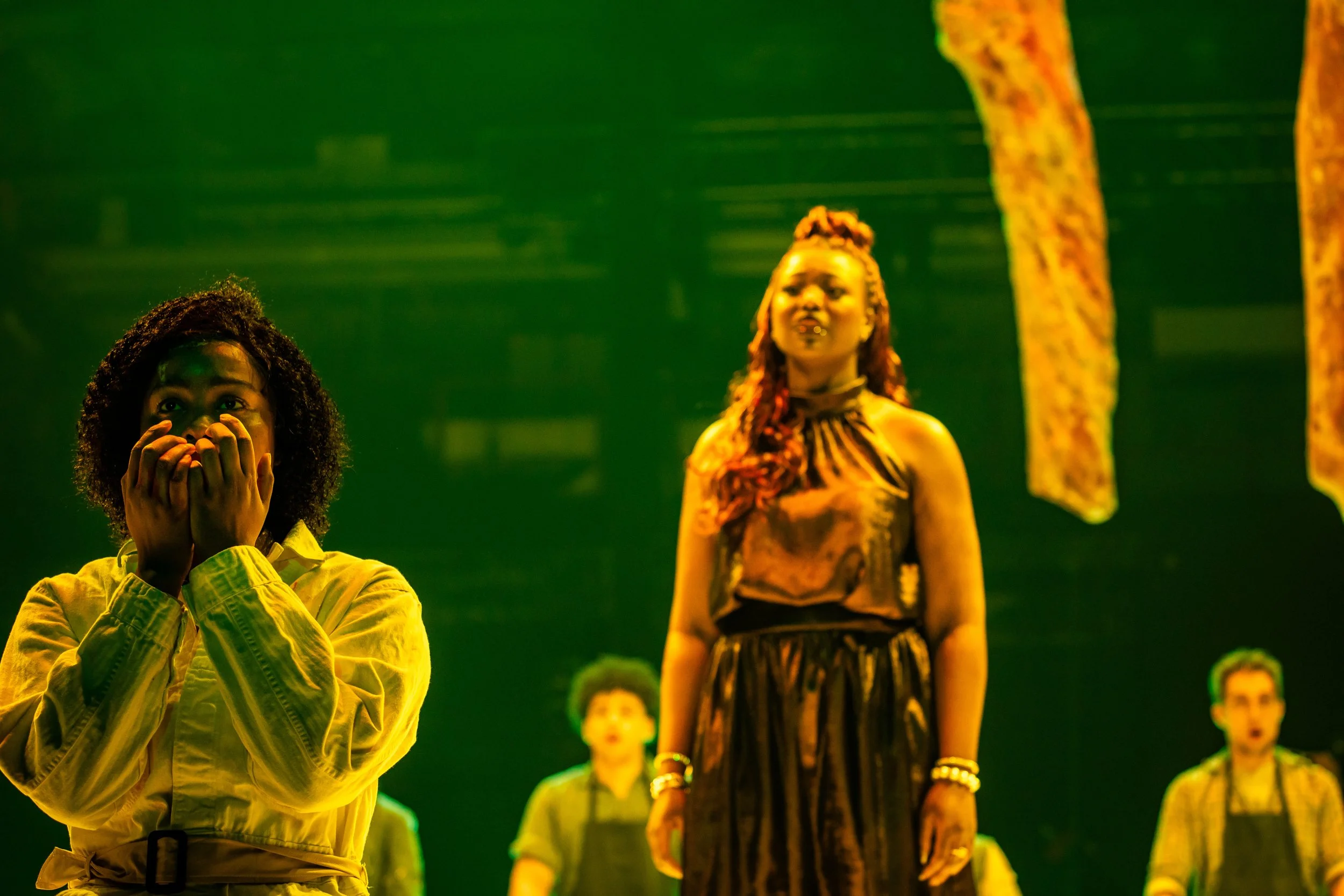
As in all theatrical work, the integrity of the process depended on the performers themselves. Much of the staging was built specifically for the singers at Curtis. Movement and characterization emerged from observing their natural physical behavior: gestures they made during breaks, the ways their bodies settled into certain positions in rehearsal. From these observations we shaped a vocabulary of movement that felt organically connected to the musical events. Our aim was always to discover images that felt both beautiful and surprising, often revealed through shifts in the architecture of the stage.
The vocal quartet performed their music entirely from memory, something that had never been attempted in this piece before. It was an extraordinary feat. The sheer complexity of what they were coordinating musically also influenced the choreography, shaping how stillness and motion functioned within the staging.
At the sitzprobe I had a different thought about the work. Sitting close to the orchestra, feeling the resonance and physical vibration of the sound, it struck me that the most ideal way to experience the piece might simply be to sit among the musicians themselves. If my work as a director is ultimately about helping the audience hear the music in high definition, then perhaps visual imagery is not always the ideal medium.
Nevertheless, the production we created developed its own logic. The sequence of images gave the work a sense of momentum and helped shape the audience’s experience of time. The result was something strange and beautiful, a staging that attempted to hold attention long enough for Saariaho’s music to reveal its depth.
The Curtis Institute is an extraordinary place to make theater. This production could only have happened there, and only with the remarkable group of artists who created it together.